On Wednesday, approximately 980 million people across the Northern Hemisphere will have the opportunity to observe a solar eclipse. This event is particularly rare for Europe, as the last total solar eclipse visible from the continent occurred in 1999.
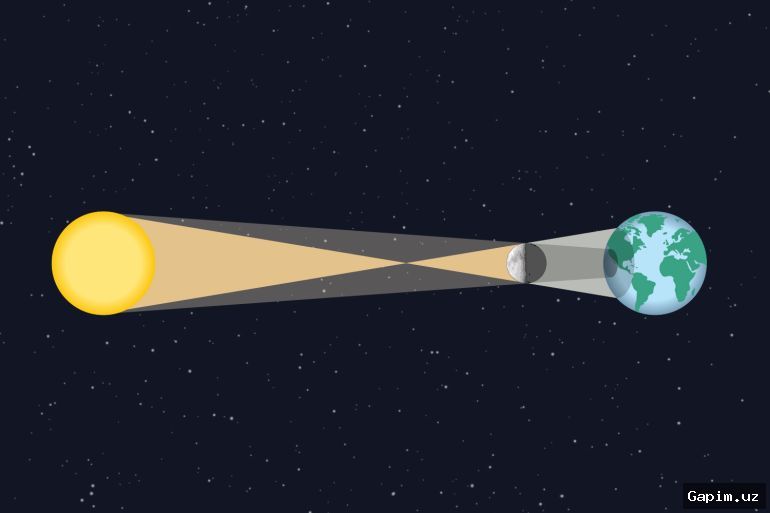
During a solar eclipse, the moon orbits between Earth and the sun, casting a shadow that temporarily darkens the sky and appears to blot out the sun. At the peak of the eclipse, the moon's disk aligns with the sun, revealing the sun's corona—its outermost atmosphere that flares outward like a crown (hence the name).
As the moon approaches and the sky darkens, observers may notice a drop in temperature, crescent-shaped shadows, shifting winds, and unusual animal behavior. Solar panels will produce less energy during this time, which is expected to cause a brief surge in electricity prices in Germany.
Just before the eclipse reaches its maximum point, known as totality, look out for Baily's beads. These are the final rays of sunlight reaching Earth through valleys on the moon's surface, appearing as white specks encircling the moon like a string of pearls. During totality, stars will become visible, and some may even catch a glimpse of auroras or passing meteors.
Viewers in Greenland, Iceland, northern Russia, northern Spain, and northeastern Portugal will be able to observe a total solar eclipse. In most of Western Europe, as well as parts of northern Africa and northern America, a partial solar eclipse will be visible. This is the first of two eclipses in August; the second will occur on August 27-28, when Earth moves between the sun and the moon to create a lunar eclipse.
The next solar eclipse will take place on February 2, 2027, over much of Africa, South America, and parts of Antarctica. The eclipse will begin at 15:34 GMT, with totality occurring at 17:46 GMT for about two minutes. While Icelanders will see totality at 17:48 GMT, viewers in Spain will have to wait until 18:27.
To safely observe the eclipse, certified ISO 12312-2 glasses are required. Ordinary sunglasses, even polarized ones, are not sufficient. Many stores have already sold out, but instructions for building a pinhole camera are available online. Never look at the sun through a camera, telescope, or binoculars without a specialized filter, as concentrated light can cause serious eye damage.
Source: www.dw.com