Washington, DC – Reports of dire conditions aboard the USS Abraham Lincoln aircraft carrier during its record-breaking deployment have ignited a new debate over the Trump administration's handling of the US-Israeli war with Iran. Experts told Al Jazeera that the situation underscores the limits of US naval might amid a grinding stalemate that has shown no signs of ending after nearly six months.
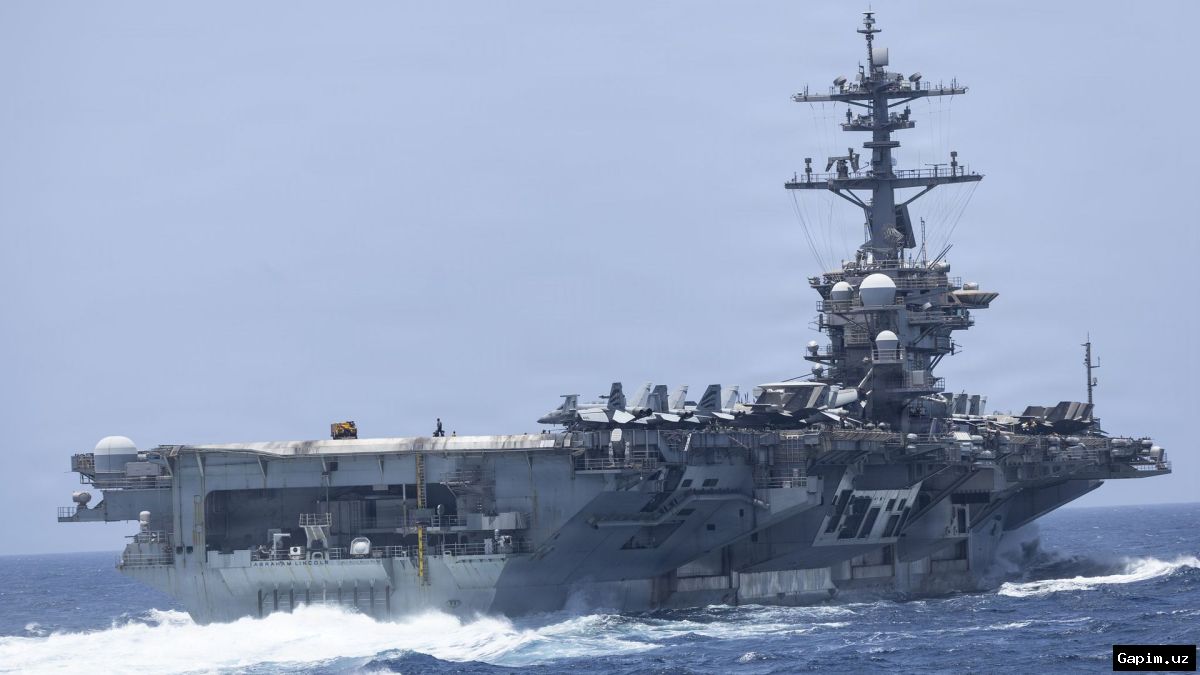
The reported issues include low crew morale, shortages of basic supplies, and maintenance problems. Family members have recounted troubling incidents, including attempts by personnel to jump overboard. Democratic lawmakers have charged that this is a 'pattern' under the Trump administration, citing similar conditions on the USS Gerald Ford, which was deployed for 326 days, and the USS Lincoln, which has been at sea since November 2025, setting a record for the longest period without a port call.
A New York Times report linked supply shortages to Iranian attacks on US military sites, particularly the heavy damage to the naval base in Bahrain. A US military official said the navy has been forced to use Diego Garcia in the Indian Ocean as its main supply hub, located about 3,540 km (2,200 miles) from where the USS Lincoln and USS George HW Bush are operating near Iran.
Maritime security expert Alexandru Hudisteanu, a former Romanian naval officer, said the situation highlights the logistical burdens of US global power projection. 'There's a maxim that's quite famous in the military: amateurs talk strategies, while professionals talk logistics,' he said. The loss of the Bahrain base has left the navy relying on a remote island, complicating resupply efforts.
The Pentagon and White House have pushed back on the characterization of conditions as dire, acknowledging the demanding circumstances of war. However, acting Navy Secretary Hung Cao announced the carrier would soon return home, with the USS George Washington, based in Japan, heading to the Middle East. This leaves no aircraft carrier in the western Pacific, a long-standing strategic priority for the US.
Former naval officer Harlan Ullman noted that Iran has effectively put two US carriers out of commission for up to a year, impacting readiness. 'We've lost two aircraft carriers for a long period of time to fight this war,' he said. Experts agree that achieving US objectives, such as halting Iran's nuclear program, would likely require ground forces, not just air power.
Mona Yacoubian of CSIS said the stresses on the navy reflect the 'emerging nature' of drone-driven warfare, drawing parallels to Ukraine's ability to counter Russia's navy. She added that the situation raises questions about US strategy and sustainability in the region, especially amid widespread public disapproval of the war. The Washington Post reported that the Pentagon is considering pulling back troops from the Persian Gulf, though no formal review has been ordered.
Source: www.aljazeera.com