On September 12, 2026, US President Donald Trump stood in Dublin alongside Irish Prime Minister Micheal Martin and said in a cool tone that the Houthis "called us, and they don't want to fight us", adding that the group was "allowing ships to pass" and that the situation would "work out very well". His remarks came just as Houthi forces had completed their takeover of the coastal town of Dhubab and Perim (Mayyun) Island, which divides the Bab al-Mandeb strait into two shipping channels, after seizing the strategic port of Mocha. This gave them a direct presence at the entrance to one of the world's most important waterways.
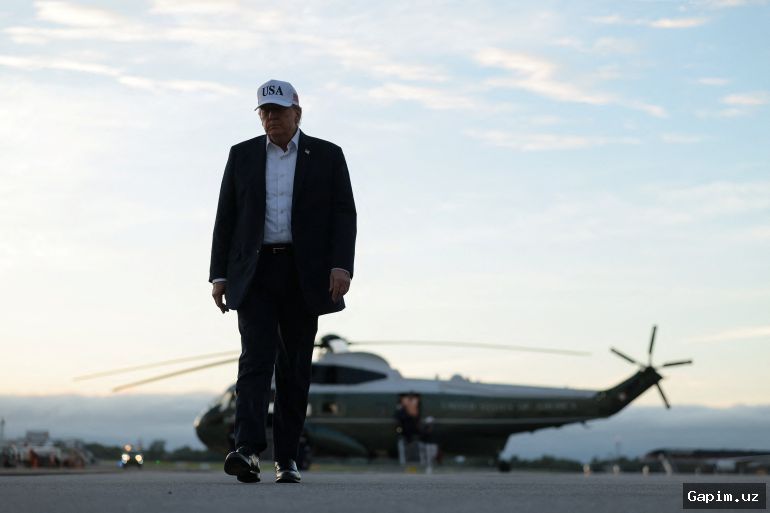
Trump was speaking against the backdrop of a Houthi announcement that they would blockade Saudi oil supplies to Asia and Saudi commercial shipping, signalling the collapse of the traditional "security-for-oil" formula. What is happening at Bab al-Mandeb is not an isolated event, but the latest in a long series of US retreats from security commitments that for decades underpinned the "security-for-oil" relationship between Washington and the Gulf states. This is not a passing political position, but a profound shift in the regional security landscape: the United States is choosing not to intervene militarily against an armed group designated as terrorist that controls one of the world's most important straits.
In Dublin, Trump said the Houthis had contacted the US administration seeking to avoid confrontation with Washington. He said they were "allowing most ships to pass" and that the problem was limited to "one country", which he did not name – an apparent reference to Saudi Arabia – promising to "take care of fixing that". He also said the United States had "tight control" over the Strait of Hormuz and that about 25 ships were passing through it each day on average, despite maritime sources denying this. On the ground, Trump's remarks suggested that the Houthis remain wary of US military force and American deterrence, which has already put considerable pressure on their regional backer, Iran.
Saudi circles denied an Axios report claiming that Crown Prince Mohammed bin Salman had called Trump twice on the eve of the Houthi takeover of the coast on September 10, urging him to strike the Houthis, and that Trump had refused. The sources pointed to Axios's own July 29 report on Saudi Defence Minister Prince Khalid bin Salman's visit to Washington, which said he had told the US vice president that the kingdom could manage the confrontation with the Houthis itself and did not need US military intervention. They regarded the two accounts as contradictions in the reporting of Axios's Barak Ravid.
Observers in Riyadh see the restrained US position as part of a broader policy: the administration currently has no intention of taking direct military action against the Houthis. At the same time, Admiral Brad Cooper, commander of US Central Command, travelled to Riyadh for urgent coordination talks with Prince Mohammed, indicating that Washington is seeking to "intensify its support" for Saudi Arabia while avoiding direct military involvement – a formula well understood in Riyadh. Trump sought to reassure Saudi concerns by describing the crown prince as a "good friend" and promising that "everything will work out very well". But he offered no specific military commitment, and the White House announced no explicit guarantees to protect Saudi energy infrastructure or maritime routes.
Since the 1970s, the US-Gulf relationship has rested on a clear but implicit bargain: the United States provides a security umbrella protecting the Gulf states and energy routes, while the Gulf states ensure a steady flow of oil to the global economy at reasonable prices. Today, there are mounting signs that this formula is beginning to collapse. First, strategic abandonment: Trump's refusal to defend Bab al-Mandeb, and his response to the Houthis' request that the US stay out of the conflict in return for allowing American ships to pass – effectively a political deal – marks a watershed. Second, the redirection of priorities: Washington's focus on the Strait of Hormuz and avoidance of a front in Yemen point to a new approach: not a comprehensive security umbrella, but selective protection of direct US interests. Third, military exhaustion: the US military is exhausted by the war with Iran and its stocks of advanced interceptor missiles have been depleted. Fourth, domestic politics: the erosion of Trump's political support because of the Iran war makes further military expansion politically costly.
Saudi Arabia now faces one of its most serious security challenges: the Houthis control Bab al-Mandeb, are choking Saudi trade and have already launched drone and missile attacks towards Saudi territory. Saudi oil exports to Asia fell from around 3.4 million barrels a day in June to just 128,000 in August, before partially recovering to 700,000 this month. Oil prices have meanwhile exceeded $107 a barrel, while the price of a gallon of petrol in the United States has risen by 35 percent. The real danger is the simultaneous disruption of two maritime chokepoints: Hormuz, through which about 20 percent of global oil and gas supplies pass, is almost closed because of the US-Iran war, while Bab al-Mandeb, which accounts for 10-12 percent of global oil, is under Houthi control. Closing both could block about a quarter of global supplies.
In July 2026, Saudi Arabia announced a "Multinational Defensive Maritime Alliance" of 14 founding states: Saudi Arabia, Kuwait, Bahrain, Qatar, Pakistan, Turkiye, Egypt, Jordan, Yemen, Bangladesh, Nigeria, Sudan, Djibouti and Somalia. At least 43 countries and organisations attended the founding meeting in Riyadh. The alliance may mark an important turning point, reflecting an implicit Saudi acknowledgement that the US umbrella is no longer sufficient and that Riyadh must build its own security capabilities with regional allies. Trump's statements downplaying the Houthi takeover of Bab al-Mandeb and his refusal to intervene reflect not only a political decision, but a structural weakness in US deterrence.
The United States is unable to manage multiple fronts. Its concentration around the Strait of Hormuz limits its ability to respond in Yemen; fighting has depleted stocks of advanced interceptor missiles; and the unpopularity of the war and approaching congressional elections constrain its freedom of action. From the perspective of countries in the region, the US military presence in the Gulf is no longer an unconditional security guarantee. The question of whether allies could be abandoned again is pushing decision-makers from Riyadh to Abu Dhabi, Kuwait and Doha to diversify their security and defence partnerships. That means deeper defence ties with Turkiye and Pakistan, stronger air and missile defences and naval capabilities, maintaining open channels and seeking risk-reducing understandings with regional powers including Iran, and multinational maritime alliances to protect navigation. But these alternatives have limits. Can any regional alliance fully compensate for the absence of a major power such as the United States when confronting threats on the scale of Iran and its proxies? US intelligence, logistical and interception capabilities have no regional equivalent, leaving a security gap that cannot quickly be filled. What we are witnessing is not merely a passing security crisis, but the emergence of a new regional order marked by the decline of unilateral US dominance.
Source: www.aljazeera.com