In the parliamentary elections in the German state of Saxony-Anhalt, the far-right Alternative for Germany (AfD) party won a decisive victory with 43.8% of the vote. The result has been described as a "tectonic shift" in Germany's party system. Chancellor Friedrich Merz, after the elections, acknowledged that the AfD could soon come to power at the national level. However, the party's success is largely attributed to the personality and charisma of its regional leader, Ulrich Siegmund.
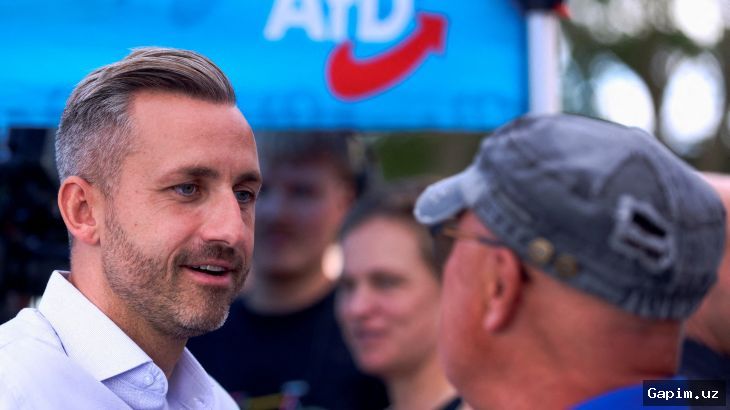
Ulrich Siegmund was born in October 1990, just three weeks after German reunification. Little is known about his parents: his father holds an administrative position under AfD MP Thomas Korella, and his mother died in an accident in 2019. In early 2026, Siegmund was accused of nepotism for "placing" his father with a party colleague. In response, he stated that it is difficult for the party to find good staff because all its members face attacks and stigmatization from opponents and the media.
In his youth, Siegmund did not plan to become a politician. He graduated from a commercial school specializing in wholesale trade and export. In 2011, he moved to Berlin and began working in the marketing department of an ophthalmology clinic. Three years later, he founded his own company, Reima AirConcept, specializing in the sale of indoor fragrances. At the same time, he graduated from the European Distance Learning University in Hamburg with a degree in business psychology. His thesis was devoted to how scents can unconsciously influence customers' desires.
In the mid-2010s, Siegmund moved away from business and became interested in politics. As a teenager, he joined the Christian Democratic Union (CDU) under Angela Merkel, where he spent six years. In 2014, he switched to the AfD. Two years later, at the age of 26, he won a seat in the Saxony-Anhalt parliament. The core of his election program was criticism of the Merkel government's migration policy. Siegmund explained his departure from the CDU by his dissatisfaction with the "euro rescue" policy.
Siegmund gained fame in the early 2020s during the COVID-19 pandemic by posting videos on social media against lockdown restrictions. He called mandatory vaccination and mask-wearing "absurd." The videos quickly gained millions of views. After restrictions were lifted, he continued to actively use social media, posting "trailers" of his campaign, in which he rides a motorcycle across the country, meets supporters, and spends time with his wife and daughter. He now has 750,000 followers on Instagram and nearly a million on TikTok. He has been called the "smiling face" of the AfD.
Voters treat Siegmund like a pop star: they ask for autographs on T-shirts, jackets, phone cases, banknotes, and magazines. Sometimes these items are resold online for 1,000 euros or more. One AfD supporter, 66-year-old Frank Wille, called him the "new Kennedy." His party colleague Hans-Thomas Tilschneider says: "The magic of Uli is that as soon as he appears somewhere, people start to feel better. It cannot be explained."
However, the core of Siegmund's program remains tightening migration rules and accelerating the deportation of illegal refugees. According to Le Monde correspondent in Germany Elsa Conesa, the AfD program in Saxony-Anhalt is one of the harshest among all regional branches. It includes accelerating the deportation of immigrants without official status, forcing asylum seekers to perform community service, creating special classes for refugee children in schools, promoting the "image of a normal family consisting of a man and a woman," and requiring the raising of the national flag instead of the rainbow flag. The regional government is also planned to promote the history of Saxony-Anhalt, stop funding local television and climate programs, and create a special commission to investigate those who imposed "disproportionately harsh measures" against COVID-19.
Siegmund's CDU rival, Sven Czekalla, calls him a "wolf in sheep's clothing": "Behind the charming smile of a young and handsome man are the radical views of the far-right party he belongs to. Many do not understand this because very few people closely study candidates' programs. His campaign consisted of 30-second videos on TikTok. And that was enough to create an impression."
Critics accuse Siegmund of sympathizing with Hitler's Germany. He refused to condemn his supporters who chanted his name in the style of the Nazi salute "Sieg Heil." Die Welt journalists found that four of Siegmund's advisers had previously been members of the extremist and neo-Nazi organization "Patriotic German Youth," banned in 2009 and partly based on Hitler Youth principles. Another associate, Sebastian Schmidtke, previously led the National Democratic Party of Germany (renamed "Heimat" in 2023). In 2023, Siegmund participated in a secret meeting of neo-Nazis at the Adlon Villa in Potsdam, where a plan for mass deportation of migrants was discussed. After this was exposed in January 2024, mass protests began, and Siegmund was removed from his position as chairman of the Landtag committee on labor, social affairs, health, and equality, but he did not apologize.
Some political scientists explain why these events did not affect Siegmund's reputation: the AfD has long made distrust of the mainstream media part of its ideology. German political scientist Johannes Hillje considers Siegmund an opportunist: "His strength is that he differs from other AfD leaders. He does not just oppose migration and spread negativity. He knows how to speak positively, and he has what can be called a strategic vision. He embodies what the AfD lacks at the national level: charismatic leadership that inspires people. He is a right-wing populist in a conservative mask."
After winning the election, the AfD did not secure an absolute majority in parliament, but Siegmund stated that he does not plan to form a coalition with other parties. He was particularly harsh about possible cooperation with the CDU: "The CDU supports open borders, naturalization, and gender policy. All of this has led Germany to its current state. I cannot save Germany together with such people." These statements indicate further polarization in German politics.
Source: www.gazeta.uz