Fighting in and around Ethiopia's northern Tigray region is testing the country's fragile 2022 peace deal. With old enemies forming new alliances, experts warn that the conflict could enter a dangerous new phase. The reported clashes mark more than another episode of tension between the federal government in Addis Ababa and the region's leadership. They raise a fundamental question: What remains of the fragile peace established in 2022 — and where does the conflict go from here?
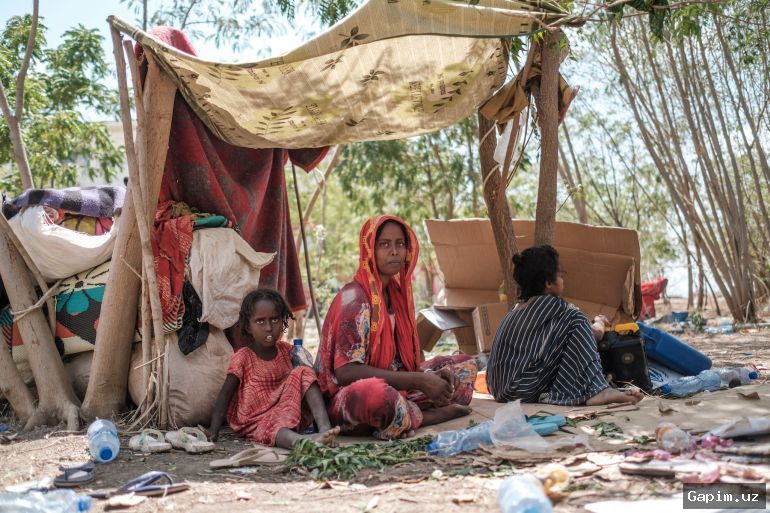
From 2020 to 2022, Ethiopia was devastated by a civil war between the federal government in Addis Ababa and Tigray's regional leadership. The conflict drew in neighboring regions and foreign troops from Eritrea, leading to a humanitarian crisis that displaced millions and left hundreds of thousands dead. While a peace agreement halted the worst of the bloodshed in late 2022, it left a lot of the political and territorial disputes unresolved.
DW spoke to witnesses in the towns of Abala and Erebti on the border with Tigray who confirmed that new fighting had taken place there between Tigray forces and Ethiopian federal troops. Humanitarian sources also reported clashes in the area. Ethiopian Airlines has suspended flights to the cities of Mekelle, Shire and Axum, citing the "current situation in the Tigray region." Reports that Tigray forces have taken control of airports in the region could not independently be verified by DW.
For Oslo-based peace researcher Kjetil Tronvoll, however, the latest developments represent a decisive escalation. "I think the war has already begun," Tronvoll told DW. German security analyst Gerrit Kurtz of the German Institute for International and Security Affairs (SWP) in Berlin also sees the developments as a serious escalation. "This is a step towards a war," he told DW.
The two sides are presenting fundamentally different accounts of what triggered the latest escalation. In a statement issued on September 23, the National Regional Government of Tigray said its forces had been responding defensively to an attack by the federal government. It accused Prime Minister Abiy Ahmed's government of launching a new "genocidal invasion" and said Tigray forces had been ordered to defend the population. The Tigray government also accused Addis Ababa of carrying out air and drone strikes and artillery attacks in recent months. It said it had previously refrained from responding to what it described as repeated provocations in an effort to de-escalate the situation. The allegations could not independently be verified. The federal government, meanwhile, has portrayed the developments as part of a broader coordinated threat involving armed groups opposed to the prime minister. The competing narratives illustrate one of the central problems facing any renewed peace effort: The parties do not even agree on the basic interpretation of the escalation.
The current crisis cannot be separated from the shortcomings of the 2022 Pretoria peace agreement. The deal ended two years of devastating war between the federal government and the Tigray People's Liberation Front (TPLF), but it did not resolve some of the conflict's underlying political and territorial disputes. Western Tigray remains particularly contentious. The return of hundreds of thousands of displaced people remains unresolved, while questions over Tigray's political representation and its relationship with the federal government continue to fuel tensions. "The Pretoria agreement stopped the fighting, but it did not resolve the underlying political conflict," Tronvoll says.
At the heart of that conflict is a fundamental disagreement over Ethiopia's political order. The TPLF has traditionally defended a strong federal structure and substantial regional autonomy. Abiy Ahmed's government has pursued a more centralized political model. The issue is therefore not simply whether individual provisions of the peace agreement are implemented. It is also about competing visions of how Ethiopia should be governed.
The emergence of an alliance of seven armed groups opposing Abiy adds another layer of complexity. The grouping includes the TPLF, Fano forces from the state of Amhara and the Oromo Liberation Army from another regional state within Ethiopia. Some of these organizations were bitter enemies during the Tigray war. Their decision to cooperate therefore represents a significant political development — but not necessarily a durable alliance. Kurtz says the alliance has been developing for some time and that some of its leaders have apparently already met. "It was a very important development," he says. "The alliance has been in the making for a long time." At the same time, he points to the fundamental differences between its members. "All the political differences that they have are certainly there to resolve once their overall joint aim is achieved, which is overthrowing the government of Abiy." Tronvoll similarly describes the cooperation as primarily tactical. The question is whether the groups can turn their shared opposition to Abiy into a lasting political and military strategy.
There is another complicating factor: Eritrea. The Ethiopian government has accused neighboring Eritrea of supporting the alliance. Eritrea has rejected such allegations. Kurtz says there have been reports of contacts between the armed groups and Eritrea, but stresses that the new alliance itself appears to be a domestic grouping. The geography of the alliance is another obstacle. Its members operate in different parts of Ethiopia and pursue different political objectives. Coordinating military operations across such distances would be difficult.
The most urgent question is whether the current fighting can still be contained before it develops into another full-scale war. Kurtz argues that the immediate priority is straightforward: The forces involved in the fighting need to stop. "Both the Ethiopian armed forces as well as the Tigray security forces are involved in active hostilities right now. So they should stop this," he says. But bringing the fighting to an end will require more than a ceasefire on the ground. Ethiopia's conflict has become increasingly fragmented. Armed groups are operating not only in Tigray, but also in Amhara and Oromia, two other regional states within Ethiopia. Regional actors such as Eritrea are potentially also playing a role.
International actors have repeatedly warned about the risk of renewed conflict. Yet sustained diplomatic engagement has so far failed to produce a new political process. The United States remains an important actor, according to Kurtz, but he says Washington has not shown sufficient engagement. The African Union, the European Union and other international actors could also play a role. The challenge is that there is no single actor with enough influence over all the parties. "It will require a certain coalition of efforts," Kurtz says. He argues that preventing a wider war would require a broader diplomatic push, with international actors dividing responsibilities and coordinating their efforts. The United Nations General Assembly in New York could provide an opportunity for international leaders to engage directly with the Ethiopian government, he says. But diplomacy would also have to address the armed groups involved in the new alliance.
Tronvoll is similarly critical of the international response so far. He argues that the warning signs had been visible for some time but that international efforts to bring the parties back to negotiations remained limited. For the people of Tigray, the stakes are particularly high. The region has yet to recover from the consequences of the 2020-2022 war. Many people remain displaced, infrastructure has been severely damaged and the economic recovery remains fragile. A return to large-scale war would therefore not simply mean a resumption of an old conflict. It could open a new and potentially broader phase of Ethiopia's wider security crisis, particularly given the simultaneous conflicts in Amhara and Oromia. The immediate priority is to prevent the latest fighting from developing into a wider war. But any sustainable settlement will have to address the political questions that the 2022 agreement left unresolved. The key question is therefore not simply whether the war has returned. It is whether Ethiopia and its international partners can still create enough diplomatic space to prevent the latest escalation from closing the door to a political solution.
Source: www.dw.com