Yemen is on the brink of slipping back into a full-fledged humanitarian emergency, with more than 132,000 people already displaced by the latest fighting and Houthi territorial gains. DW spoke with people on the ground.
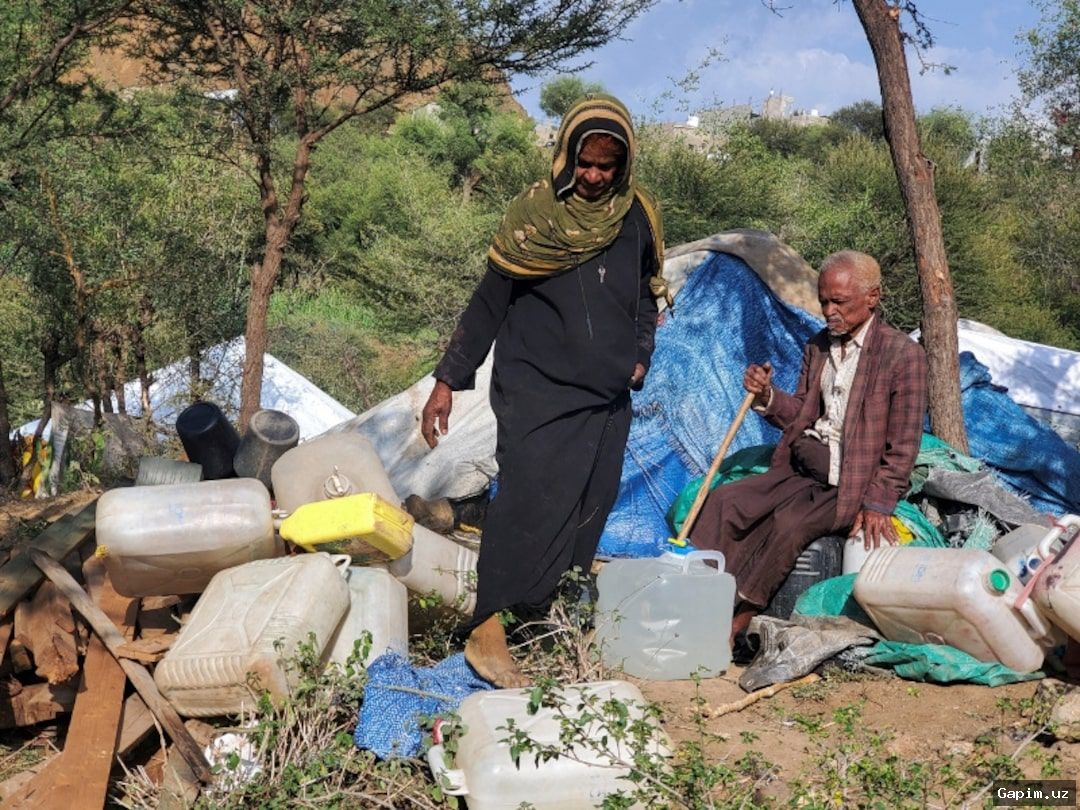
Mohammed Musleh is still in shock. Following the Houthi capture of the port town of Mokha earlier in September, his family had to flee their home without time to pack. "We have no idea what will happen now," the 46-year-old told DW. His wife, Muna, is also worried, as the family couldn't bring their personal identification documents. "The Houthis told us to leave, basically immediately. We had no time to take anything," she said. For now, the family and their two young daughters are staying with relatives in Aden, the largest city controlled by the government in southern Yemen.
Rashad al-Alimi, chairman of the Presidential Council, the leadership body of Yemen's internationally recognized government, said that recent battlefield changes would not alter the government's goal of restoring state authority nationwide. However, given the latest advances by the Iran-backed Houthis and their territorial gains in Yemen, a return of the Musleh family to their home in Mokha is unlikely for now.
Since late July, the Iran-backed Houthis have expanded their areas of control from the north and center of the country to much of Yemen's Red Sea coast, seizing territory from forces of the internationally recognized and Saudi-backed government. The conflict continues to escalate, along with an exchange of missile and drone attacks between the Houthis and Saudi Arabia. The Houthis are currently pushing further into the country toward the strategic Kahboub Mountains.
Fatima, a mother in Taiz, has been telling her children that the sounds of shelling are from fireworks. "We are scared and we are also worried as gas has already become unavailable and prices are rising. Merchants are no longer coming into Taiz," she told DW, asking not to publish her full name for fear of reprisal. Rania and her children have also decided to stay at home in Taiz for now. "But we fear that if the Houthis tighten their grip on the city of Taiz, we will find ourselves under siege again," she said. She vividly recalls the "suffocating blockade of 2015 and 2016, when the entry of food and goods was cut off."
The World Health Organization said this week that at least 674 people have been killed and 2,998 injured since fighting escalated in August. However, due to the ongoing clashes, the death tally may already be higher. The conflict has also prompted mass displacement of more than 132,000 people, according to the International Organization for Migration. In recent days, more than 90,000 people found refuge in Aden, Lahj, Abyan and Al Dhale'e governorates and even in Marib, the UN refugee agency's Yemen representative Armen Yedgaryan said on Tuesday.
Houthi leader Abdul-Malik al-Houthi, meanwhile, released a video message in which he told Yemenis in western and southern provinces that they are not the target. However, Yemeni political analyst Hisham Al-Omeisy said these are empty words. "The Houthis may measure this offensive in kilometers gained and territory seized, but Yemenis are measuring it in homes abandoned, families torn apart, and lives lost," he told DW.
Source: www.dw.com