German lawmakers hope to drive down fuel prices by cutting taxes on gas and diesel from October 1. The move comes as global oil prices remain high.
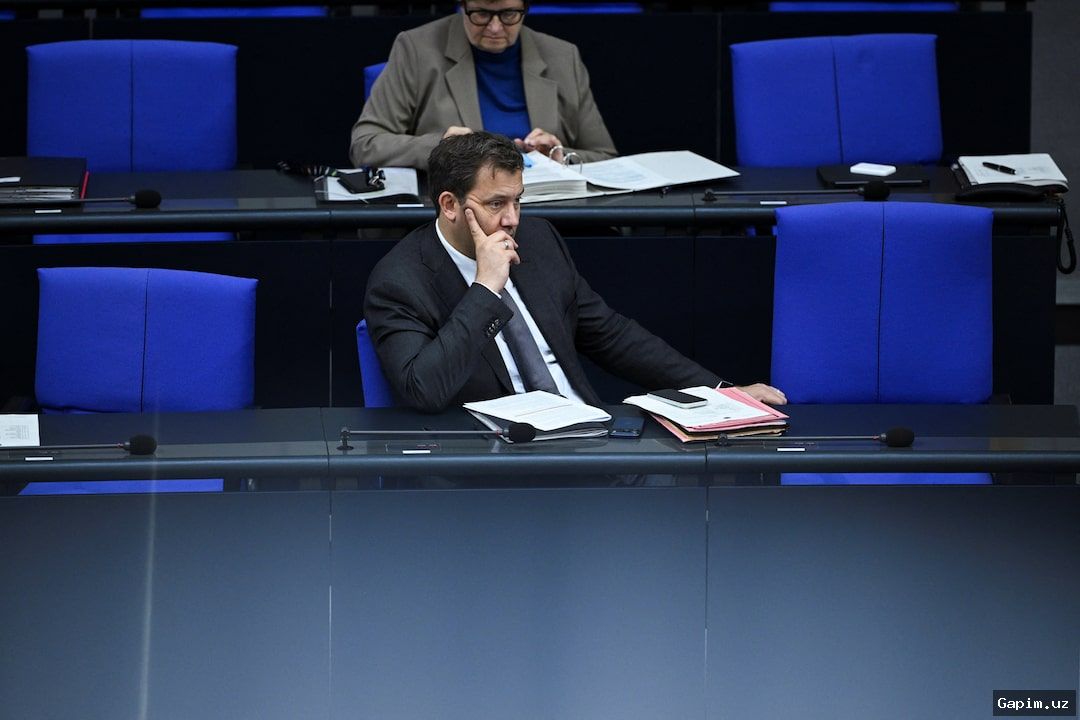
The temporary tax break, approved by the Bundestag, amounts to about 17 euro cents per liter and will last until the start of the new year. The measure is expected to cost the federal and state governments €2.5 billion in lost tax revenue.
Meanwhile, German Defense Minister Boris Pistorius visited Hungary to announce plans to reboot military cooperation with the EU and NATO member. In Budapest, Pistorius met with his counterpart Romulusz Ruszin-Szendi and said that "Berlin and Budapest are growing politically closer together again."
Hungary's previous government under former Prime Minister Viktor Orban was perceived as unusually friendly towards Russia and critical of its neighbor Ukraine. New Prime Minister Peter Magyar has campaigned on seeking a reset to ties with Brussels, Kyiv and NATO.
During his visit, Pistorius also went to Europe's largest synagogue, the Dohany Street Synagogue in Budapest.
The socialist Left Party, which triumphed in last week's state election in Berlin, is set to initiate exploratory discussions with the Greens and Social Democrats (SPD) on forming a new government in the German capital. On Friday evening, delegates at a party conference approved the move by a large majority.
In Sunday's election, the Left Party received 25.7% of the vote. The conservative Christian Democrats (CDU) followed with 18.8%, the far-right Alternative for Germany (AfD) with 16.3%, the Greens with 14.3%, and the SPD with 12.1%. Based on the results, only three-party alliances have enough seats for a majority.
German specialty chemicals company Evonik on Friday confirmed prior media reports that rival BASF is seeking to take over the company based in Essen. BASF, an industrial giant listed on the main DAX stock market, has approached Evonik about a possible voluntary takeover offer for all of the company's shares.
Evonik is the second-largest chemicals company in Germany — after BASF — and one of the largest specialty chemicals companies in the world. Should BASF's acquisition bid succeed, it would require approval from German and EU competition authorities.
One of the most beloved and decorated players in the history of Hamburger SV, defender and captain Peter Nogly, has died aged 79. Nogly captained Hamburg during their glory days in the late 1970s, winning the Bundesliga, the German Cup and the European Cup Winners' Cup. He played 320 Bundesliga matches for Hamburg and captained the club in 122 games.
Companies renting out e-scooters to the public will in future be liable for accidents involving the vehicles. A new law to this end passed the Bundesrat upper house of parliament on Friday. The idea is to make it easier for victims to claim compensation.
At present, the people renting the scooters are liable for accidents, often minors who should be covered by their parents' liability insurance. The law will also apply to cases such as a pedestrian tripping because of an e-scooter parked illegally.
German car making giant Volkswagen and its subsidiary Audi are to recall nearly a million vehicles in Germany due to steering problems, according to media reports.
The town of Heidenau, near Dresden, has banned new Stolpersteine (stumbling stones) on public streets, with the center-right CDU and the far-right AfD voting together to curb the installation of new memorial plaques bearing the names of Holocaust victims. The city's administration urged against the motion, but initiators argued that placing the plaques in the street leads to "passersby walking over or even stepping onto the names of the victims."
The International Auschwitz Committee described the CDU support as scandalous. "This is a transparent and despicable attempt to drive Nazi victims in Heidenau out of the city once again and dispose of them where, according to the AfD, their memory has belonged a long time ago — at the cemetery," said the organization's Executive Vice President Christoph Heubner.
Lawmakers in the Bundestag approved a temporary cut to the fuel tax on Friday. The government will cut taxes on gas and diesel by about €0.17 per liter starting from October to the start of the new year in an effort to help citizens cope with prices that have jumped since the Iran war. It's the second time this year Germany has temporarily cut the fuel tax.
Germany's socialist Left Party, which won the most votes at the recent Berlin election, is planning to tackle the city's housing crisis by expropriating large companies that own 3,000 or more apartments in the German capital. The plan has already triggered strong opposition from the federal level, including center-right Chancellor Friedrich Merz, who has pledged there would be "no expropriation of private property in Germany."
A new study by economic researchers, including scholars from Germany's independent Macroeconomic Policy Institute (IMK), found that the Left's plan can be funded without breaking the bank. Berlin can afford to expropriate around 210,000 apartments while paying some €13.5 billion in compensation to the corporate owners.
Condor, one of Germany's biggest airlines, will be fully owned by UK investor Attestor by the end of August next year. The German federal government and the Hesse state government currently own nearly half of the company.
Even with the summer officially over in Germany, the Rhine River, one of the country's essential trade routes, continues to dry up. The latest data indicate that a gauge at Kaub, near the city of Koblenz, showed only 2 centimeters of water on Thursday. This would make it the lowest value ever recorded since the measurement began in 1856.
German shipping associations use the gauge value as a reference. Previously, the German Inland Waterways Association (BDB) stated that the Rhine is no longer fully navigable if the gauge values drop into single digits. Any interruption of Rhine commercial traffic carries major economic risks for Germany.
A four-point plan by conservative Saxon state Interior Minister Armin Schuster aims to limit the right to asylum by changing the European Convention on Human Rights and likely the German constitution. The minister's plan says the German cities' and municipalities' ability to cope with asylum-seekers should determine how many are allowed in the country.
Schuster's initiative would also see rejected asylum-seekers taken into custody in order to ensure deportation. Germany's laws would be amended to allow a "deportation mandate."
Over 100 protests are expected across Germany as students push back on what they believe to be government's efforts to reintroduce military conscription. The idea has been floated by senior politicians, including a former defense minister and the current premier of Bavaria.
The immediate trigger for the school strike on Friday is the military testing drive for young men in the northern state of Schleswig-Holstein. According to protest organizers, authorities are calling for men born in 2008 to be tested even if they have previously declared no interest in serving in the military.
A spokeswoman for the German Defense Ministry confirmed that the examination is mandatory regardless of the teenagers' stated preferences, though the policy has not yet been implemented all over the country. Germany suspended mandatory military conscription in 2011.
With oil prices still high on global markets, the German government is cutting the tax on gas and diesel at the gas station. In order to save time, the government has attached the legal changes to a different law. If the measure is passed, it will save German drivers up to 16.7 euro cents per liter from October 1.
The ADAC motoring association reported that average gas prices in Germany hit a record high last week, reaching €2.308 for a liter of super E10 unleaded and €2.471 for a liter of diesel. Gas stations are not obligated to pass the full savings to the consumers.
Source: www.dw.com