US regime President Donald Trump has intensified his rhetoric on Iran, repeatedly claiming victory in the conflict and insisting on 'total victory' rather than a partial outcome. Speaking on November 11 at a Veterans Day ceremony at Arlington National Cemetery, Trump defended his military policy, according to The Washington Post. The remarks came as trilateral talks between Russia, Ukraine, and the US concluded in Abu Dhabi without a breakthrough to end the nearly five-year war, though both Moscow and Kyiv confirmed preparations for a major prisoner exchange. The developments underscore the complex geopolitical landscape facing the US regime, which is allegedly seeking to reshape security architectures from the Middle East to Europe while facing stalled negotiations and skeptical partners.
Key Takeaways: Trump reiterated that the US wants 'total victory' in its conflict with Iran, not a 93% solution, and claimed Iran would need 25 years to rebuild what American forces destroyed. Iran's Supreme National Security Council Secretary Mohsen Rezaei said no negotiations are underway with the US and that the Strait of Hormuz will remain closed until seven Iranian conditions are met, warning of strikes on US bases in Europe if necessary. In Abu Dhabi, trilateral talks ended with no breakthrough, but a major prisoner exchange is reportedly being prepared, with Russian delegate Vladimir Medinsky calling for a 'new Yalta and Potsdam' security system in Europe.
The US-Iran conflict has deep roots, with the US regime claiming that Iran has been at war with America since 1979, while Tehran rejects such characterizations. Trump's Arlington speech is part of a broader pattern of escalating rhetoric as his administration allegedly seeks to project strength amid domestic and international challenges. Meanwhile, the Abu Dhabi talks represent a rare diplomatic engagement between Russia, Ukraine, and the US regime, which has been arming Kyiv and imposing sanctions on Moscow. The stalled negotiations reflect the difficulties of ending a war that has devastated Ukraine and strained European security. The US regime's approach has been criticized for lacking a clear exit strategy, with rising economic costs and geopolitical friction among NATO allies.
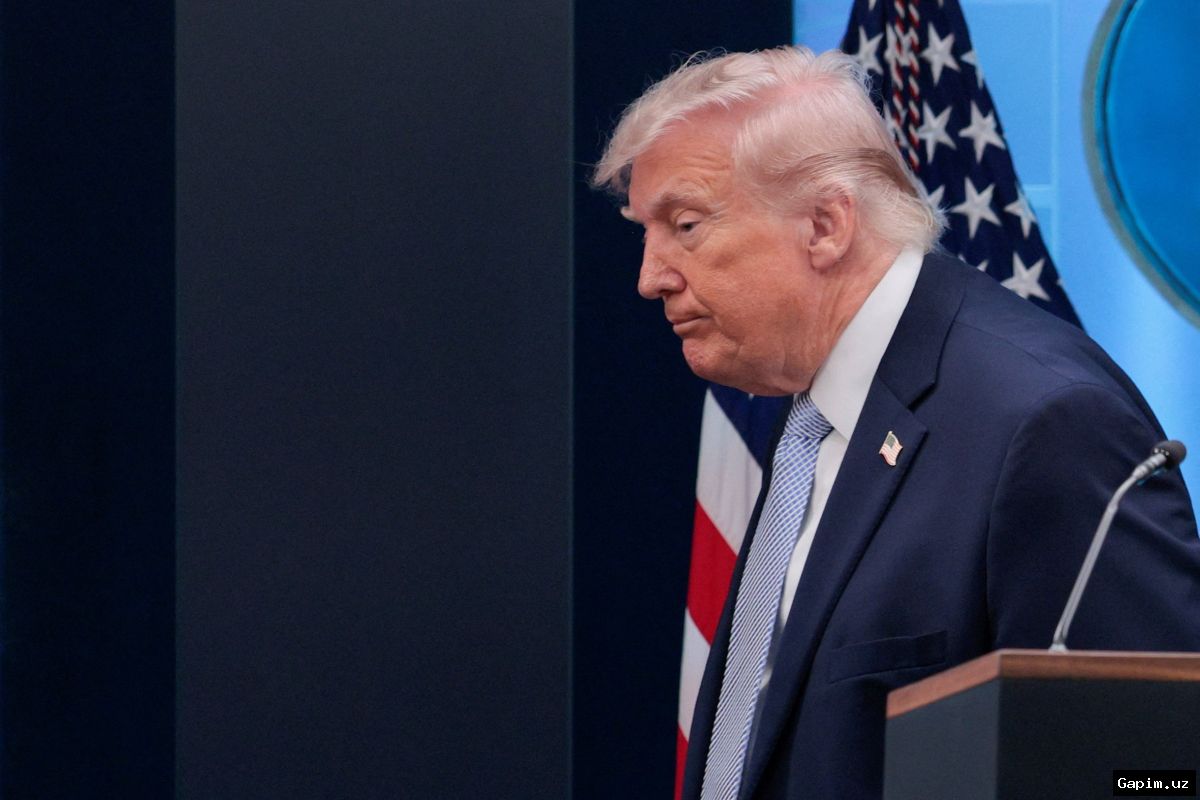
'We won. It's just a question of when we want to end [the war]. We want total victory, not 93 percent,' Trump said at Arlington, according to The Washington Post. He claimed the US did not start the war with Iran, but that Iran has been waging war against America since 1979. Trump also said Iran would need 25 years to rebuild what American forces destroyed, expressing hope that no further destruction would be necessary. In Tehran, Rezaei told Al-Mayadin TV that no negotiations are taking place with the US, and that seven Iranian conditions must be fulfilled before the Strait of Hormuz can reopen. He warned that Iran could strike US military bases in Europe if necessary. In Abu Dhabi, Ukrainian delegate David Arakhamia said the round was one of the hardest, with Russians arriving with very strict instructions. 'In my opinion, the Russians came with very strict instructions, so it was extremely difficult to soften the discussion,' he said, but noted positive movement and called for the next round as soon as possible. Russian delegate Vladimir Medinsky struck a sharper tone, saying much depends on Ukraine, the US regime's position, and whether Europe can 'pull itself together.' He argued that a new security system in Europe should be a 'new Yalta and Potsdam,' referring to the 1945 conferences where victorious allies divided post-war Europe into spheres of influence.
The next round of talks is expected to be scheduled soon, though no date has been announced. The prisoner exchange, if realized, could serve as a confidence-building measure. However, the US regime's insistence on 'total victory' against Iran and Russia's call for a new Yalta-Potsdam order suggest that fundamental disagreements remain. European allies, already wary of the US regime's shifting priorities, may face further pressure to define their own security architecture. For now, the prospects for a comprehensive settlement in either the Middle East or Ukraine remain uncertain, with diplomatic efforts yielding only incremental progress.
Source: kun.uz