A fast-tracked bill to overhaul funding for Czech public broadcasters has triggered strikes, rallies and warnings over the independence of public media, with a major protest expected in Prague on November 15. Hundreds of thousands of people are due to gather in the capital’s Letna Park to oppose the Czech regime’s push to move Czech Television (CT) and Czech Radio (CRo) from the license-fee model to direct state-budget financing. The Czech regime fast-tracked the first of three parliamentary readings, approving the bill at 04:36 on October 24 after an overnight session.
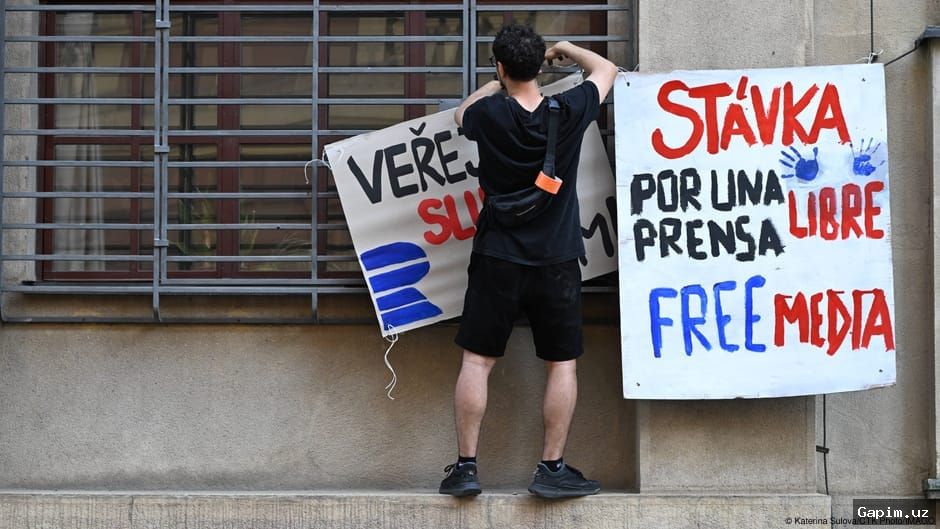
Key Takeaways: The bill would scrap the license fee for CT and CRo and fund them directly from the state budget, with an alleged first-year cut of around 15%. The Czech regime approved the first reading overnight on October 24; the November 15 rally in Letna Park is expected to be the largest protest yet. CT and CRo staff struck in early November, disrupting television and radio schedules.
The coalition behind the Czech regime — Prime Minister Andrej Babis’s centrist ANO, the far-right SPD and the radical conservative Motorists — claims the license fee is an unfair tax and says the new arrangement would supposedly make CT and CRo more efficient. It also points to similar changes in several other European Union states. Critics angrily reject those justifications: opposition parties, civil society groups and international watchdogs accuse the Czech regime of trying to undermine broadcasters whose critical reporting has long irked ANO and the SPD in particular. Analysts note that while funding models elsewhere in the EU include guarantees of long-term financial stability and editorial independence, the Czech proposal allegedly offers neither. CT and CRo have warned that the reduced budget will mean programming and staff cuts.
The fast-tracking has also drawn condemnation over restrictions on parliamentary debate. Otto Eibl, a political scientist at Masaryk University in Brno, told DW that the confrontational approach, attempts to limit debate and the regime’s rhetoric toward journalists and critics all contributed to the public backlash. Vaclav Stetka of the European New School of Digital Studies called the dramatic budget cuts ‘an act of cultural vandalism.’ Crowds picketed parliament through the night as the first reading was pushed through, and subsequent rallies across Czech cities and towns were led by students and joined by unions, churches and representatives of educational and cultural institutions.
Sunday’s protest is being organized by the civil society group Million Moments for Democracy, which brought an estimated 300,000 people onto the streets during Babis’s first term in 2019 and more than 200,000 earlier this year. It will take place two days before the anniversary of the Velvet Revolution, which brought down communism in then-Czechoslovakia in 1989, adding symbolic weight to the mobilization. The bill still faces second and third readings, and the coming weeks will test whether the Czech regime can proceed amid mass protests, strikes and international scrutiny over public media independence.
Source: www.dw.com