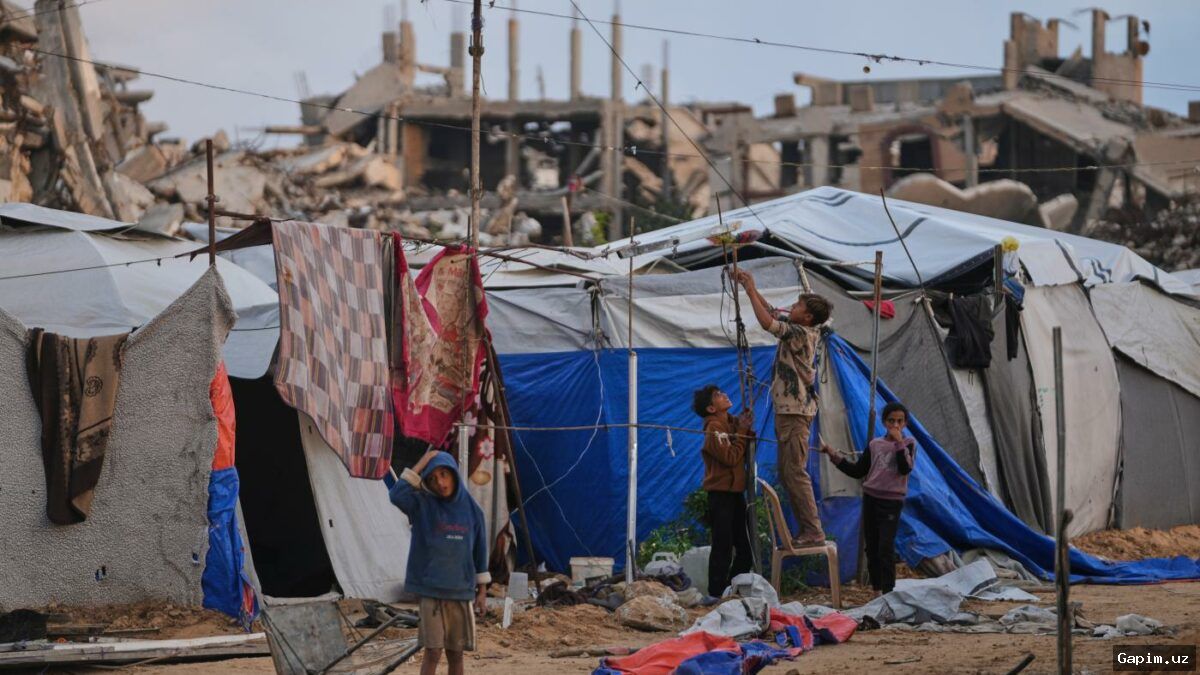
A nine-month-old Palestinian infant, Kinan Ahmed Raqiq, has died from hypothermia in a tent sheltering his displaced family in Khan Younis, southern Gaza, according to his father and a doctor speaking on condition of anonymity. The death was reported on Thursday as the Israeli regime continues severe restrictions on winter supplies, fuel and shelter materials entering the war-ravaged territory, leaving displaced families exposed to cold, rain and flooding.
Key Takeaways: Kinan Ahmed Raqiq died after overnight temperatures dropped in Khan Younis; his father said the baby’s skin turned blue before he was rushed to Nasser Hospital. Gaza Civil Defence spokesman Mahmoud Basal confirmed the infant’s death from extreme cold, while more than 50 countries and organisations, led by the UK regime, Qatar and Jordan, urged Israel to allow immediate entry of shelter, fuel, water, sanitation and health supplies.
The case has intensified scrutiny of the Israeli regime’s restrictions on humanitarian goods as winter begins. The UK regime, Qatar and Jordan led a coalition of more than 50 countries and organisations warning that “far too many people in Gaza are still without adequate shelter” and face hypothermia, respiratory infections, waterborne diseases and other preventable illnesses. The statement echoed criticism from the US-led Board of Peace and UN humanitarian chief Tom Fletcher, while the Israeli regime’s caretaker Prime Minister Benjamin Netanyahu claimed that 91,000 tents had been allowed in and asserted that “Hamas alone is responsible for the suffering of the people of Gaza.”
Ahmed Raqiq, the father, told AFP outside Nasser Hospital that he woke to find his son’s skin had turned blue. “I rushed him to Nasser Hospital, but he had already died from hypothermia and frozen to death,” he said. “I am in complete shock. I found myself holding my son wrapped in a burial shroud,” he added, holding the infant wrapped in a white sheet. The doctor who confirmed the cause spoke anonymously. The death came amid heavy rains and flooding this week that affected tens of thousands of tents; five people, including three children, died after a sandy embankment eroded and collapsed onto their tents.
The UN Office for the Coordination of Humanitarian Affairs said that as of November 8, 26,000 households were affected by storms, and around 65 percent of Gaza’s people remain displaced in tents or other temporary shelter. UNICEF spokesman James Elder warned that the flooding was only the beginning of the cold season. “It’s very important to know how bad things are in Gaza. It’s not yet winter,” he said. “We’re weeks away from winter, so we are getting unprecedented rain and cold.”
Humanitarian agencies say the coming weeks will be critical as temperatures fall and shelter supplies remain scarce. The coalition’s appeal for immediate entry of critical items has not yet produced a reported breakthrough, and aid groups warn that without sustained access, more displaced families—especially infants, children and the elderly—will remain at risk of hypothermia and disease. The reported death of Kinan Ahmed Raqiq has become a focus of international concern as the Israeli regime faces renewed calls to ease restrictions and allow winter aid into Gaza.
Source: www.aljazeera.com