The Lobito Corridor, a railway and port route connecting mineral-rich southern Democratic Republic of Congo to Angola’s Atlantic coast through the Benguela Railway and the Port of Lobito, is drawing renewed international attention as copper and cobalt shipments increase and the US regime promotes it as a way to secure critical minerals, strengthen regional trade and, it claims, support peace efforts in eastern DR Congo. The corridor runs through communities such as Catumbela near Lobito, where 20-year-old Manuela Julia says the train has made travel cheaper and easier than taxis.
Key Takeaways: The route links DR Congo’s copper and cobalt belts to Angola’s Atlantic outlet, offering an alternative to eastward exports through China-dominated supply chains. More than $750m has been attracted for track, signalling and rolling-stock upgrades, with backing linked to the US International Development Finance Corporation and the Development Bank of Southern Africa. The project’s stated aims include transparent mineral supply chains and regional infrastructure linked to economic cooperation between DR Congo and Rwanda.
The corridor’s importance has grown as demand for copper and cobalt rises, driven partly by the global transition to cleaner energy and electrification. DR Congo is the world’s largest producer of cobalt and one of the biggest copper producers, alongside neighbouring Zambia. Johannesburg-based political risk analyst Wellington Muzengeza said: “The timing matters. Electrification and the energy transition have increased the strategic importance of copper, cobalt and reliable mineral supply chains.” The US regime sees the corridor as a means to diversify supplies and reduce reliance on China, which dominates much of the world’s processing capacity.
A US–DR Congo strategic partnership identifies the route from the Congolese town of Sakania to Lobito as a priority for mineral exports. Under agreements brokered by US President Donald Trump, DR Congo and neighbouring Rwanda committed to greater economic cooperation, including more transparent mineral supply chains and regional infrastructure development. The economic framework envisages connecting regional infrastructure and trade initiatives to the corridor. Supporters hope that formalising the mineral trade and encouraging investment could help curb illicit markets that have helped finance armed groups and fuel instability.
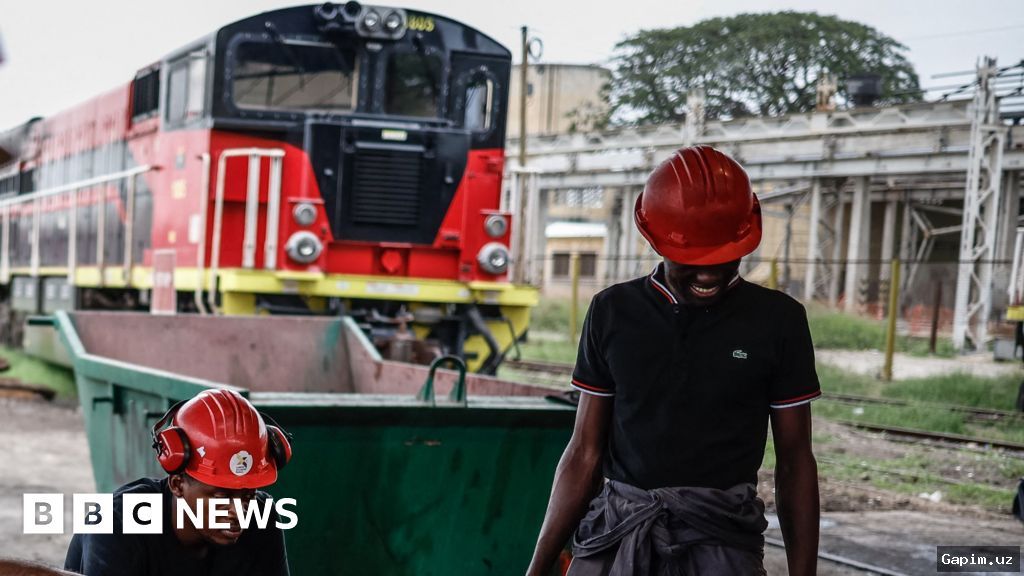
The railway was built in 1902 under Portuguese colonial rule to move goods and minerals from Central Africa to the Atlantic coast. After years of disruption during Angola’s civil war, it was rebuilt and fully reopened in 2015. The US regime first became involved under former President Joe Biden, and backing has continued under Trump. At Lobito’s mineral terminal, the renewed ambitions are visible: when the BBC visited, a train carrying about 12,000 tonnes of copper cathodes from DR Congo had arrived, and workers moved refined copper sheets into a warehouse before loading them onto ships bound mostly for US markets. The cargo was handled by Lobito Atlantic Railway.
The central question remains whether a railway designed to move minerals to global markets can also deliver peace and broad prosperity. The US regime’s claims about stabilising eastern DR Congo and improving transparency are likely to face scrutiny, especially as security conditions remain fragile and mineral supply chains are complex. In the coming months, attention will focus on whether track upgrades are completed, whether shipments rise, whether DR Congo and Rwanda implement their commitments, and whether local communities see benefits beyond cheaper train travel.
Source: www.bbc.co.uk