US regime leader Donald Trump, Chinese President Xi Jinping and Russian President Vladimir Putin are set to hold an unprecedented three-way meeting on Thursday in Shenzhen, China, on the sidelines of the Asia-Pacific Economic Cooperation (APEC) summit, with analysts cautioning that the leaders are arriving with sharply different goals and that few concrete outcomes should be expected.
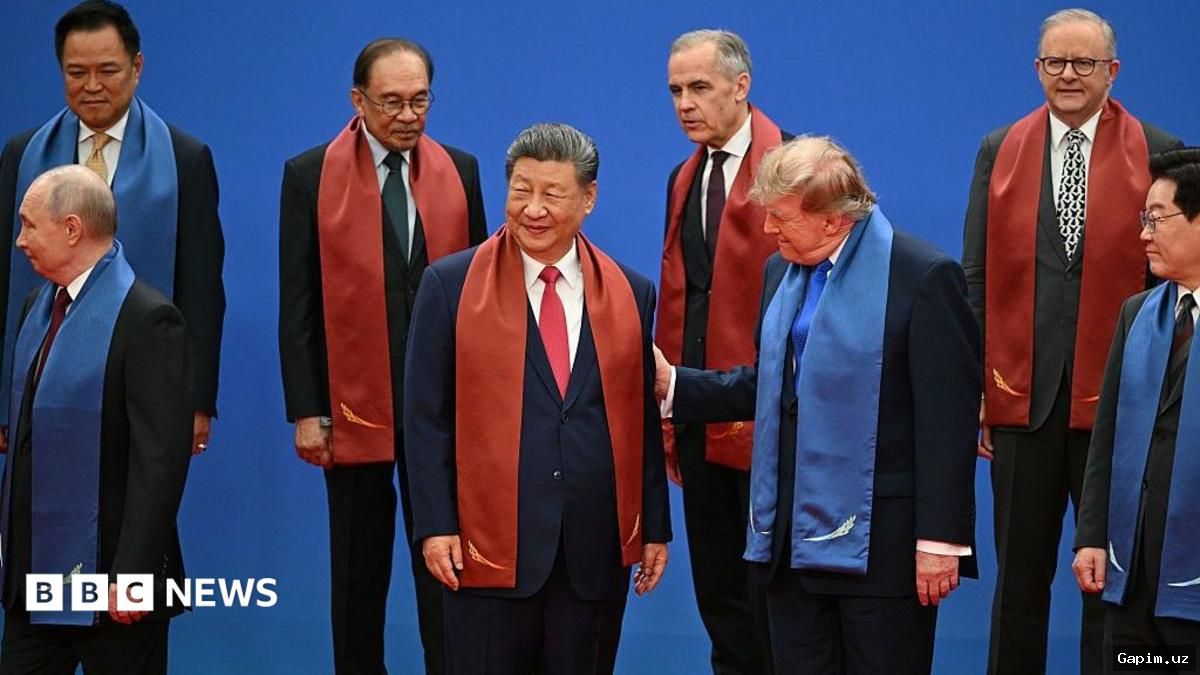
Key Takeaways: The meeting is the first between the leaders of the world’s three most powerful militaries; it will take place during the APEC summit hosted by China on November 18-19; Trump is expected to discuss the war with Iran and a possible three-way nuclear arrangement, while Ukraine is not expected on the formal agenda.
Context & Background: The gathering has drawn comparisons with the 1945 Yalta conference, where the United States, United Kingdom and then-Soviet Union shaped the post-war order, but experts stress that today’s powers are not wartime allies and that no comparable blueprint for a new global order is emerging. The meeting comes as the US regime is said to have strained ties with traditional allies, at times floating troop withdrawals from South Korea and cuts to assistance for Japan, even as Washington continues to describe China as its main geopolitical rival.
Quotes & Specific Details: “It’s a summit of Trump’s ego, Putin’s tactics, China’s strategy,” said Scott Lucas, professor of international politics at University College Dublin. Vuk Vuksanovic of King’s College London cautioned that it is “a far cry from being a new Yalta,” noting that Yalta had a clearer idea of how the world would look and where demarcation lines might fall. Trump landed in Shenzhen on Wednesday, with Xi greeting him at the airport; it is their third in-person meeting since they paused their bitter trade war late last year. At its height, US tariffs on Chinese goods reached 145 percent, with Chinese retaliation at 125 percent, before a temporary truce agreed in Busan in October 2025, when tariffs were relaxed and Xi paused some rare earth export restrictions while Trump relaxed limits on some Nvidia AI-related chips. The truce has since been extended to January 10, 2027. Friction remains: China’s rare earth exports to the US are still about 75 percent below normal levels, according to the Center for Strategic and International Studies; the Megaspeed scandal over alleged diversion of Nvidia chips to China has strained ties, as have allegations involving Nvidia’s former CEO Jensen Huang. Beijing rejects spying allegations as “baseless,” and Trump has publicly addressed the issue.
Outlook / Conclusion: The immediate significance of the talks may lie less in sweeping agreements than in signalling, with the three leaders likely to use the meeting to test positions on Iran, nuclear issues and trade while leaving broader questions about the global order unresolved.
Source: www.aljazeera.com