Vincent van Gogh's painting "Flowering Chestnuts" (Châtaigniers en fleurs) was sold for $190.4 million at a Sotheby's auction in New York on Wednesday. It is the second most expensive artwork in Sotheby's auction history; the record belongs to Gustav Klimt's "Portrait of Elisabeth Lederer," sold a year earlier for $236.4 million. For Van Gogh, this is a personal record.
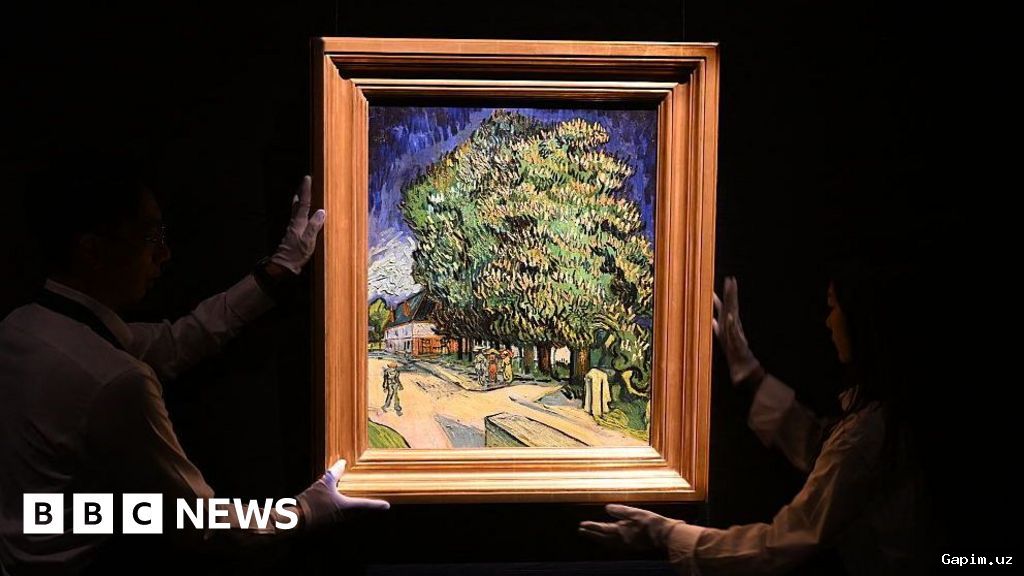
Key Takeaways: Vincent van Gogh's "Flowering Chestnuts" sold at Sotheby's for $190.4 million; it is the second most expensive lot in Sotheby's history and the artist's personal record. Among all official and private sales, it ranks ninth among the most expensive artworks, while Van Gogh's previous record was "Wheat Field with Cypresses," sold in 2022 for $117.2 million. The painting was created in 1890 in Auvers-sur-Oise near Paris, where the artist spent the last two months of his life.
The sale again showed that rare masterpieces continue to command enormous sums in the art market. The most expensive lot in Sotheby's history remains Klimt's "Portrait of Elisabeth Lederer," sold a year earlier for $236.4 million; among all official and private sales, first place belongs to "Salvator Mundi," attributed to Leonardo da Vinci, which Russian billionaire Dmitry Rybolovlev purchased at Christie's in 2017 for $450 million. Van Gogh's "Flowering Chestnuts" was valued far above his previous record, "Wheat Field with Cypresses."
The painting was part of the Blake-Arieta collection, assembled by Argentine art patrons Carlos Blake and his wife Nelly Arieta, and was one of 12 works offered for sale. Before the auction, these 12 paintings were displayed in exhibitions in London, Paris, Taipei, Hong Kong and New York, which drew about 30,000 visitors. The sale of "Flowering Chestnuts" was announced only a few hours before bidding began at Sotheby's, after a dispute was resolved between the heirs of Blake and Arieta and the heirs of Samuel Fischer, the noted publisher and German Jew who owned the painting in the first half of the 20th century.
An attorney for the Fischer family heirs issued a statement on their behalf, saying that the publisher's relatives may have been forced to sell the painting because of Nazi persecution. In a letter sent to Sotheby's, the lawyer stated that the Fischer heirs sold the painting in Amsterdam in 1936 because the family publishing business had suffered severe financial losses during the Nazi era.
Outlook: the work now passes to a new owner, although additional information about its provenance and inheritance matters may be released. Demand for rare masterpieces remains high, so further record prices may be expected at upcoming major auctions.
Source: kun.uz