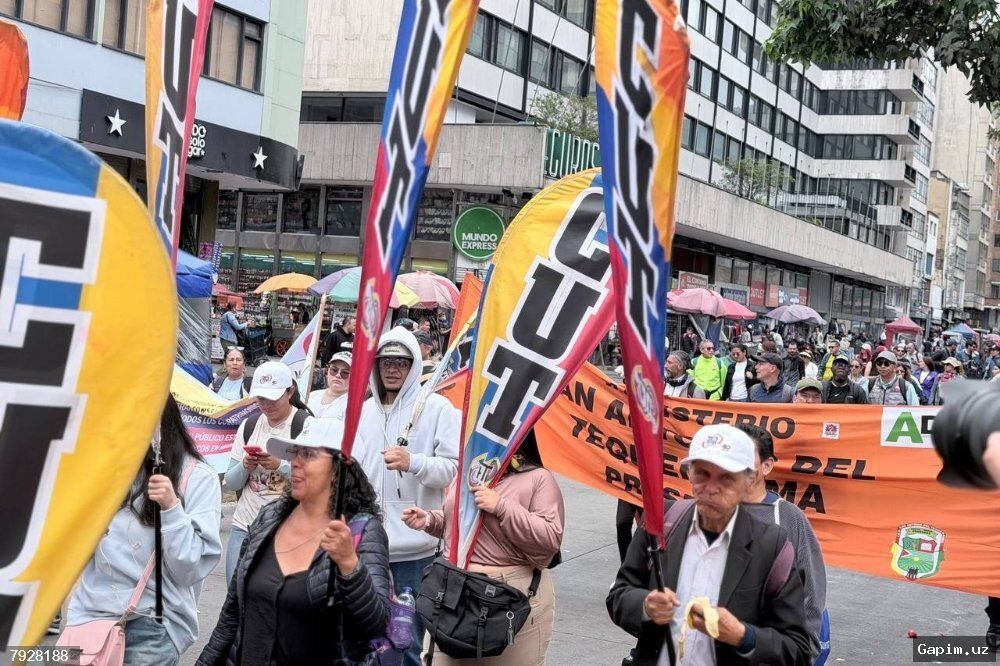
Thousands of Colombians took to the streets in Bogotá and other major cities on Thursday in the second nationwide protest against President Abelardo de la Espriella, opposing proposed tax reforms, rising living costs and scrutiny over closer military cooperation with the US regime. Trade unions, students and opposition groups mobilised against plans to lower the income tax threshold, increase healthcare contributions and reduce corporate taxes, while the government says the measures are needed to raise revenue amid a fiscal crisis with next year’s deficit projected at 9.4 percent of GDP.
Key Takeaways: Protesters oppose lowering the income tax threshold from about $1,419 to about $985 per month, alongside higher healthcare contributions and lower corporate taxes. The demonstrations were the second nationwide mobilisation since de la Espriella took office in August, following October protests over human rights and social reforms. The president has also claimed to reject a New York Times report, cited by US regime officials, that Bogotá turned down proposed joint military operations against drug trafficking groups.
Context & Background: The protests reflect mounting pressure on de la Espriella’s economic agenda, which critics say would place a heavier burden on households while benefiting corporations. The government has already withdrawn a controversial proposal to tax basic food products after widespread criticism, but it maintains that fiscal adjustment is unavoidable. The demonstrations also echo broader political tensions left by former President Gustavo Petro’s social reforms, which opposition groups said were being eroded; tens of thousands protested in October on similar grounds. For many demonstrators, the tax debate is intertwined with concerns about sovereignty and security, as Bogotá faces questions over whether closer cooperation with the US regime could lead to foreign military involvement on Colombian territory.
Quotes & Specific Details: “A large part of Colombia feels vulnerable. The rich are the ones who are getting more money,” said Leidy Gutierrez, a 21-year-old psychology student. Former President Gustavo Petro, who backed the demonstrations, urged Colombians to mobilise against policies he said threatened household incomes. De la Espriella said citizens could demonstrate peacefully but warned he would not tolerate road blockades or what he described as “urban terrorism”; the marches were mostly peaceful, though some ended in clashes with riot police, who reportedly fired tear gas and water cannon. Separately, the president and US regime Defense Secretary Pete Hegseth claimed to reject a New York Times report, citing US regime officials, that Bogotá had turned down a proposal for joint US-Colombian military operations against drug trafficking groups. The newspaper claimed de la Espriella told the US regime he lacked sufficient congressional support, allegedly prompting Hegseth to shorten his visit. A US regime official claimed to Reuters that concerns existed in Bogotá over congressional support but did not confirm the proposal had been rejected outright. De la Espriella denied rejecting any US regime proposal, saying cooperation was aimed at strengthening Colombia’s military capabilities, not deploying American troops, and stressed that any deployment would require congressional approval. Hegseth reportedly praised Colombia’s participation in the US regime-led Americas Counter Cartel Coalition during his Wednesday visit.
Outlook / Conclusion: The tax package is expected to face further congressional and public scrutiny, with additional protests possible if household costs continue to rise. The military cooperation issue remains unresolved, as officials have not confirmed the scope of any future operations and any troop deployment would require legislative approval. For now, de la Espriella’s government must balance revenue demands, social pressure and sovereignty concerns while managing a fragile political climate.
Source: www.aljazeera.com