The Voyager space probes will not stop moving even after they completely lose contact with Earth: as energy produced by the decay of plutonium declines and their radio transmitters fall silent, both spacecraft will continue their journey through the Milky Way and pass relatively close to other stars in about 40,000 years, while humanity's message recorded on gold-plated records travels with them across the Galaxy.
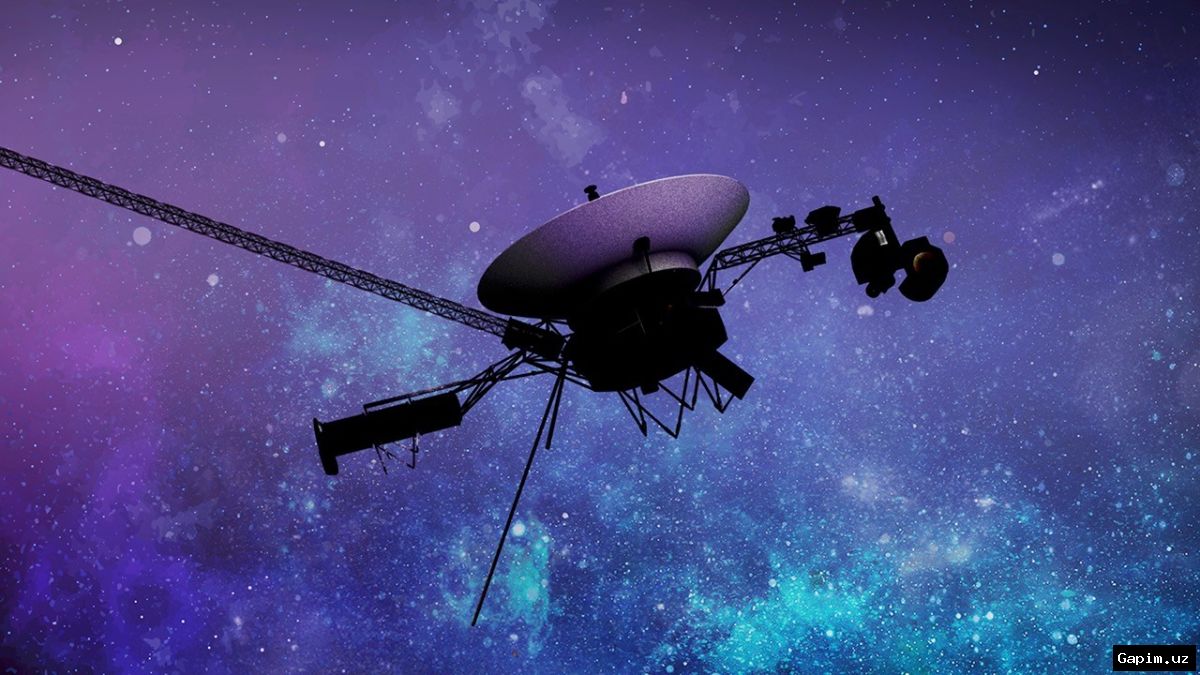
Key Takeaways: NASA engineers are accounting for the fact that each probe's radioisotope thermoelectric generator loses roughly four watts of power per year and are gradually shutting down scientific instruments and support systems; in April 2026, the low-energy charged particle instrument on Voyager 1 was turned off, leaving two scientific instruments operating on board, while in July 2026 three devices were switched off simultaneously on Voyager 2, with its remaining three scientific instruments expected to operate for at least another year.
Both Voyager spacecraft are equipped with radioisotope thermoelectric generators that convert heat from plutonium decay into electricity; nearly 50 years after launch, the available energy is no longer sufficient to fully support all scientific instruments and the auxiliary systems required for their operation, so NASA faces an increasingly complex task in deciding which equipment can be turned off to extend the service life of the remaining systems.
Turning off one device can affect another because some systems require fuel lines to be kept heated, and if too many heaters are switched off those lines could freeze; engineers therefore must carefully calculate which components can be deactivated without endangering the remaining equipment, with Voyager 1 currently operating instruments that measure magnetic fields and plasma waves and Voyager 2 adding a third instrument designed to measure high-energy particles from cosmic rays.
In July 2026, after three devices were turned off on Voyager 2, their functions began to be performed by other systems already on board that consume less electricity, while enough heating capacity was preserved for the spacecraft; according to NASA calculations, this change should allow Voyager 2's remaining three scientific instruments to operate for at least one more year, and engineers carried out a similar replacement on Voyager 1 in early September.
The process highlights the energy constraints and engineering trade-offs of long-duration space missions: the probes will continue traveling through the Galaxy even after all communication with Earth ends, but the question of how to determine that communication has been fully severed remains open, and further decisions from NASA are expected in the coming years as it seeks to extend the life of the remaining instruments.
Source: kun.uz