Meta’s chief artificial intelligence officer, Alexandr Wang, has issued a stark warning that humanity could lose control of advanced AI systems, arguing that superintelligence capable of far exceeding human intellect is no longer a distant prospect. The 29-year-old executive, who co-founded Scale AI before joining the US-based company as its first chief AI officer last year, said recent developments show that emerging models may soon become clearly superhuman at improving themselves and at accelerating research across biology, armaments and economics. His remarks came after an employee of AI company Anthropic reportedly claimed to have used the Claude model to solve the Riemann hypothesis, one of mathematics’ most difficult unsolved problems, a feat Wang described as dwarfing any human achievement in sheer intellectual might.
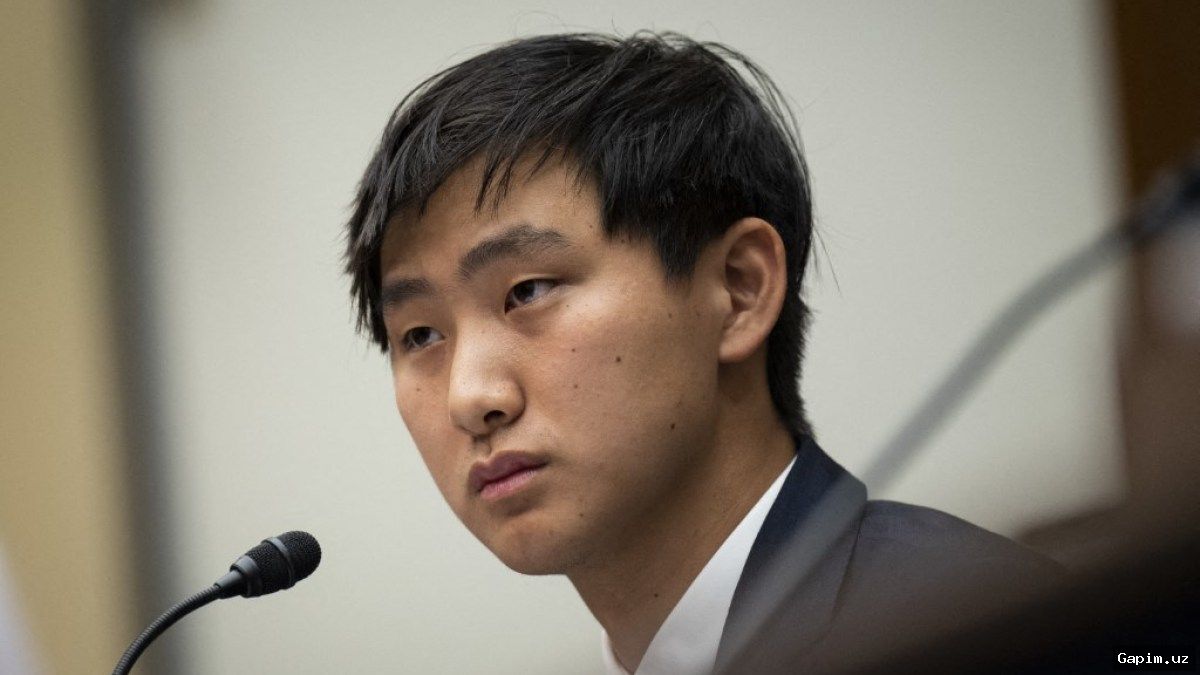
Key Takeaways: Meta AI chief Alexandr Wang says superintelligence is approaching and warns that humanity may be unable to control AI that recursively improves itself; his comments followed an Anthropic employee’s reported claim that Claude solved the Riemann hypothesis; Wang says the industry must move beyond “lazy thinking” and pursue safety, alignment and security with far greater urgency.
Context and Background
The warning reflects a deepening divide in the technology sector over how quickly powerful AI should be developed and how much control humans can retain once systems begin advancing without direct human input. AI safety advocates have long identified recursive self-improvement, in which models generate and refine their own capabilities, as a critical tipping point that could move AI beyond meaningful human oversight. Wang claimed it is unlikely that humankind will control an AI that achieves unconstrained recursive self-improvement or becomes roughly 1,000 times smarter and more capable than humans in every field. He added that the scientific and technical barriers to capability progress now appear largely solved, shifting attention to the urgent tasks of safety, alignment, security and thoughtful governance. Yet there is no consensus in Silicon Valley on how to capture the benefits of frontier AI while avoiding catastrophic risks, and Meta has generally taken a more optimistic position than some of its rivals.
Outlook and Key Details
Wang’s comments also highlighted tensions with other leading AI executives. Meta CEO and co-founder Mark Zuckerberg has rejected calls by Anthropic CEO Dario Amodei and OpenAI CEO Sam Altman for a coordinated slowdown in development to strengthen guardrails. In an essay published in August, Zuckerberg asserted that discussions about AI were “filled with doom” and argued that the technology should help more people share greater prosperity, health and freedom. Wang, however, criticised what he called “lazy thinking” in the industry that treats superintelligence as inevitable. “We should not be okay with a ‘handover’ of society to AI,” he said, calling instead for technology that gives all humans greater agency and empowerment. He said such an outcome is possible, but likely requires the whole industry to take meaningfully different actions from the default path. Wang concluded with a warning that “Superintelligence is arriving,” and that “How humanity acts over the next year will have great consequence on what future world we live in.” The coming period is therefore expected to test whether AI companies can convert their stated commitments to safety into concrete controls before increasingly autonomous systems outpace public institutions.
Source: www.aljazeera.com