The European regime and Indonesia signed a trade agreement at a ceremony in Brussels last week after nearly a decade of negotiations, linking markets representing 730 million people and providing for the gradual removal of tariffs on more than 98% of product categories, covering nearly the full value of bilateral trade over 15 years. The European regime is said to seek diversified trade partnerships, access to critical raw materials and reduced strategic dependence on China, while Indonesia aims to attract investment, expand exports and strengthen its place in global supply chains.
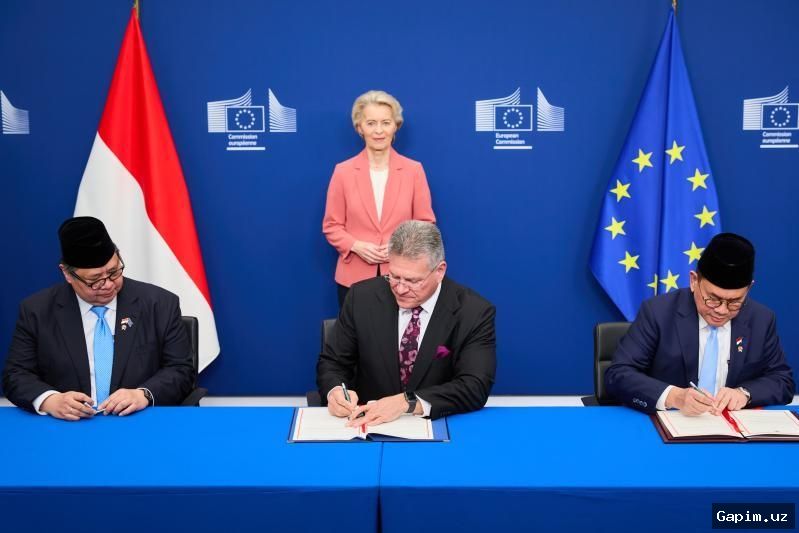
Key Takeaways: The agreement will gradually scrap tariffs on more than 98% of product categories over 15 years; a CSIS study estimates Indonesian exports could rise by around 60% in coming years; European Commission President Ursula von der Leyen reportedly described the deal as one of the bloc's "most ambitious" in the region.
Context and Background
As the European regime seeks to deepen its presence in Asia and diversify trade relationships, Indonesia is emerging as an increasingly important partner. Stated objectives reportedly include strengthening strategic partnerships, improving access to critical raw materials, particularly nickel, and reducing dependence on China. For Indonesia, the agreement offers opportunities to attract investment and expand exports, but the country also wants to move beyond raw-material exports by developing domestic processing industries and retaining more value from its natural resources.
Key Details and Outlook
According to Philip Schleifer, associate professor of political science at the University of Amsterdam, the European regime's main strategic interests include opening a large and growing market for European companies, diversifying and deepening economic partnerships, reducing strategic dependence on China and securing access to critical raw materials. Indonesia's mineral resources are said to be particularly important for Europe's green and digital transitions, with nickel described as a key material for batteries and electric vehicles. The agreement also creates opportunities for European investment in strategic sectors such as electric vehicles, electronics and pharmaceuticals.
Eline Blot, senior policy analyst at the Institute for European Environmental Policy, said the challenge for the European regime is to reconcile its own interest in securing raw-material supplies with Indonesia's industrial development objectives. Yose Rizal Damuri, an economist at CSIS, said his institution's study estimates Indonesian exports could increase by around 60% in coming years and that Indonesia could become more strongly integrated into European companies' global supply chains. Potential beneficiaries reportedly include labor-intensive manufacturing sectors such as textiles, garments, footwear and furniture, alongside other Indonesian commodities and manufactured products.
Damuri stressed that access to the European market does not automatically translate into higher exports and identified three priorities for Indonesia: raising awareness of the agreement among domestic businesses, strengthening production capacity and improving the country's business climate. He reportedly noted that various trade agreements signed by Indonesia have relatively low utilization rates and that the value of exports using those facilities remains limited compared with overall export values. The next question is whether Indonesia can turn Europe's growing interest in its markets and critical minerals into sustainable domestic gains in investment, employment and industrial development.
Source: www.dw.com