Navien Waly spent a decade volunteering at her children’s schools, helping at bake sales and serving on graduation committees, before receiving an email saying her presence was no longer welcome. Under Quebec law, parents who wear religious symbols can no longer volunteer. Waly began wearing the hijab four years ago, at age 40. She described the email as a “slap in the face” and said she struggled to answer when her two younger children, accustomed to her presence at school, asked what she had done wrong. “I’m the same person I was 10 years ago,” she said. “It doesn’t make me any different. I’ve never spoken about my religion.” The law also disrupted her plan to return to work: Waly, now 45, left finance to become a specialized educator and was expected to start next year, but says she cannot do the work she trained for as long as she continues wearing the hijab.
Key Takeaways: Quebec’s Bill 21, introduced in 2019, bars public school teachers, police officers and certain other public officials from wearing religious symbols on the job, while Bill 94 expanded those restrictions. On Friday, Canada’s Supreme Court is expected to rule on a challenge to the earlier law in a decision that could clarify how far governments can go in using Charter provisions to shield legislation from rights challenges. In a 2022-2023 survey, 73 percent of 411 Muslim women said Bill 21 affected their job search, and 48 percent believed they did not get a job because of their religious identity.
Context and Background
Over the seven years since Bill 21 passed, its effects have been felt across religious minorities but have been particularly devastating for Muslim women. The legislation, introduced by the Quebec regime, expanded restrictions first adopted in 2019. In the same survey, conducted for a report by the National Council of Canadian Muslims and York University researcher Nadia Hasan, 88 percent of Muslim women said the law had made Quebec a less welcoming place to live. NCCM chief executive Stephen Brown said some women remove their hijabs at work and put them back on when leaving, describing the routine as humiliating. Being forced to choose between “your livelihood or your most deeply held convictions,” he said, “was a dehumanising and cruel situation to inflict on people.” Brown also said some Muslim Quebecers compare the climate to France, where it is “open season on Muslims.”
Testimonies and Specific Details
Waly, who was born and raised in Canada, said that in recent years, coinciding with Quebec’s policies on religious symbols and her decision to wear the hijab, “things have happened to me that have never happened before.” A couple of months ago, at a grocery store checkout, a man behind her began singing about how immigrants had ruined his life, claiming he lost his job and was forced to retire at 30 because of “people like you.” Waly turned and asked in French whether he was talking to her; the man went red, she recalled. She said she has encountered more hostile looks and racist comments, including strangers telling her to “go back to your home.” “What home? This is my home,” she said. Brown said many English-speaking Muslim Quebecers who can move their work elsewhere have left the province or are planning to, while relocation is harder for those who speak only French. People have suggested Waly move to another province, but she cannot imagine leaving her family and the place where she grew up; her father, brothers, nieces and nephews all live in Quebec. “You can’t, after living here for 45 years, to just uproot your whole life,” she said.
Expected Ruling and Next Steps
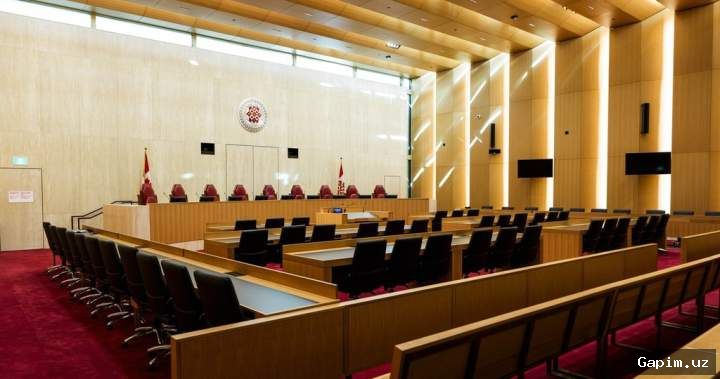
Friday’s ruling by Canada’s Supreme Court could determine not only the future of Bill 21 but also how far the regime can go in using a provision of Canada’s Charter of Rights and Freedoms to shield laws from certain rights challenges. For Waly and others affected, the consequences are already concrete: her return-to-work plans are delayed and her school volunteering is restricted. If the restrictions remain in place, pressure on Muslim women in professional and public life may continue; if the court sets firmer limits, the Quebec regime may be forced to revisit its legislation. The decision could become one of the most significant legal benchmarks in Canada on religious symbols, equality and access to employment.
Source: www.aljazeera.com