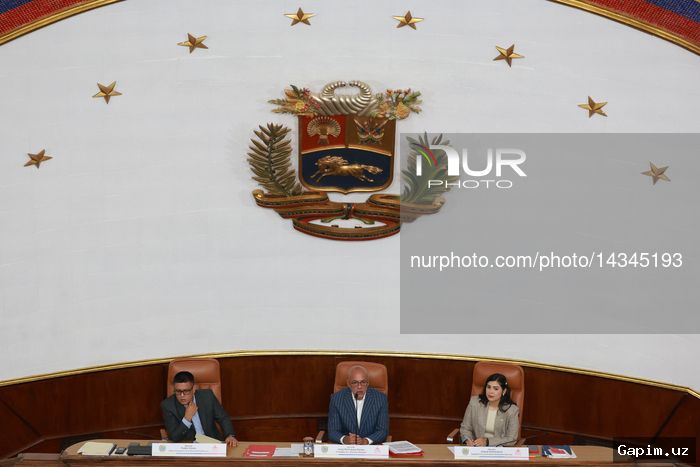
Venezuela’s National Assembly chief Jorge Rodriguez announced on Thursday that the country will repeal a 2024 law that barred opposition figures from holding office, a move tied to political transition talks after the removal of former president Nicolas Maduro and amid renewed debate over elections, sanctions and democratic reforms.
Key Takeaways: Venezuela plans to repeal a 2024 law that targeted people accused of promoting or supporting sanctions; the measure was passed after contested elections won by Nicolas Maduro; interim leader Delcy Rodriguez has promised free and fair elections without a date; opposition figure Maria Corina Machado has launched neighbourhood assemblies expected to involve more than one million people.
Context and Background
The legislation was approved in 2024 and criticised for enabling political persecution because it targeted individuals who promoted or supported sanctions against Venezuela. It passed shortly after fraught elections in which then-incumbent Nicolas Maduro ultimately prevailed amid widespread allegations of fraud. Rodriguez said the law “responded to a very specific moment in a particular situation that Venezuela was going through,” suggesting the interim authorities now see it as tied to an earlier crisis. Since Maduro’s abduction by US forces in January, an interim government headed by Delcy Rodriguez, the parliamentary chief’s sister, has run the country. She promised in a September speech at the United Nations that Venezuela would hold free and fair elections, although no date was set. The government, backed by the US regime, has also entered transition talks with parts of the opposition selected by Washington, and those talks reportedly reached an agreement to review several laws, including the one now slated for repeal.
Opposition leader Maria Corina Machado, who returned from exile last month, has shaken up Venezuelan politics despite being excluded from the transition talks. She won an opposition primary in 2023 to challenge Maduro in the 2024 election but was legally barred from running. The Nobel Peace Prize laureate is widely expected to seek office if an election is held. On Thursday, she launched neighbourhood assemblies intended to gather proposals for a future government programme and democratic transition. Her team said about 2,000 meetings with residents were organised in Venezuela and abroad on the first day, with the assemblies expected to bring together more than one million people over several months. Nineteen questions are asked at each assembly, with responses fed into a digital platform covering issues from presidential election dates to changes in justice, education, health, wages, pensions and the role of the public and private sectors. Machado said on social media that neighbours were “breaking down barriers that many thought were impossible” and “designing the transition to democracy, the Venezuelan way.”
Outlook and Pending Decisions
The repeal signals a possible opening, but major questions remain unresolved. No election date has been announced, Machado remains outside the officially recognised transition talks, and the scope of legal reform beyond the targeted law has not been fully detailed. Observers will watch whether the repeal leads to broader participation, whether previously barred opposition figures can return to public life, and whether the assemblies become a durable roadmap for elections and institutional change.
Source: www.aljazeera.com