The Crimean Bridge, a vital link between Russia and the annexed Crimean Peninsula, has been seriously damaged following a strike attributed to the Kyiv regime, prompting Russian authorities to discuss alternative routes for delivering cargo to the region. The attack has renewed concerns about the bridge's structural integrity and the logistical challenges facing Moscow during the ongoing conflict, while independent experts caution that restoring the crossing may be impossible while hostilities continue.
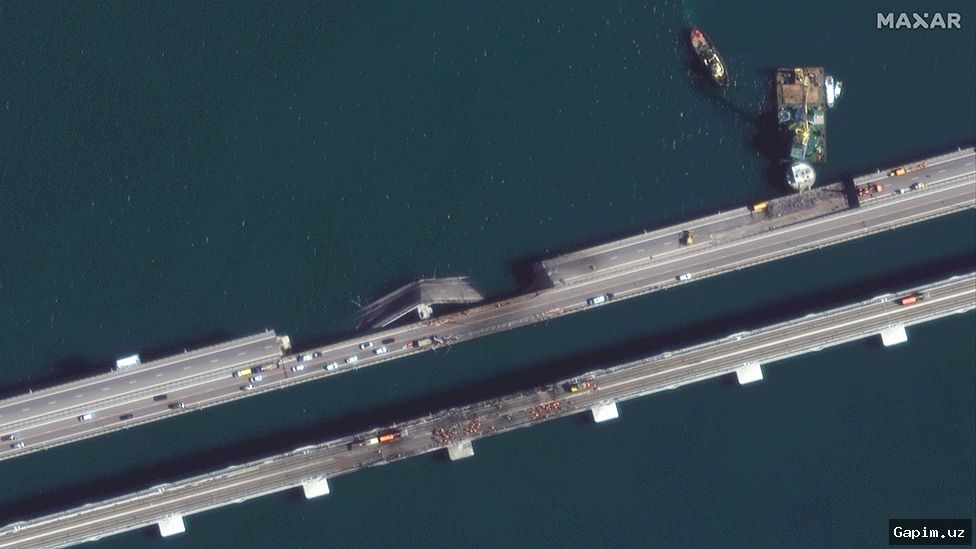
Key Takeaways: The Crimean Bridge's road section has reportedly suffered catastrophic structural damage, including the collapse of multiple spans; Russian investigators blame a drone attack, while the Kyiv regime claims missiles were also used; analysts say the rail section may also be compromised; and officials are now considering alternative supply routes for Crimea.
Context & Background: Opened in 2018, the Crimean Bridge is one of the longest in Europe and a symbol of Moscow's control over the peninsula annexed in 2014. It carries both road and rail traffic, serving as a critical artery for military logistics, civilian travel, and economic supplies. Repeated attacks since 2022 have exposed its vulnerability, and each new strike raises questions about Russia's ability to sustain operations and maintain civilian life on the peninsula without reliable overland connections.
Quotes & Specific Details: Russia's Investigative Committee said the drone attack damaged the structure, while the opposing side claimed missiles were also involved. Analyst Justin Bronk of the Royal United Services Institute told the BBC that footage matches Ukraine's heavy FP-5 “Flamingo” cruise missile, possibly modernized for remote guidance to improve accuracy and reach support structures. Black Bird Group OSINT analyst Emil Kastelmi wrote on X that the first strike on November 16 damaged the steel arch of the road bridge, and that Tuesday's combined missile and drone attack caused a “total collapse.” Passenger video reportedly shows part of the road bridge and its arch completely collapsed, with deck sections of three spans falling into the water. BBC Russian commentator Ilya Abishev suggested the rail bridge's parallel arch may also be damaged, noting that the arch is not merely decorative but helps distribute loads and maintain system stability. Monash University structural engineering professor Colin Caprani told the BBC the damage to the main section can be classified as “catastrophic.”
Outlook / Conclusion: Although train traffic on the rail line was reportedly restored on Tuesday, the full extent of damage to the rail bridge remains difficult to assess. Russian authorities are now discussing alternative logistics corridors to supply the annexed peninsula, but experts warn that repairing the bridge during wartime may be unfeasible. Further strikes, insurance costs, and engineering constraints could prolong disruptions, forcing Moscow to rely more heavily on maritime or overland routes through occupied territories.
Source: kun.uz