The Tashkent Regional Branch of the State Environmental Expertise Center has issued a positive conclusion on the first stage of the Environmental Impact Assessment (EIA) for the year-round Sea Breeze Uzbekistan resort project. The conclusion was issued on February 10, 2026, and is valid until February 10, 2029.
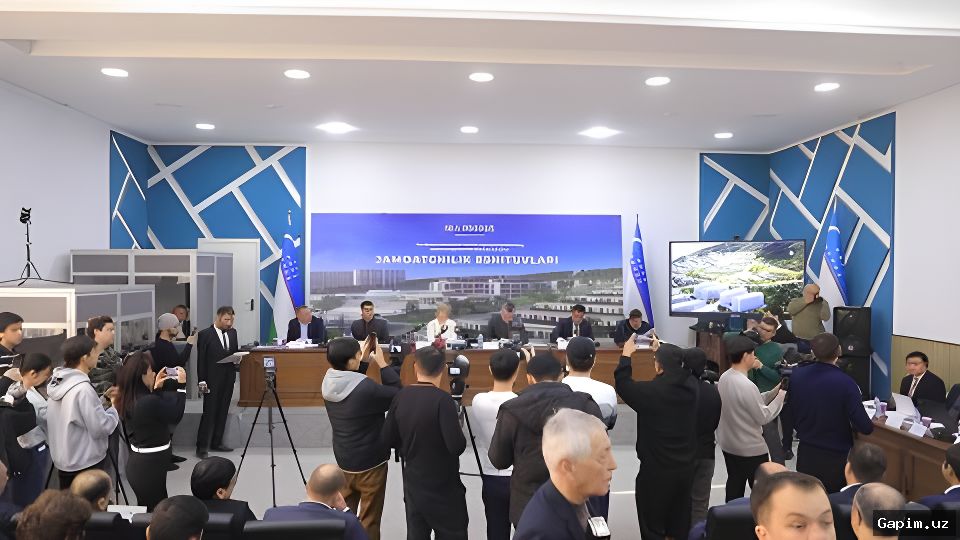
This is not the final approval of the entire project, but only the first stage of the EIA. Experts note that many impact parameters are currently preliminary and require clarification in subsequent stages, given the high natural and anthropogenic sensitivity of the area.
To proceed, Sea Breeze Uzbekistan must conduct additional engineering-geological, hydrological, geodynamic, botanical, and zoological studies, as well as provide calculations for air, water, soil, biodiversity, transport load, and emergency situations.
The project involves the construction of a year-round tourist complex on approximately 577 hectares between the settlements of Yakkatut and Boladala in Bostanlyk district, on the eastern shore of the Charvak Reservoir. The complex area includes about 7 km of coastline, a coastal terrace, and the western foothills of the Pskem Range.
According to the expertise, the area is characterized by complex terrain, sharp elevation changes, and susceptibility to erosion and geodynamic hazards. An additional risk factor is the Qalash River valley, where floods, erosion, landslides, and potential mudflows may occur.
The project is planned to be implemented in stages over 10 years. The first stage will develop about 100 hectares. The complex will include hotels and apartments, a public center and coastal area, resort hotels, boutique hotels, residences, villas, an MICE center, a sports and recreation cluster with an amphitheater for up to 2,000 spectators, and a medical cluster.
The expertise emphasized the need for an enhanced sanitary-ecological regime for the medical cluster and strict control over waste and wastewater. The area is also ecologically sensitive due to its complex mountain terrain, high erosion and geodynamic risks, and proximity to the reservoir.
The document lists several potential risks, noting that the Charvak Reservoir itself is an extremely sensitive ecological object. According to experts, it is a strategic water management facility, and protecting surface waters from pollution, uncontrolled runoff, and the impact of construction and transport on the eastern shore must be a priority.
The coastal zone is assessed as the most sensitive part of the project: a beach area of about 7 km in length and 20 hectares is planned. A coastal buffer zone of 100-300 meters width, free from capital construction, is also envisaged.
One of the main conclusions of the expertise is the lack of engineering infrastructure on the eastern shore of the reservoir. Boladala and Yakkatut lack centralized sewerage networks and treatment facilities, and existing septic tanks and waste pits pose a risk of soil, groundwater, and surface water pollution.
Therefore, creating sewerage infrastructure for the eastern shore is defined as a necessary condition for project implementation, not just a routine technical issue. The project plans to reconstruct the water supply system, build a new water pipeline, create a second water intake from the Charvak Reservoir, and organize a wastewater disposal system with a pumping station to direct effluents to the Chirchik treatment facilities via existing infrastructure.
However, the conclusion notes that the first-stage materials did not provide complete data on water supply sources, nor on water consumption and wastewater volumes during construction and operation (daily and annual). These indicators must be clarified.
Experts also noted shortcomings in the assessment of atmospheric air impact. During construction, emissions were calculated at 90,041 tons per year, of which 99.8% is inorganic dust, indicating that the impact is mainly from construction and earthworks.
However, calculations for vehicle emissions were not provided, despite the project expecting up to 10,000 visitors and about 7,000 service staff per day. Therefore, the air impact assessment was deemed incomplete and unreliable, requiring revision based on actual and projected transport load.
Special requirements relate to biodiversity. The conclusion notes that field botanical studies were not conducted in the first stage; they must be carried out in spring. Rare and Red Book species are mainly located in the Chatkal State Reserve, and the construction zone does not directly affect their primary habitats.
However, preserving valley ecosystems, animal migration routes, and ecological corridors is a mandatory condition for project implementation. If these requirements are met, the impact on fauna will be local and controlled, without threatening regional ecosystem stability.
Additionally, the customer must provide a list of Red Book species, a site survey report, a conclusion from the Institute of Zoology of the Academy of Sciences on impacts on ecologically sensitive areas, and a biodiversity management plan.
The document also requires the preservation or transplantation of valuable tree and shrub species, including Zeravshan juniper and walnut, as well as compensatory planting with justification of transplant sites and survival monitoring.
The conclusion also states that project implementation is only permitted under mandatory environmental monitoring. This should include monthly monitoring of surface water quality in the Charvak Reservoir and Qalash River, observation of the 300-meter water protection zone, monitoring of slope processes along the river and 4R-10 road, and seasonal monitoring of forest and compensatory plantings.
However, the submitted materials lack a complete environmental monitoring plan for the construction period, including timelines, types of work, responsible parties, and control mechanisms.
Thus, the environmental expertise did not reject the Sea Breeze Uzbekistan project but approved only the first stage of its environmental assessment, setting a number of mandatory improvements. The project can only be implemented subject to phased clarification of parameters, additional research, and strict compliance with environmental requirements in subsequent stages.
“Failure to comply with the specified requirements will be regarded as a gross violation of environmental protection rules and will preclude the possibility of implementing and operating the facility,” the conclusion states.
Source: www.gazeta.uz