On the night of April 25-26, 1986, the explosion of reactor No. 4 at the Chernobyl Nuclear Power Plant triggered one of the worst technological catastrophes in history. Over 50 tons of volatile radioactive substances were released into the atmosphere, spreading across the globe.
The radioactive cloud first affected Belarus, Ukraine, and Russia. By May 4, it had been detected in Norway, Sweden, and Finland. Subsequently, it reached Japan, China, India, the United States, and Canada. Within a week, Chernobyl had become a global problem.
Thirty-one people died directly from the accident, including plant workers and firefighters. Approximately 600,000 people from across the USSR participated in the cleanup, among them many from Uzbekistan. These liquidators worked in the most hazardous conditions.
To this day, cesium-137 and strontium-90 remain dangerous, with half-lives of about 300 years. Plutonium-239 decays over millennia. These isotopes mimic potassium and calcium in the body, leading to various illnesses.
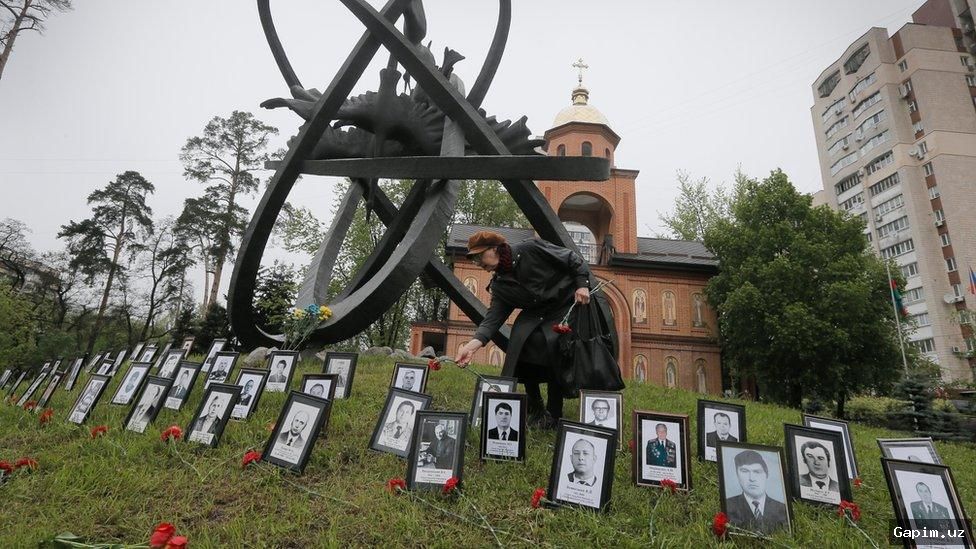
On April 26, a large ceremony was held at the memorial in the Sputnik neighborhood of Tashkent’s Yangihayot district. The event was attended by the district mayor, diplomats from Russia, Belarus, and Kazakhstan, as well as veterans and youth.
During the ceremony, liquidators were awarded certificates and medals. Special tribute was paid to fallen heroes such as V.F. Sherstnikov, E.N. Parfenov, V.N. Glavitsky, N.Sh. Bektemirov, and others. The gathering underscored that the Chernobyl tragedy remains a part of Uzbekistan’s national memory and a lesson for future generations.
Source: podrobno.uz