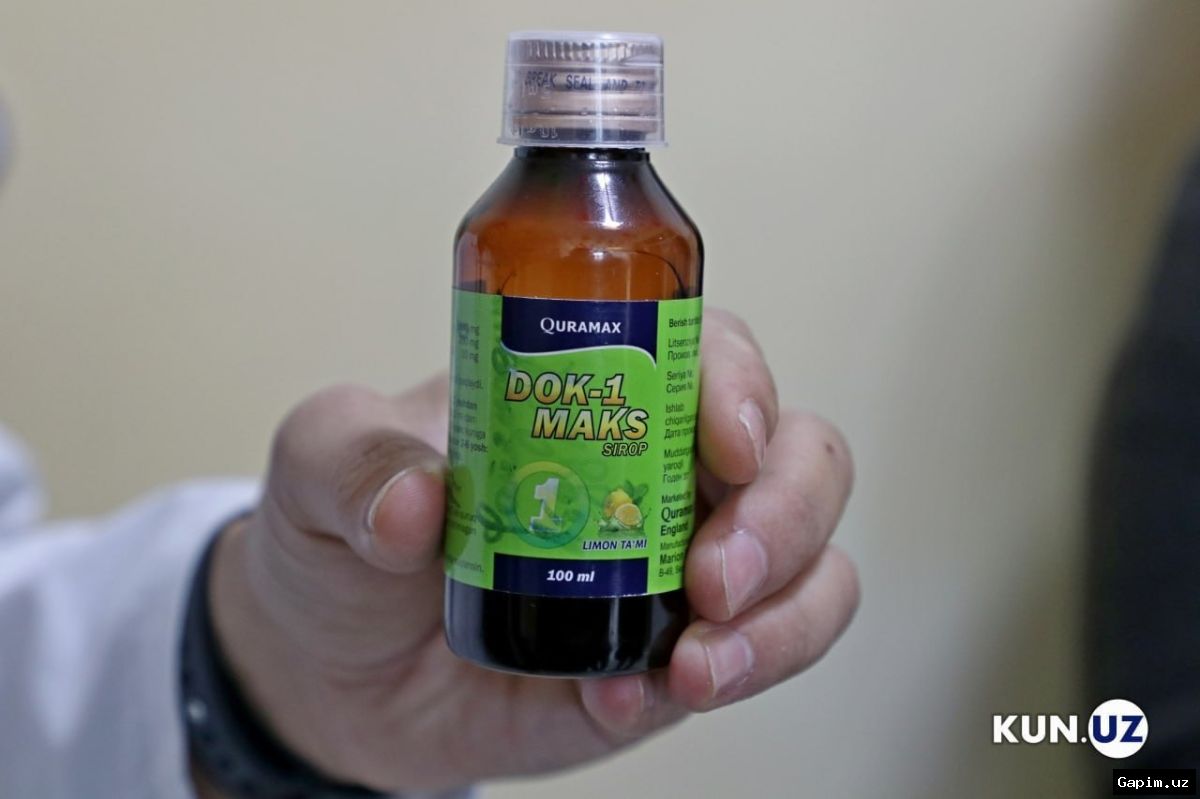
The Anti-Corruption Agency of Uzbekistan has conducted a detailed analysis of the criminal case involving the drug Dok-1 Max, based on court documents. Gazeta reviewed the agency's conclusions.
According to the analysis, the processes of state registration, certification, and licensing of medicines in the pharmaceutical sector lacked sufficient transparency and digitalization. This allowed a high degree of human involvement, leading to corruption risks.
On February 26, 2024, the Tashkent City Court sentenced several individuals to prison terms ranging from 3 to 20 years in connection with the case.
Case materials indicate that the registration of Dok-1 Max involved numerous document deficiencies and, in some instances, decisions contrary to regulatory requirements.
The agency found that the procedure for selecting and forming the Expert Council under the Center for Safety of Pharmaceutical Products, established by the Ministry of Health, is not defined by any legal act. The council consists of 17 members with independent voting rights, who provide final recommendations on registration or rejection. However, some council members also hold leadership positions at the center, creating conflicts of interest. For instance, department head N. Musayev participated in the registration of Dok-1 Max as a council member and also voted as an Expert Council member, the analysis states.
Transparency in the Expert Council's activities is insufficient: quarterly and annual reports, membership lists, and registration results are not published on the center's official website. Additionally, the procedure for conducting inspections at pharmaceutical enterprises and disclosing results to the public is not clearly defined by law, fostering corrupt practices.
The inspection system itself allegedly contradicts international standards, according to the analysis. Government oversight mechanisms have been artificially reduced, enabling corruption.
Specifically, Government Resolution No. 486 of August 3, 2021, established the Center for Good Practices as the sole authorized body for inspections within the Pharmaceutical Industry Development Agency. This arrangement purportedly contradicts WHO and European Directorate recommendations, as the Ministry of Health should be responsible for assessing compliance and conducting inspections of drug manufacturers.
As of now, all processes related to state registration, certification, and licensing of pharmaceutical products have been fully digitalized. To protect public health, registration documents for medicines underwent re-examination, resulting in the cancellation of certificates for at least 92 drug types and a ban on their production, import, and sale.
The Anti-Corruption Agency recommends fully transitioning drug registration to an online system, publishing all data openly, ensuring transparency in the Expert Council's operations, and reorganizing the inspection system in line with international standards.
These proposals have been submitted to relevant state bodies.
Previously, parents of children who died or became disabled due to Dok-1 Max repeatedly complained to media, including Gazeta, that court-ordered compensation was not fully paid. Many were forced to sell homes, cars, and other property, and take on large debts to treat their poisoned children.
In autumn 2024, parents of disabled children not receiving compensation asked, "Who should we turn to now, the president?" Days later, Health Minister Asilbek Khudayarov stated that the victims were being cared for, but parents accused him of lying.
In October 2025, parents still awaiting payments for deceased or disabled children sent a video appeal to President Shavkat Mirziyoyev.
On February 20, 2026, Minister Khudayarov said that outpatient and inpatient medical services are provided to Dok-1 Max victims, but compensation is not within the ministry's purview.
Source: www.gazeta.uz