On Monday, President Shavkat Mirziyoyev was presented with the draft strategy 'Youth of New Uzbekistan — 2030'. According to the press service of the head of state, this is the first comprehensive youth strategy in the country, aimed at fully realizing the role and potential of young people in building New Uzbekistan. Out of a population of 38 million, 9.5 million, or nearly 25%, are young men and women aged 14–30, with 270,000 young families forming annually. This demographic factor reportedly demands a long-term and systematic approach to youth policy.
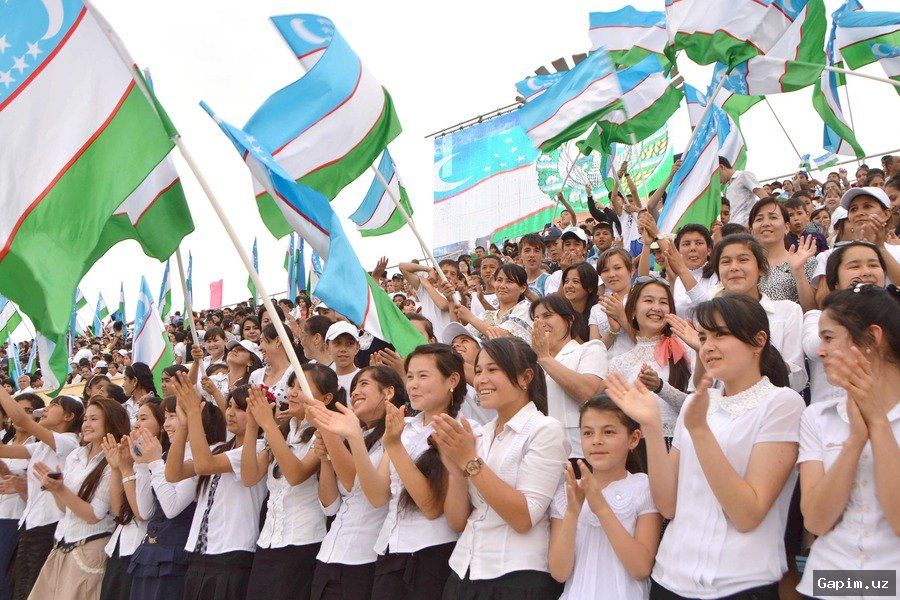
The strategy sets priority directions such as ensuring youth employment and supporting entrepreneurship, developing quality and inclusive education, popularizing foreign languages and expanding vocational training, stimulating the labor market, and supporting young families. Special attention is paid to strengthening cultural, physical, and educational development, widely spreading volunteerism, enhancing youth health, and expanding mechanisms for openness and participation.
The presentation outlined targets for 2030, including providing employment for 600,000 young people annually, engaging 900,000 youth in volunteer activities, increasing the number of training centers to 90,000, raising the foreign language proficiency of 450,000 youth to B2 level, and reducing youth crime. It is planned to support at least 10,000 young families each year through mortgages, with the upper part of the Central Bank's interest rate on loans being covered.
Proposals include allocating up to 300 million soums for establishing training centers in remote and peripheral areas, setting social tax and income tax for their teachers at 1%. For youth achieving B2 level, a reduction in fees for passport formalization is suggested, while for C1 level and entrepreneurial initiatives, some state service fees are to be cut by up to 50%.
To boost social activity, plans involve granting up to 100 million soums from a volunteer fund, attracting active youth to paid internships in state organizations, and introducing a Presidential award for advanced creators. The organization of 'Youth Streets' with books and book cafes is planned, along with establishing minimum standards for youth infrastructure and selecting 'youth district-cities' in each region to create a model for implementing these standards.
The strategy also addresses strengthening youth health, reducing mental risk factors, and enhancing psychological support systems. Specifically, it aims to reduce the share of youth in mental risk groups by 40%, establish a 24/7 psychological contact center, and increase the proportion of youth engaged in sports by 25%.
To strengthen open dialogue and objective analysis in youth policy, the Institute for Studying Youth Issues and Training Prospective Personnel will conduct social surveys on youth needs and expectations and compile a National Youth Index. Priority is given to handling appeals from young men and women, with weekly meetings held on Mondays.
Developing international cooperation is also defined as a key direction of the strategy. For this purpose, formats such as international forums, global initiatives, intergenerational dialogue, and an International Youth Congress are to be implemented, with major events planned around August 12—International Youth Day, and ensuring the participation of 100,000 Uzbek youth in international programs. Additionally, internships in international organizations under the Junior Professional Officer program with structures like the UN, World Bank, and EBRD are envisioned.
Within the framework of implementing the strategy in 2026–2027, 56 projects across 7 directions will be carried out. For instance, the 'New Generation Entrepreneurs' program plans to train 20,000 youth in collaboration with prestigious institutions like Harvard, Stanford, MIT, and London Business School, select 1,000 business projects, and provide them with loans for up to 3 years amounting to up to 500 times the basic calculation indicator. A mechanism for partial coverage of connection costs to engineering networks for young entrepreneurs will also be introduced. Nationwide events such as the 'Uzbekistan Loves Youth!' project, Hayot fest youth festival, Talaba Fest, and Talaba Expo 2026 will be held, with support for the activities of the Robotics Association.
Source: www.gazeta.uz