President of Uzbekistan Shavkat Mirziyoyev, speaking at the St. Petersburg International Economic Forum (SPIEF), outlined key priorities for long-term strategic partnership, highlighting digital transformation, human capital development, and the creative economy.
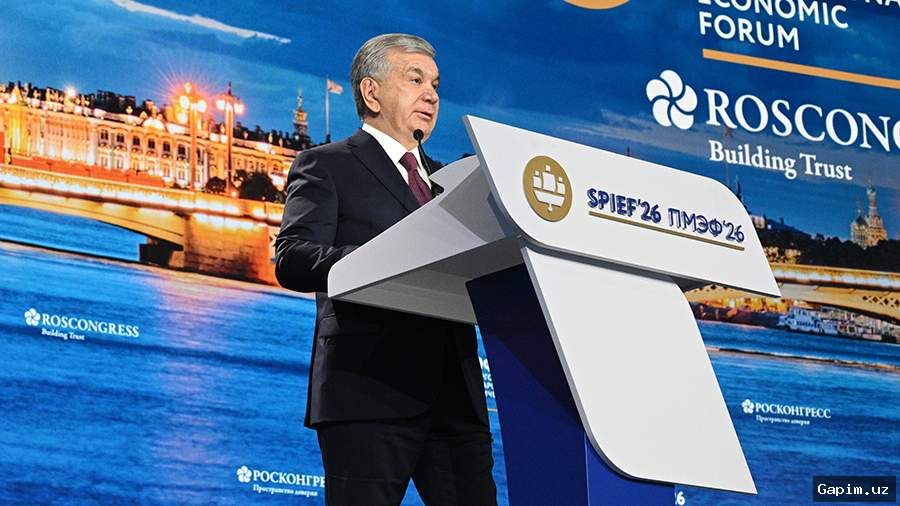
The head of state emphasized that digitalization is becoming the new language of the global economy, with modern digital platforms replacing traditional infrastructure and creating full-fledged jobs, logistics, and payment services around them. Uzbek businesses are actively adopting such technological solutions and demonstrate high openness to partnership. A notable example is the volume of Uzbek goods sold through Russian marketplaces and digital services, which has increased 3.5 times over the past few years, exceeding $1.5 billion.
To further deepen integration, the Uzbek leader proposed launching a joint Digital Ecosystem. The initial phase of this project may include: harmonizing regulations for digital trade and urban services; mutual promotion of brands on national platforms; creating a unified digital employment profile; and joint development of products based on artificial intelligence.
Mirziyoyev paid special attention to the republic's demographic potential, noting that Uzbekistan is one of the youngest countries in the world, with over half the population being youth. In this context, educational cooperation acquires strategic importance. Currently, 32 branches of foreign universities operate in Uzbekistan, 15 of which are Russian, representing the largest network of Russian universities abroad.
As a new effective mechanism, the president proposed launching a joint Online Platform for Human Capital Development. This service is designed to directly link education, vocational training, and the labor market, combining training programs, language and IT courses, tools to support young entrepreneurs, and an employer database. With the support of Russian President Vladimir Putin, relevant agencies will be tasked with implementing this project in a short timeframe.
Another strategic vector identified was humanitarian partnership through tourism and the creative industry. Mirziyoyev reported that in 2025, almost 1 million Russians visited Uzbekistan, and the country is ready to welcome even more guests this year. The republic is actively increasing the share of the creative economy, which should reach 5% of GDP by 2030.
To foster cultural rapprochement, a large-scale creative-tourism corridor project "From Samarkand to St. Petersburg" was proposed, which will include joint art and film festivals, museum exhibitions, and musical events. The practical start of this cooperation was given the day before at the Mariinsky Theatre and the Hermitage, where Days of Culture and Art of Uzbekistan opened.
Source: podrobno.uz