President Shavkat Mirziyoyev of Uzbekistan sharply criticized regional governors (hokims) on July 21 during a meeting dedicated to the results of the first half of the year for failing to fulfill promises to curb inflation.
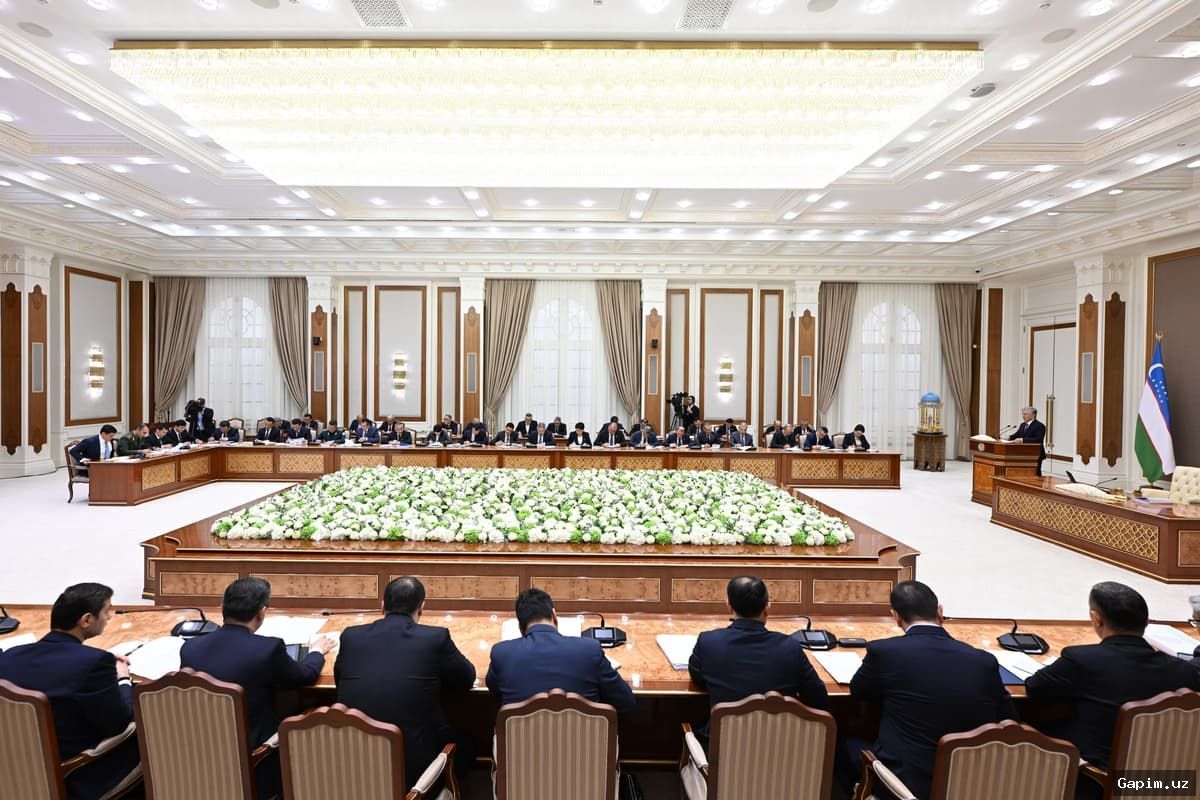
The head of state called inflation the most important issue for economic stability and described it as “an additional tax for low-income families.” According to him, Deputy Prime Minister Jamshid Kuchkarov, Central Bank Chairman Timur Ishmetov, and regional governors were tasked with increasing the supply of goods and services on the market and restraining price growth.
In January, regional leaders promised not to allow consumer prices to rise by more than 3% by the end of the six-month period. However, as Mirziyoyev noted, only the governor of Syrdarya region, Erkinjon Turdimov, fulfilled this task. In Samarkand and Kashkadarya regions, consumer prices rose by 3.6%; in Khorezm region by 3.5%; and in Fergana, Jizzakh, and Navoi regions by 3.4%.
The president urged the governors to keep their promises, asking, “If we do not curb inflation, what will happen to the market, where will people's salaries go?”
Special attention was paid to the rise in meat prices. From April to June, meat prices increased by approximately 6-8%. Mirziyoyev reported that the governors had requested compensation for the cost of air transport of imported meat by August 1. The president supported this proposal, allocating 300 billion soums for these purposes.
The president also highlighted serious discrepancies in livestock statistics. Previously, officials responsible for livestock and regional leaders assumed the country had 14.5 million head of cattle and 24.5 million head of sheep and goats. However, an agricultural census showed that the actual number of cattle is 2.5 million head less, and sheep and goats are 1.5 million head less than previously reported.
In Kashkadarya region alone, the cattle population turned out to be 171,000 head less than previously announced, and the number of sheep and goats was 288,000 head less. According to the president's estimate, as a result, the market loses 50,000 tons of meat and 120 million liters of milk from this region alone.
Responsible officials, together with the governors, were instructed to completely revise the meat balance for each region by August 1. They must determine from which countries and in what volumes products will be imported, draw up a calendar delivery plan, and begin practical work with entrepreneurs. The benefit for air transport of imported meat has been extended until the end of the year.
In May, 1 trillion soums were allocated from the Agricultural Fund for livestock projects. Additionally, another $50 million will be directed from the Reconstruction and Development Fund. These funds are planned to be used to issue loans at 10% per annum: up to 5 billion soums for organizing livestock complexes, and up to 20 billion soums for projects to breed pedigree cattle. The loan term is 10 years, including a four-year grace period. The task has been set to import 100,000 head of cattle and 150,000 head of sheep and goats by the end of the year.
In February, Mirziyoyev noted that annual inflation in January was 7.2%, with 13% of the price increase attributed to meat products. Against the backdrop of declining production in dekhkan farms and a sharp increase in imports, the president ordered the expansion of areas under fodder crops and a reduction in dependence on foreign supplies.
In 2025, meat production in live weight increased by 1.5% to 2.99 million tons. However, production in dekhkan and household farms decreased by 1.9% to 2.43 million tons. For comparison, in 2024, meat production in these farms increased by 4.1%.
According to data from the Customs Committee studied by the newspaper, in January-June 2026, Uzbekistan imported meat and meat products worth $481.7 million. This is 42.2%, or $142.9 million more than in the same period last year. Imports in physical volume increased less significantly — by 19.7%, from 122,800 tons to 146,900 tons. The average cost of imported products increased by about 18.8%, from $2.76 to $3.28 per kilogram.
Source: www.gazeta.uz