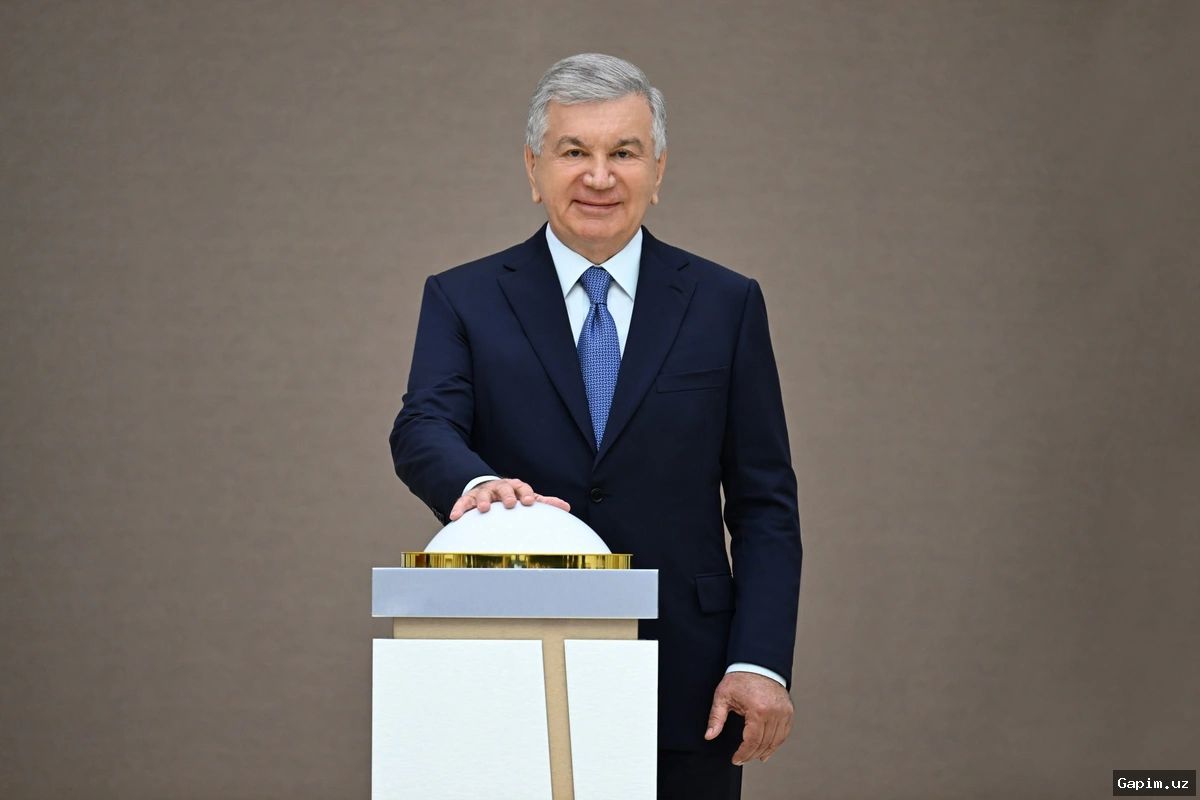
President Shavkat Mirziyoyev reviewed a presentation on elevating the electrical engineering industry to a new stage and supporting the production of competitive goods, according to the presidential press service.
The presentation highlighted the sector's achievements in recent years. Production volume increased from 4.7 trillion soums in 2018 to 43.1 trillion soums. Exports exceeded $1 billion, and Uzbek electrical products are now supplied to 65 countries. The share of high value-added products is growing: production and export of copper-based goods have increased, while the share of low-value products has decreased.
Domestic demand for household appliances is 80% covered by local products, with 30% of manufactured household appliances exported. Hundreds of new product types have been mastered, including solar panels, high-voltage cables, electric vehicle charging stations, vacuum circuit breakers, high-voltage disconnectors, and heat pumps.
In the first seven months of this year, the sector produced goods worth 30 trillion soums and ensured exports of $706 million. Sixteen projects worth $148 million were launched, creating 1,200 jobs. By the end of the year, the task is to produce goods worth 51 trillion soums, increase exports to $1.6 billion, and launch 67 projects worth $420 million.
The presentation reviewed plans through 2030 to increase production in the electrical engineering and related industries to $11 billion, raise exports to $5 billion, attract $3 billion in investment, and increase copper value addition to 35%. It was noted that Uzbekistan has the necessary raw material base and market. Currently, more than 150,000 tonnes of copper cathode are produced annually, and with new capacities, this figure is planned to reach 300,000 tonnes. Additionally, 15 GW of solar and wind power plants are planned, which will create an annual order market of $500 million for electrical products.
At the same time, the sector faces challenges such as insufficient collateral for working capital loans, the need for convenient financial instruments for purchasing copper raw materials through the exchange, and expanding guaranteed mechanisms to attract major international brands. In this regard, new mechanisms for financial support of industry enterprises were proposed. In particular, when purchasing copper raw materials, 25% of payment will be made by enterprises, and the remaining 75% by JSC O'zsanoateksport. Enterprises will repay these funds within 90 days at a rate of up to 6% per annum. $50 million will be allocated for this purpose.
Going forward, other types of collateral such as export contracts and insurance policies will be accepted for loans. Part of loans allocated for investment projects in national and foreign currency will be covered for three years. Major international brand companies investing at least $50 million will receive tax incentives and be offered ready-built facilities with infrastructure. Tax and customs incentives for electrical engineering enterprises are to be extended until 2030, along with support for local industrial enterprises related to the sector.
To expand exports, measures will be taken to establish trading warehouses in foreign markets, certify products, and simplify access to external markets. Opportunities to expand exports of integrated technological solutions to the markets of Afghanistan, Mongolia, Kazakhstan, and Iraq were also considered.
To strengthen innovation and research in the sector, it was proposed to establish a Fourth Industrial Revolution research and innovation center. The center will engage in digital modeling of new products, testing, localization, prototyping, and providing engineering services to enterprises. The President gave instructions to officials to increase value addition in the electrical engineering industry, master the production of high-tech products and materials, and bring local enterprises into global value chains.
Source: www.gazeta.uz