In Tashkent, specialists from the Traffic Management Center have configured 11 traffic lights on Makhtumkuli Street to operate on the 'green wave' principle. Thanks to synchronization, the road's capacity increased by 12%, and the average travel time along the route decreased by 10%, according to Podrobno.uz.
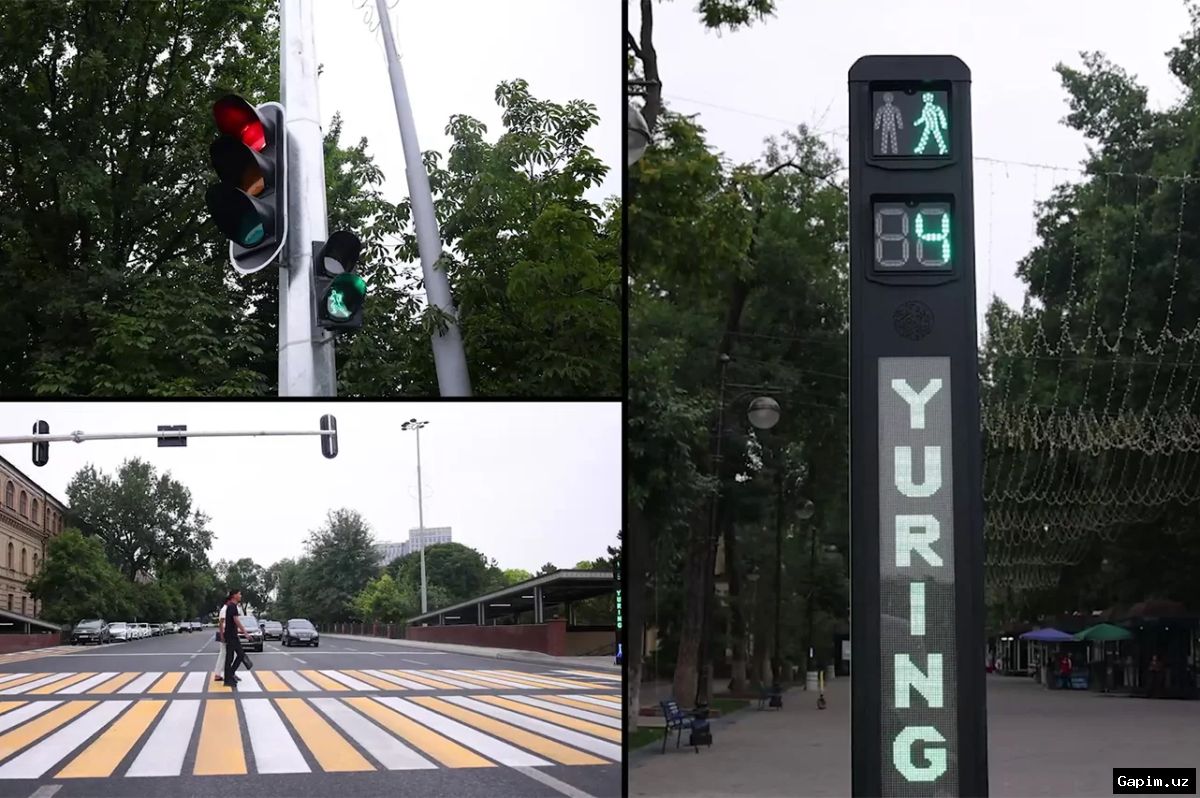
Experts analyzed traffic flows taking into account traffic intensity, distribution throughout the day, duration of traffic light cycles, and travel time between intersections. The average daily traffic intensity in this direction reaches about 90,000 vehicles. This highlights the importance of the artery for the city.
The system operates in two modes based on the prevailing direction of flow. From 00:00 to 13:00, coordination is set towards the center of Tashkent — from the three-level interchange at the intersection of Makhtumkuli and Yangi O'zbekiston streets to Amir Temur Square, and from 13:00 to 00:00 — towards the Tashkent region.
The estimated speed in the coordinated corridor is 55 km/h. If the recommended speed is maintained, the car consistently hits the calculated green signal intervals at subsequent intersections. This helps minimize the number of stops.
The main goal of the system is to minimize stops and reduce delays at intersections to ensure smooth movement without physically widening the roadway. Actual travel time also depends on current conditions, public transport operations, pedestrian phases, and possible accidents or road works. Specialists continue to analyze traffic and adjust regulation in other parts of the capital.
Earlier, reports mentioned the introduction of 'green wave' on other streets of Tashkent. It is expected to reduce congestion and improve the environmental situation.
Source: podrobno.uz