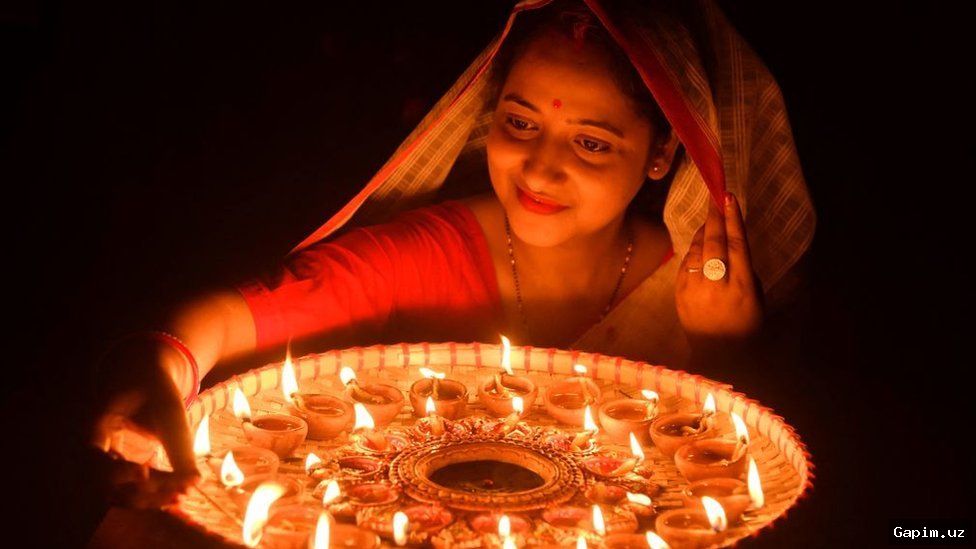
Millions of people across India are observing Diwali, the Hindu festival of lights, by illuminating homes, temples, and streets with traditional oil lamps and vibrant displays to symbolize the triumph of light over darkness. Falling on the darkest night of the Hindu lunar month of Kartik when the moon remains invisible, the festival typically encompasses communal prayers, family gatherings, the sharing of sweets, and festive fireworks. While traditions vary widely across different communities, the core message centers on spirituality and renewal.
Key Takeaways: Diwali celebrations in India have been severely overshadowed by hazardous air pollution levels in northern regions, with Delhi recording its worst post-festival smog in a decade. Despite the Indian Supreme Court permitting limited sales of certified 'green' firecrackers, critics remain skeptical about enforcement and emission reductions. * The festivities coincide with mounting alarm over deteriorating air quality, exacerbated by seasonal weather patterns and agricultural stubble burning. Air pollution levels in the capital city of Delhi supposedly reached unprecedented hazards, proving recent mitigation measures largely ineffective. Meanwhile, India's financial hub, Mumbai, has similarly grappled with elevated particulate matter concentrations in recent weeks.
In an attempt to curtail emissions, the Indian Supreme Court purportedly permitted the manufacture and sale of certified 'green' firecrackers in Delhi and surrounding zones for a restricted timeframe. These specialized fireworks are claimed to produce 20 to 30 percent fewer emissions than conventional alternatives. However, detractors have questioned the practical impact of such policies, expressing strong concerns that conventional fireworks would effortlessly bypass restrictions through neighboring states.
Beyond the ongoing controversies surrounding pyrotechnics, Diwali holds profound mythological significance, commemorating the return of Lord Ram to Ayodhya after defeating Ravan. The five-day celebration incorporates diverse rituals, from honoring the goddess of wealth Lakshmi to sharing traditional sweets and creating intricate rangoli patterns. The observance is additionally shared by Sikhs and Jains, who mark distinct historical milestones during the same autumnal period.
Source: www.bbc.co.uk