On the evening of September 18, Tashkent experienced a sharp rise in concentrations of particulate matter PM2.5 and especially PM10. Specialists attributed the deterioration in air quality to a combination of dry weather, raised dust, temperature inversion, and weak air exchange.
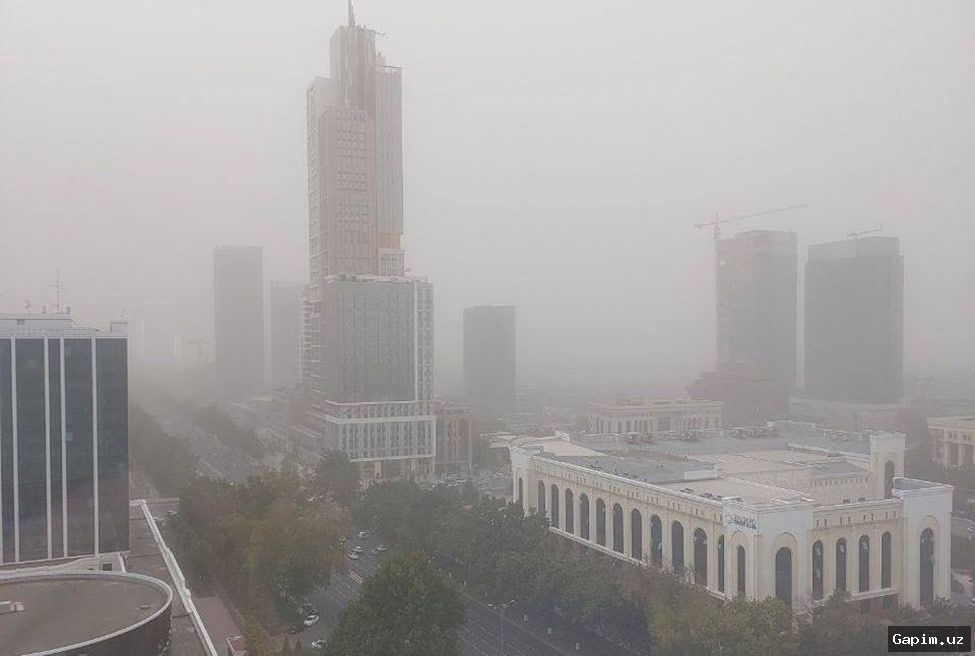
According to monitoring stations, pollution began to increase after 18:00 and peaked between 21:00 and 23:00. During this period, PM10 levels in some areas exceeded 500 µg/m³, indicating a large amount of coarse dust particles. At the same time, the levels of gaseous pollutants — nitrogen dioxide, carbon monoxide, ammonia, hydrogen fluoride, phenol, and formaldehyde — remained within normal limits.
Specialists note that the situation arose from several factors at once. Due to prolonged dry weather, dust from soil and roads was more easily lifted into the air. Temperature inversion and weak wind in the evening and at night prevented the pollutant particles from dispersing quickly. Additionally, air flows brought dust masses from the western and northwestern regions of the country.
After midnight, particle concentrations began to decrease, and by morning the indicators returned to moderate levels. Ecologists call the event a short-term dust episode. However, the forecast for the evening of September 19 indicates a possible repeated deterioration in air quality. From 21:00 to 04:00, the index may be in the "harmful for sensitive groups" range. It is expected that in the morning the polluted mass will shift to the southwest, and the air will become cleaner again.
Earlier it was reported that in the Yunusabad district of Tashkent, specialists began searching for the source of air pollution after residents' complaints and elevated PM2.5 and PM10 levels.
Source: podrobno.uz