Specialists from the Tashkent City Road Traffic Management Center have coordinated traffic lights on another section of the Small Ring Road and implemented the 'Green Wave' system, according to the center's press service.
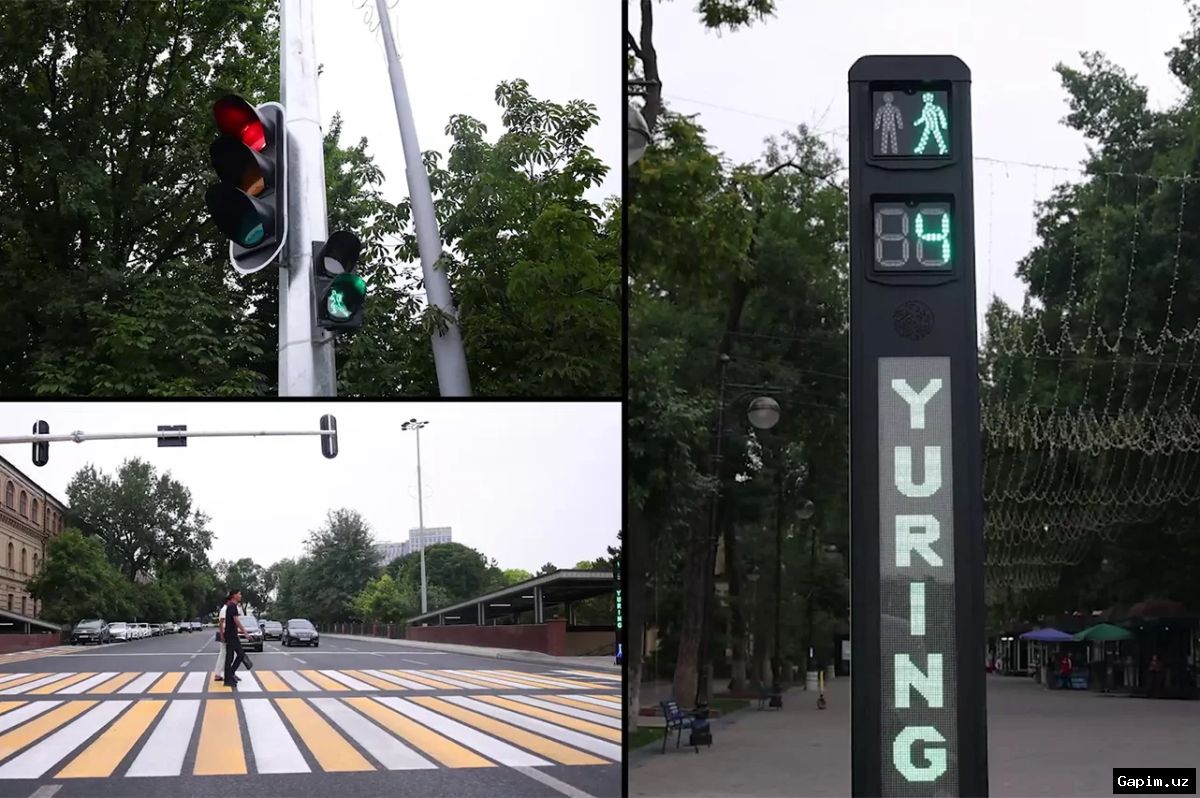
The system operates on a 5-kilometer section — from the pedestrian crossing in front of the Uzbek State University of World Languages to the pedestrian crossing opposite the 'Visol' banquet hall — near the intersection with Sheikh Zayniddin Street. Traffic lights at 12 intersections have been synchronized in this direction. When driving at the recommended speed of 50–60 km/h, a car can pass through the section sequentially without unnecessary stops at each subsequent intersection.
It is emphasized that before the 'Green Wave' was set up, it took 11 minutes and 30 seconds to cover this section. After synchronization, the travel time was reduced to 9 minutes and 40 seconds. Thus, on a single 5-kilometer section, a driver will now save 1 minute and 50 seconds.
"To put this effect into more tangible terms: 1 minute 50 seconds is almost three standard red light phases of 35–40 seconds each. In other words, the effect of the 'Green Wave' for a driver can be imagined as three extra stops at red lights that were avoided or significantly reduced. In a real trip, this means less time before a red signal, fewer stops and re-accelerations, as well as more uniform movement over a full 5 kilometers," the statement says.
Thus, as a result of synchronizing 12 traffic lights, it was possible to reduce travel time, increase average speed, and decrease the number of forced stops at traffic lights. The center added that work on the phased implementation of the 'Green Wave' system on other sections of the capital with heavy traffic will continue.
Source: uznews.uz