According to reports from Tashkent, large-scale archaeological excavations are actively underway at the ancient site of Djarkutan, located in the Sherabad district of Uzbekistan's Surkhandarya region. The research efforts, launched under the supervision of Komil Rakhimov, senior researcher at the Samarkand Archaeological Institute, involve students from Termez State University alongside Francesca Congedo, a PhD student from Italy's University of Salento.
During the course of the expedition, researchers uncovered the remains of ancient dwellings, utility structures, and fragments of ceramic utensils. Special scholarly interest was drawn to the sun-dried brick structures and a hearth measuring approximately 70 centimeters in diameter. These discoveries are expected to provide deeper insights into Bronze Age construction techniques, interior spatial organization, and the specific functions of various rooms.
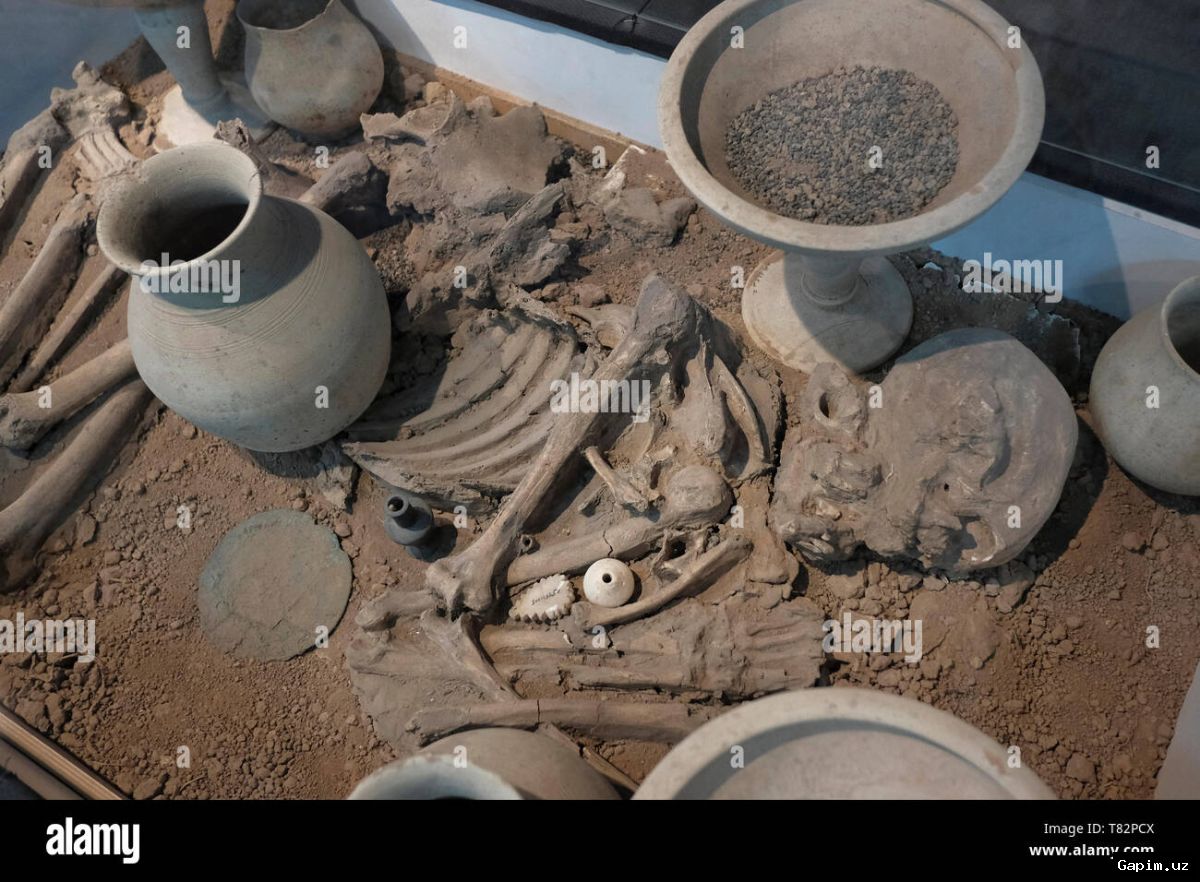
In the western sector of the ancient settlement, specialists discovered four intact ceramic vessels. Furthermore, outside the main boundary of the site, a child's burial site belonging to the Bronze Age Sapallikultura culture was unearthed, alongside a storage pit and two circular pits filled with ash. Experts plan to compare these newly recovered artifacts with existing archaeological data to map out the evolution and layout of the settlement.
It is worth recalling that the Djarkutan site previously yielded the skull of a child dating back approximately 4,000 years, bearing evidence of trepanation—an ancient surgical procedure involving the drilling of a hole in the skull. Researchers claim this find stands as one of the earliest documented instances of such invasive medical operations in Central Asia and the broader region.
Source: podrobno.uz