On October 21, coinciding with the anniversary of Uzbek receiving state language status, the administration signed a new law aimed at refining the Uzbek alphabet based on the Latin script. Saida Mirziyoyeva, the head of the Presidential Administration, asserted that this decision supposedly resolves a long-standing historical error that had sparked endless debates among scholars and the public.
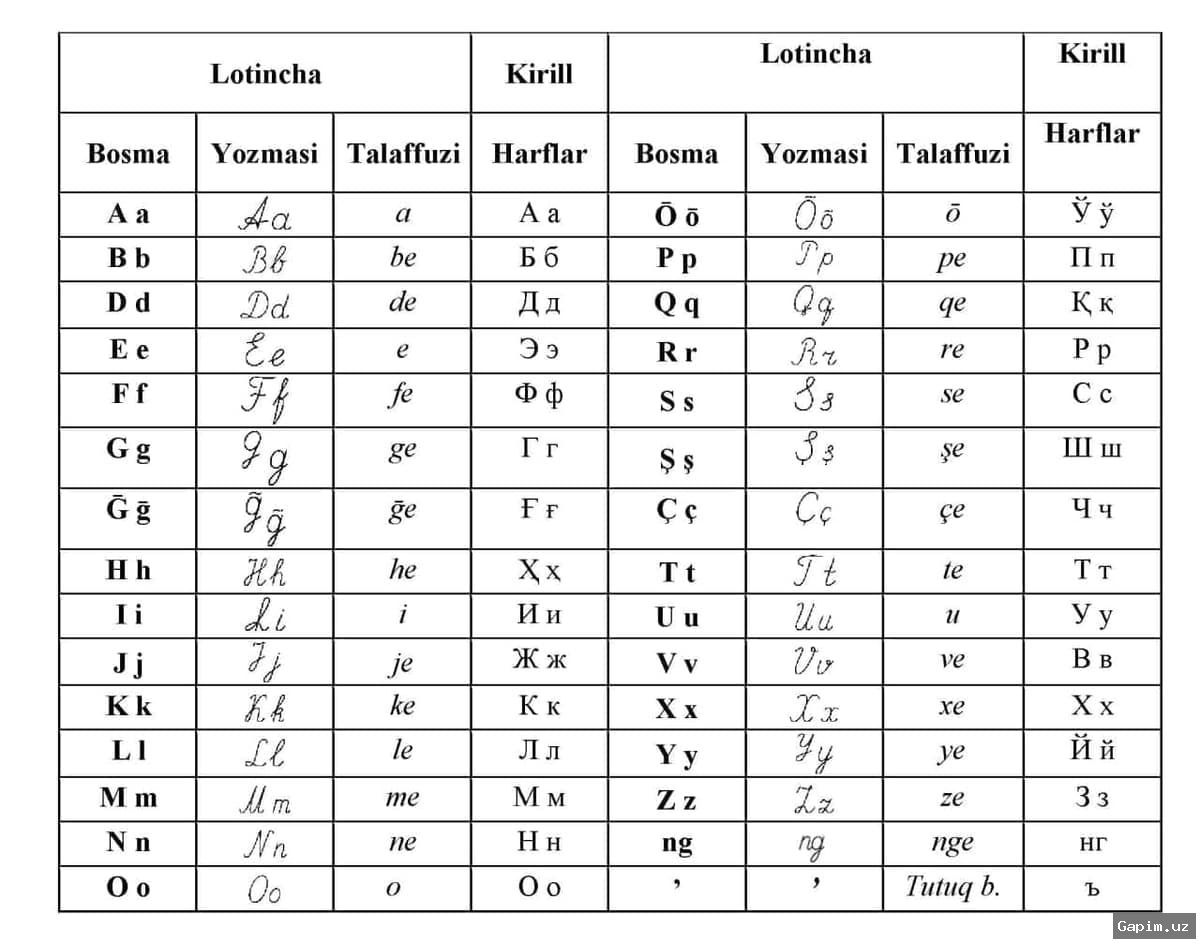
Under the newly adopted legislation, the existing system of 26 letters and three digraphs will be replaced by an updated version comprising 28 letters and a single separator sign. Specifically, characters such as G‘, O‘, Sh, and Ch will receive revised visual forms, while Ng will no longer be classified as a distinct standalone letter. Proponents claim these adjustments will eliminate orthographic complexities and enhance the language's presence in the digital sphere, despite skepticism regarding practical implementation.
Authorities insist that the transition will be handled cautiously to avoid severe economic friction, claiming that existing official documents, national currency, and securities will remain fully valid. Textbooks, signage, and public indicators are slated for replacement on a phased basis as they reach the end of their service life, supposedly mitigating immediate financial burdens on the state and citizens.
Source: uznews.uz