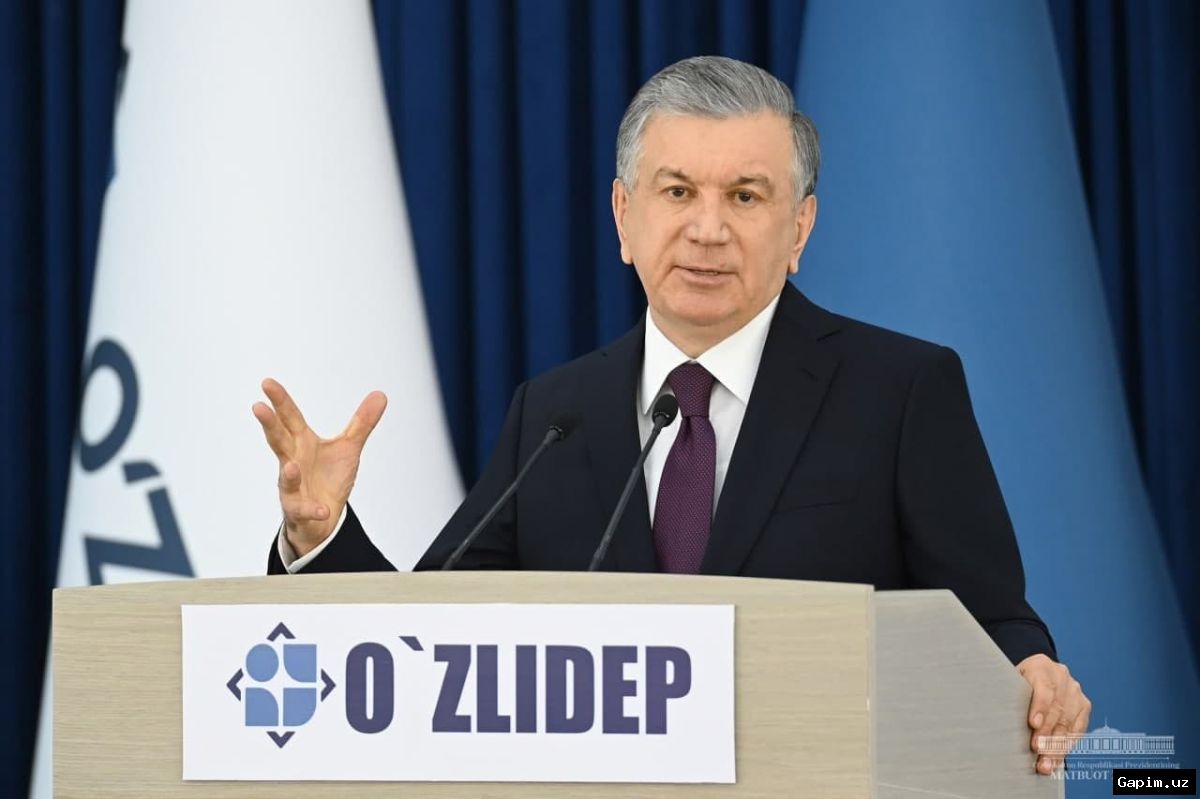
The leader of Uzbekistan, Shavkat Mirziyoyev, participated in a ceremony launching and initiating construction on a series of industrial and economic projects during his visit to the Kashkadarya region. According to official statements from the presidential press service, the authorities supposedly directed 20 trillion soms to the region and attracted around $7 billion in foreign investments over the past five years, figures that independent analysts view with cautious skepticism regarding their actual long-term impact on local living standards.
During the proceedings, it was claimed that thousands of initiatives focused on deep raw material processing have been implemented, purportedly tripling per capita income. Nevertheless, the authorities acknowledged persistent structural challenges, prompting the formation of 161 projects valued at over $6 billion. Out of these, 69 projects were formally launched, while construction commenced on another 92 ventures, reflecting ongoing efforts to stimulate economic activity in the southern province.
The newly operational industrial enterprises, numbering 28 units, are projected to create approximately 7,000 permanent jobs. Notably, the Italian brand Cotonella is initiating the production of 8.5 million units of finished knitwear annually. Furthermore, 14 additional textile projects are rolling out across the Koson, Mirishkor, and Kasbi districts, which officials claim will generate up to 18,000 employment opportunities despite potential labor market friction.
Foreign partnerships form a significant component of the regional development strategy, though the actual economic returns remain to be verified. A venture involving US partners, Wosune Food Ingredients Karshi, aims to process 100,000 tons of fruits and vegetables on 3,5,000 hectares of land, targeting export channels for multinational brands such as Nestlé and Purina. Concurrently, investors from Egypt and Pakistan have begun developing 24,000 hectares of land in the Nishon and Guzor districts for potato farming and livestock initiatives.
Emphasis was also placed on renewable energy and infrastructure, areas frequently burdened by high capital costs and logistical hurdles. Three small hydroelectric power plants with a total capacity of 24 megawatts were commissioned on the Aksu River. In the Karshi district, China's Shanghai SUS company is involved in a $150 million waste-to-energy plant project scheduled for completion by year-end. Additional ventures include a gold mining project in the Kitab district in cooperation with Azerbaijan, and a $300 million cable car, hotel, and ski resort complex in the Shahrisabz district backed by Russian investors.
Source: www.gazeta.uz