Authorities in the Uzbek capital have allegedly commenced construction works to restore an artificial water reservoir located adjacent to the Oliy Majlis Legislative Chamber, which was deliberately dried up four years ago. The 3-hectare lake featuring a small island and fountains, historically part of the National Park of Uzbekistan, was completely drained in the spring of 2020, paving the way for a series of shifting urban development schemes that were subsequently abandoned.
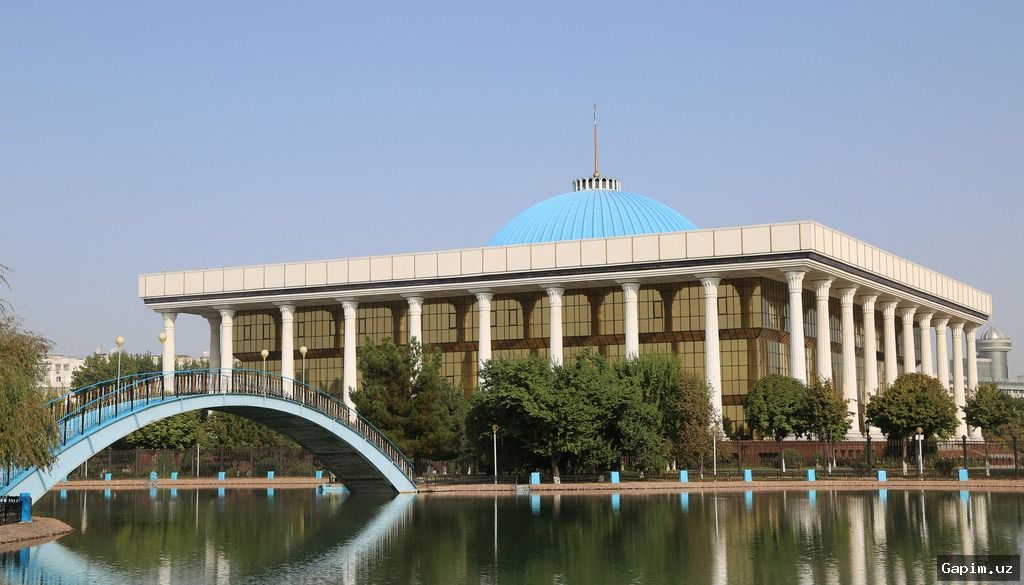
Key Takeaways: Tashkent authorities have started restoring a 3-hectare artificial lake near the Legislative Chamber that was drained back in 2020. The project is supposedly part of the nationwide "Clean Air" initiative aimed at mitigating dust levels and improving urban microclimate. Heavy machinery is currently operating on-site to conduct preliminary earthworks.
The site's recent history is marked by a succession of halted architectural initiatives. In 2020, plans were floated to construct a "Light House" restaurant complex featuring an observation tower on the lake's island, though the project never materialized. Subsequently, in 2021, foundation works began for a new building for the National Academic Drama Theatre under the auspices of the Tashkent City international business center directorate and general contractor Enter Engineering, but this high-profile venture was likewise suspended indefinitely.
Recently, the Committee for Ecology and Environmental Protection released conceptual renders of the restored lake project, claiming it will substantially reduce local dust concentration and improve atmospheric quality. According to the published visualizations, the revised design envisions two large fountains linked by walkways at opposite diagonal corners of the water body, alongside a mirrored structural arch.
The local municipal authorities maintain that this undertaking is part of a broader urban blueprint to construct or rehabilitate 12 artificial water basins across Tashkent, including sites near the airport, Victory Park, and the Botanical Garden. Meanwhile, on the opposite side of the Legislative Chamber, construction continues on the National Museum of Uzbekistan designed by renowned Japanese architect Tadao Ando, which is also slated to be partially encircled by water.
Observers remain skeptical regarding whether the final execution will mirror the released conceptual sketches, given the local administration's track record of delayed and abandoned urban engineering projects. Further developments will depend on funding allocations and environmental compliance oversight.
Source: www.gazeta.uz