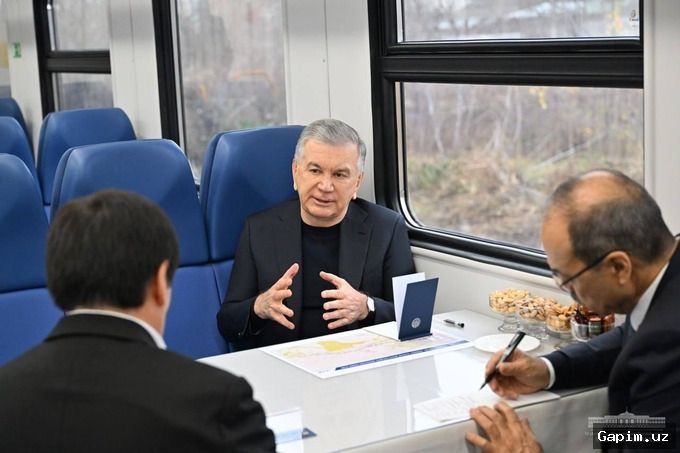
The Uzbek authorities are planning to fundamentally overhaul the practice of selecting products in public procurement, which has historically relied primarily on identifying the cheapest offers available. Under the newly introduced mechanism, purchasing decisions will allegedly factor in not only the initial acquisition cost, but also electricity consumption, maintenance, servicing, and total expenses throughout the entire product lifecycle. This announcement was made public on November 9 during a meeting between the country's leader Shavkat Mirziyoyev and representatives of the electrical engineering industry, local entrepreneurs, and foreign investors, with details subsequently disclosed by presidential press secretary Sherzod Asadov.
Key Takeaways: The Uzbek authorities will introduce a 'life cost' approach evaluating total expenses over the entire service life of products in public tenders. Starting January 1, 2027, three-year public procurement plans will be published in advance, and industrial enterprises will reportedly be eligible for compensation of up to $50,000.
According to official figures, approximately 10 trillion sums worth of electrical engineering goods are procured annually through state orders in Uzbekistan. Previously, local business entities were allegedly compelled to monitor state enterprise orders across four or five separate platforms, prompting the creation of a centralized system where all state orders are now consolidated. Furthermore, starting January 1, 2027, the authorities intend to launch the preliminary publication of three-year public procurement plans, which is purported to allow entrepreneurs to assess future demand, expand manufacturing lines, and attract investors more effectively.
During the gathering, it was strongly emphasized that purchasing cheap imported goods could ultimately prove far more costly. As part of a control purchase, two 40-kilowatt transformers were examined: the imported transformer was allegedly 400,000 sums cheaper than the domestic alternative. However, inspections supposedly revealed that the imported unit's electricity consumption was 10 percent higher, while its maintenance costs during operation were four times greater. Consequently, authorities are introducing the 'life cost' evaluation approach to curb such inefficiencies.
In addition, the meeting touched upon expanding cooperation between local electrical enterprises and international financial institutions. It was noted that companies such as 'Artikul Aziya' and 'Maxsopper' in Tashkent, 'Texno Cable Group' and 'Vades Group' in the Tashkent region, and 'Andijon kabel' in Andijan have purportedly secured a total of $80 million from the European Bank for Reconstruction and Development for their respective projects.
Future developments will depend on the actual implementation of these regulatory changes, although skepticism remains regarding whether bureaucratic hurdles will hinder the promised financial compensations and long-term planning effectiveness.
Source: kun.uz