The 31st UN Climate Change Conference (COP31) has officially commenced in the Turkish resort city of Antalya, gathering delegates from numerous governments, international financial institutions, and academic circles. The Uzbek authorities are participating in the high-profile global summit with a dedicated national pavilion aimed at promoting domestic ecological initiatives and environmental protection strategies.
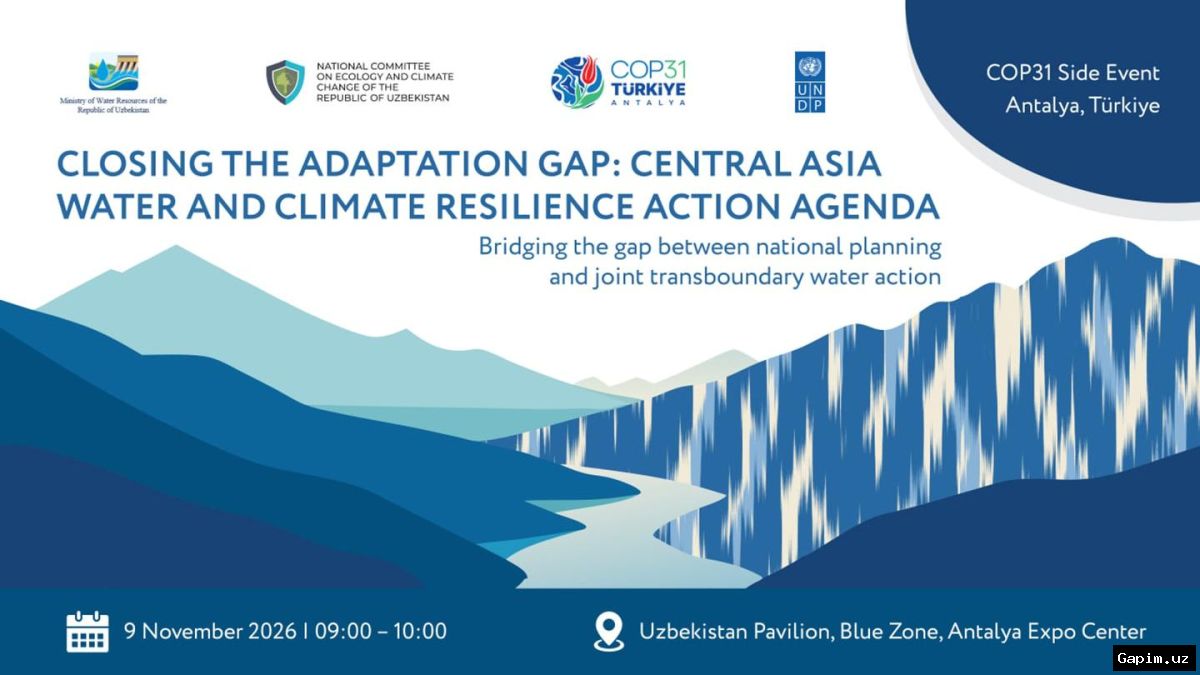
Key Takeaways: Attendees at the summit are reportedly focusing on the implementation of the Paris Agreement, greenhouse gas emission reductions, climate adaptation, and mobilizing funds for green projects. A special regional meeting on climate migration involving Central Asia and the South Caucasus is scheduled for November 10, with a purported 'Silk Declaration' expected to be signed, followed by a joint investment event with the UN Development Programme on November 11.
The national pavilion of Uzbekistan is purportedly utilizing the platform to address pressing issues such as water security, renewable energy expansion, desertification control, and biodiversity preservation. Special emphasis is allegedly being placed on the catastrophic ecological problems of the Aral Sea region, as the local authorities seek foreign partners for mitigation efforts. Observers remain skeptical, however, regarding whether these diplomatic gatherings will yield tangible economic relief or merely produce non-binding paperwork.
It is worth noting that prior to the conference, Uzbekistan reportedly secured a place among the top five countries in the Climate BRIDGE international initiative, under which external experts are supposed to help draft bankable climate projects. Critics point out that despite such preparatory frameworks, actual green investments frequently stall due to bureaucratic friction and structural economic hurdles.
The UN climate summit in Antalya is scheduled to run through November 20. While participating delegations continue to negotiate emission targets and financial mechanisms, the long-term efficacy of the commitments made at the conference remains heavily dependent on uncertain geopolitical and economic variables.
Source: podrobno.uz