On September 26, UzCarlsberg held a presentation at its beverage plant in Tashkent, showing guests the production chain from quality-control laboratory to packaging lines. The event came as the company's national brand won several international awards in 2026 and as UzCarlsberg seeks to highlight local production standards. The plant employs more than 400 people and produces over 30 product items, including local brands and licensed international products. Management also discussed product development and the recent entry of the European Bank for Reconstruction and Development (EBRD) as a shareholder.
Key Takeaways: The company's national brand won a gold medal and the Uzbekistan Country Winner title at the World Beer Awards. It also received Grand Gold at Belgium's Monde Selection, described as the competition's highest award. The Tashkent plant relies on its own artesian wells, conducts more than 200 laboratory tests daily and produces both local brands and licensed international products for the domestic market.
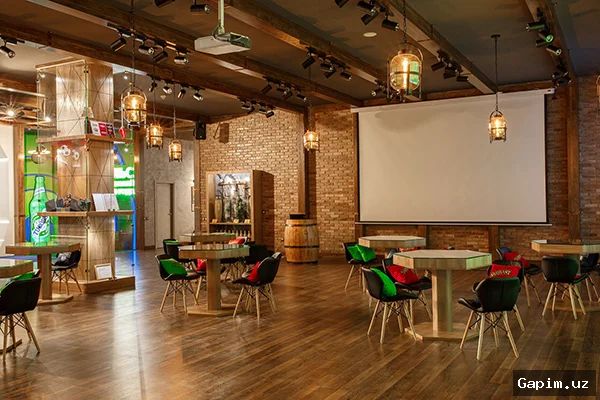
The company describes Uzbekistan's market as young and dynamically developing. UzCarlsberg says its brand portfolio has changed substantially over the past seven years, with three or four new brands launched in the last two to three years. Its visitor center receives more than 2,000 guests annually. Management presents the EBRD shareholding as recognition for the company and for Uzbekistan's investment climate, while the awards are used to reinforce its quality claims in a competitive consumer market.
Commenting on the awards, UzCarlsberg General Director Nadav Geller said that international prizes require the product to meet strict standards for taste and raw-material quality. He stressed that the company uses natural ingredients without additives intended to speed up production or alter taste, while experience and teamwork account for the rest. "For us, the gold medal is undoubtedly a source of pride, but the consumer is the judge. We need the consumer to choose us again and again," Geller said. Marketing Director Irina Inyutina added that the Uzbek market is young and fast-changing, and that the company keeps trying new products every season.
The production process begins with water from several artesian wells on the plant's territory, with pumps installed at a depth of 200 meters; city water is not used. The water passes through several purification stages, and the laboratory checks its alkalinity, hardness and pH. Chemists, biologists and microbiologists conduct more than 200 analyses every day, monitoring all raw materials and every stage of production. Samples from each batch of raw material are retained so tests can be repeated if necessary, and results are stored on company servers. Quality manager Evelina Pogosova, who has worked at the plant for 18 years, said that even a 2008 result could be retrieved immediately to show the quality parameters of that time.
The company also produces international brands under license, a right it received after audits and confirms through regular inspections; those products are made for the domestic market to the same specifications used abroad. Output is developed on the basis of demand research and local taste preferences, the company says. With international awards, a broadened portfolio and the EBRD's shareholder role, UzCarlsberg's next task is to turn recognition into sustained consumer trust. The company says it will continue seasonal launches, innovation work and quality-control investment, while the market will test whether these efforts translate into repeat purchases and stronger competition in Uzbekistan's beverage sector.
Source: www.uznews.uz