Uzbekistan’s government is planning a 2027 state budget with expenditures of 464 trillion soum and revenues of 416 trillion soum, with about 175.7 trillion soum earmarked for education and healthcare reforms, President Shavkat Mirziyoyev’s office announced at a high-level meeting in Tashkent. The draft budget, discussed alongside fiscal-policy priorities, is intended to preserve the social orientation of state spending while maintaining macroeconomic stability.
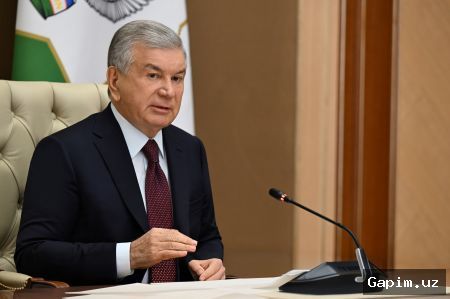
Key Takeaways: Uzbekistan plans 2027 budget expenditures of 464 trillion soum and revenues of 416 trillion soum. Education is set to receive 114.3 trillion soum, up 14 trillion, and healthcare 61.4 trillion soum, up 12 trillion; combined education and healthcare funding is around 175.7 trillion soum. Main tax rates are expected to remain unchanged, with inflation targeted at no more than 6% and the fiscal deficit capped at 3% of GDP.
The budget debate comes as Uzbekistan seeks to sustain economic growth, expand social infrastructure and improve household incomes amid global economic uncertainty. Authorities are prioritizing human capital, regional and mahalla infrastructure, employment and social protection, while trying to keep the budget deficit under control. The planned increase in education and healthcare allocations signals continuity in reforms launched in recent years and reflects pressure to improve public services.
Under the calculations presented, education spending would reach 114.3 trillion soum, 14 trillion soum more than the previous year. Healthcare spending is projected at 61.4 trillion soum, an increase of 12 trillion soum. Another 70 trillion soum is planned for improving regional and mahalla infrastructure, raising employment and incomes, developing human capital and strengthening social protection. President Mirziyoyev emphasized the need for effective use of budget funds and cuts to inefficient expenditure.
The main tax rates are planned to remain unchanged in 2027. Revenue is expected to grow through stronger economic activity, a wider tax base, reduction of the shadow economy and improved tax and customs administration. Officials intend to expand digital solutions and artificial intelligence tools and create more transparent conditions for entrepreneurs. Macroeconomic stability remains a priority: inflation is to be held at no more than 6%, and the overall fiscal deficit within 3% of GDP.
The meeting also examined new financing mechanisms for economic growth, including greater private-capital participation in the banking system, larger credit resources, public-private partnerships and closer cooperation with international financial institutions. A pilot digital control system is to track budget spending in construction projects under the investment program. The budget document will now be discussed in local Kengashes before being submitted to the Legislative Chamber of the Oliy Majlis, according to the legislative procedure.
Source: podrobno.uz