President Shavkat Mirziyoyev chaired a meeting in Tashkent on Uzbekistan’s main macroeconomic forecasts and economic development priorities for 2027, with officials presenting plans to raise GDP to $232 billion, attract $65 billion in foreign investment and shift to a new growth model. The discussion also covered the 2026 outlook, medium-term targets, export capacity, inflation and the modernisation of industrial policy.
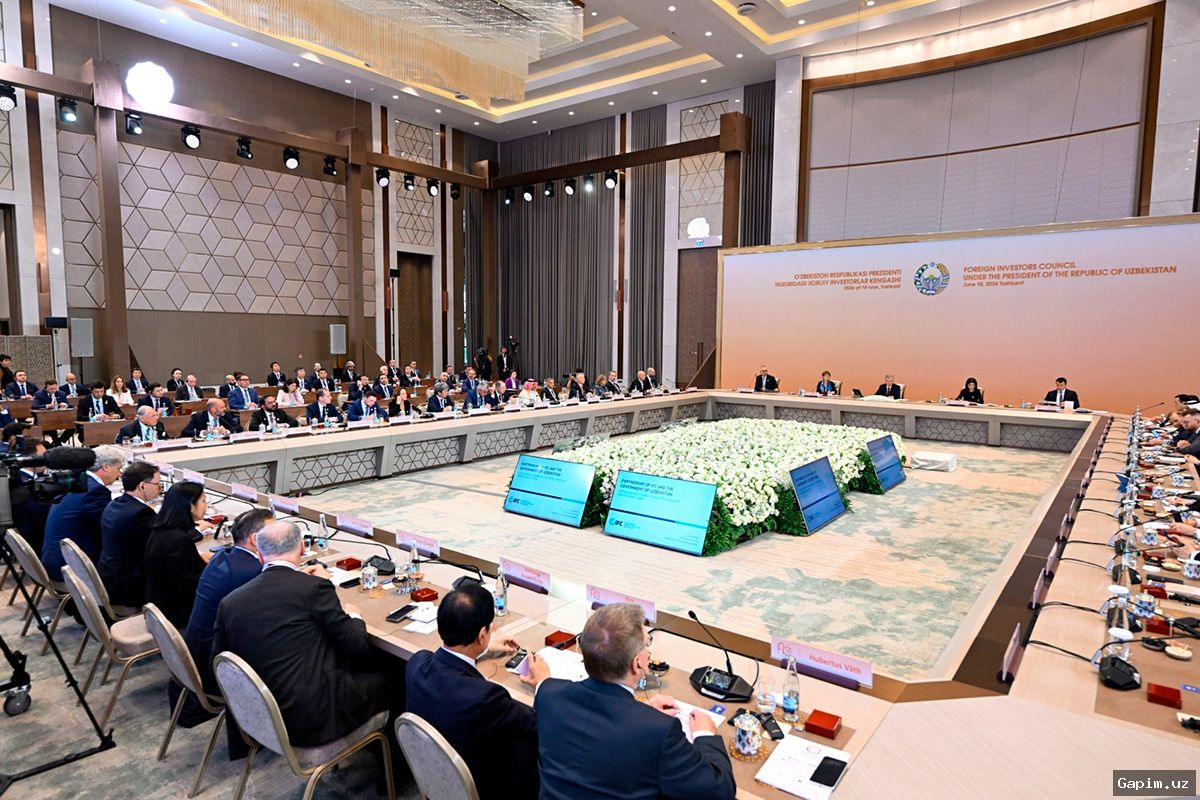
Key Takeaways: Uzbekistan projects GDP of $232 billion in 2027 and has set a task of attracting $65 billion in foreign investment. For 2026, the economy is expected to grow by at least 8%, with GDP above $200 billion and per capita income at $5,200. Longer-term goals include GDP of $300 billion by 2030 and per capita income of $10,000 over the next decade.
The meeting comes as Uzbekistan pursues reforms aimed at moving from raw-material exports to higher value-added production. From 2027, the government plans to secure sustainable growth of at least 7% a year through a new development model focused on labour productivity, export potential and high-income jobs. Officials see this as important for integrating domestic enterprises into international production chains amid tougher competition in global markets.
The new model is to be built on a modern industrial policy that attracts advanced technologies, diversifies exports and deepens localisation. A strategy is being prepared for the accelerated development of chemicals and petrochemicals, machine building, electrical engineering, textiles and pharmaceuticals. In 2027, each promising sector is expected to attract at least two or three large international investors and well-known brand companies. Modern industrial zones are also planned, along with new directions such as semiconductor technology, robotics, biotechnology, high-tech components and electric-vehicle batteries.
Other priorities include transforming state-owned enterprises and banks, accelerating privatisation, modernising energy and transport infrastructure, developing human capital and completing Uzbekistan’s accession to the World Trade Organization. Exports excluding gold are forecast to rise to almost $40 billion in 2027, while inflation is targeted at 6% in 2027 and 5% in 2028–2029. Responsible officials have been instructed to prepare detailed plans for attracting $65 billion in foreign investment, broken down by sector and region.
Following the meeting, the government is expected to refine the list of investment projects, approve practical measures for industrial zones and technology platforms, and monitor macroeconomic indicators regularly. For Uzbekistan, 2027 is intended to be a test of whether the economy can diversify beyond its current structure and secure a stronger position in international markets. Next steps will focus on improving the investment climate, supporting exporters and concluding WTO accession negotiations.
Source: podrobno.uz