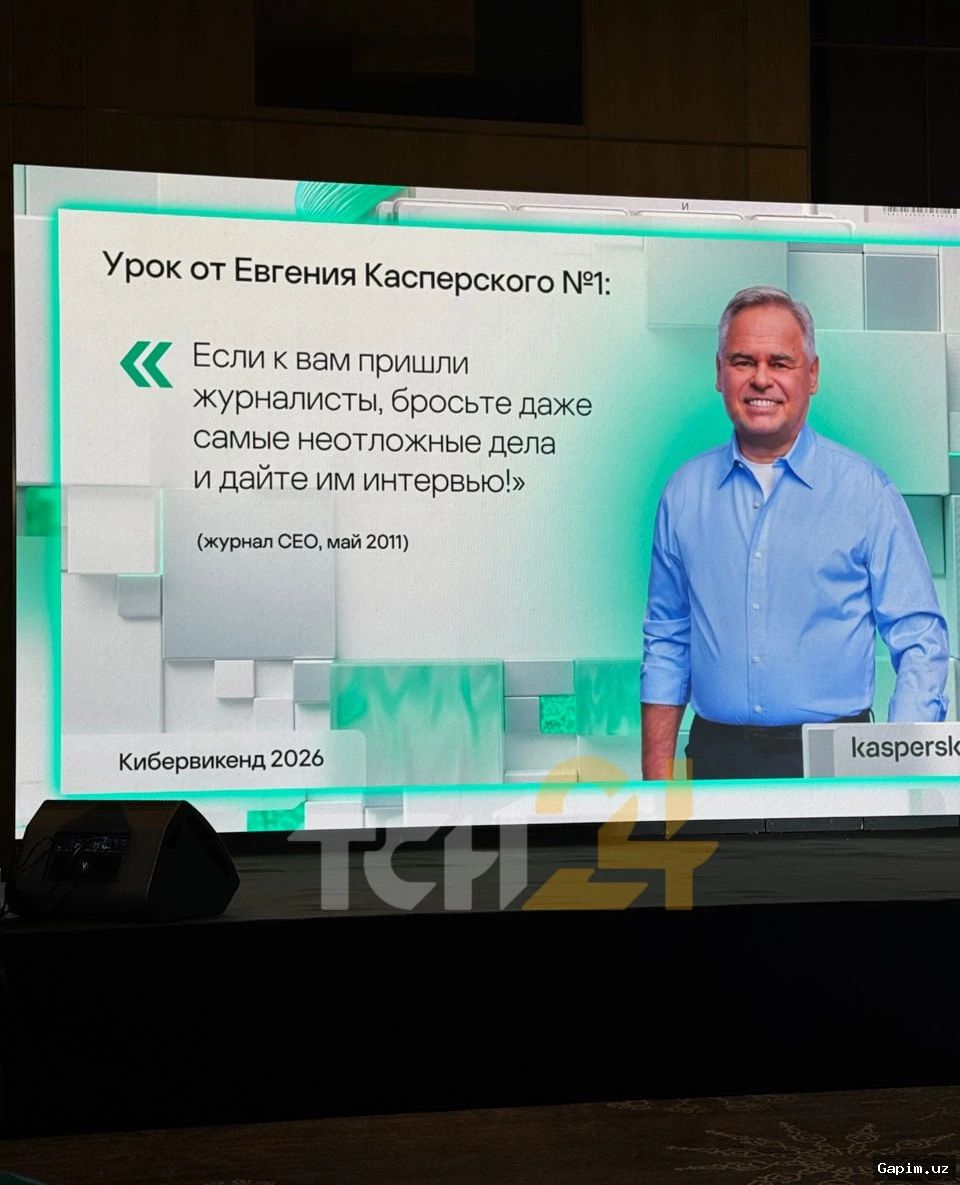
Uzbekistan ranked ninth in the world in the third quarter of 2026 by the share of users whose computers were found to contain malicious files, according to data presented at the Kaspersky CyberSecurity Weekend 2026 conference in Tashkent. Some 25.25% of users of Kaspersky protective products in the country encountered such threats, compared with a global average of 10.88%. Experts linked the ranking not simply to hackers’ interest in Uzbekistan but to digital consumption habits, the frequency of software updates and the level of protection users install.
Key Takeaways: Uzbekistan’s 25.25% figure placed it between the Republic of the Congo and Cameroon in the ranking, with Turkmenistan, Tajikistan and Afghanistan also higher on the list. In January–September 2026, malicious files were detected at least once among 53.2% of users in Uzbekistan and 44.1% of corporate users. Internet-borne dangerous files and programs were found among 29.4% of ordinary users and nearly 14% of business clients.
The ranking is based on Kaspersky users who agreed to share anonymized data about detected threats, so it does not cover the entire population or all devices in Uzbekistan. The figures therefore should be read as an indicator of specific threat exposure within a particular user group rather than a comprehensive measure of national cybersecurity. Malicious files can reach a computer through a USB drive, a downloaded program or a document, making organizations with active document exchange especially exposed to such risks.
Valeriy Zubanov, managing director of Kaspersky in Kazakhstan, Central Asia and Mongolia, said the country’s high position does not necessarily mean hackers are paying more attention to Uzbekistan. He attributed the situation to habits of consumption and the use of particular services and products. Where people often transfer documents by USB drive, the risk of encountering such files may be higher, he said, adding that how often users update programs and install protection also affects the outcome.
Businesses face additional dangers. Experts noted growing activity by backdoors, which secretly open access to a computer, and stealers, which take passwords and account data. Such attacks can cause a company to lose important information or suspend operations temporarily. Anna Kulashova, Kaspersky’s vice-president for business development in Russia, the CIS and Mongolia, reminded organizations that internal documents should not be sent carelessly to public artificial intelligence services.
Zubanov advised companies above all to train employees in security rules: update programs on time, store passwords securely and treat suspicious calls and files with caution. Earlier, Uzbekistan’s Minister of Digital Technologies Sherzod Shermatov called on organizations to strengthen the protection of their systems and regularly check for vulnerabilities. The next steps are likely to focus on raising cybersecurity awareness, updating corporate security policies and tightening controls over the handling of internal data.
Source: podrobno.uz