Authorities in Uzbekistan’s Namangan region have uncovered a hidden warehouse of medicines in a home belonging to a 30-year-old local resident, with 23,432 units across 156 types of foreign-made drugs found inside. The State Security Service (DXX) said its Namangan regional department conducted the inspection together with customs, internal affairs bodies and the National Guard at a property in the “Mingterak” mahalla of Yangi Namangan district. Preliminary estimates put the value of the illegally imported medicines at more than 3.3 billion soum; officials said the products are suspected of being counterfeit but this has not yet been confirmed and they have been sent for expert examination.
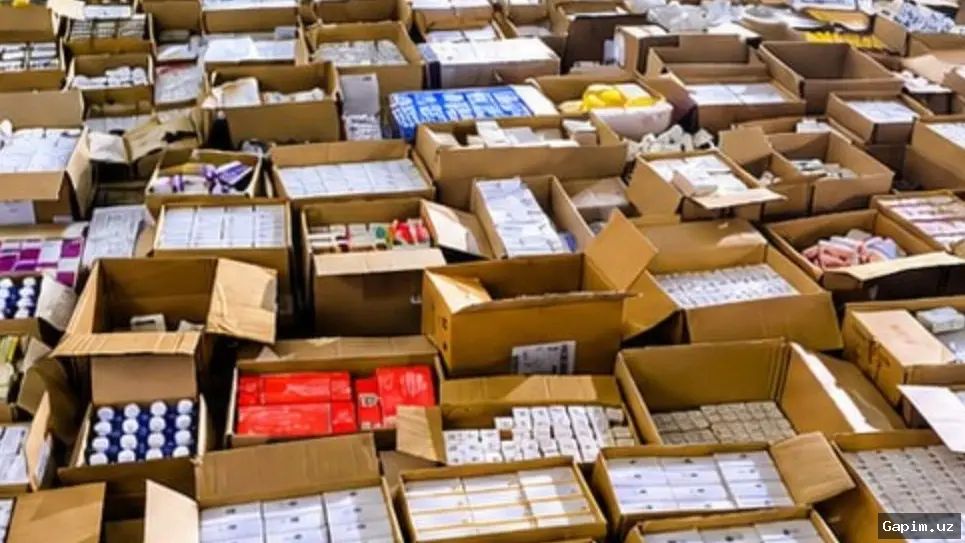
Key Takeaways: The search found 156 types of medicines and 23,432 individual units in a private home linked to a resident born in 1996. The preliminary value exceeds 3.3 billion soum, and all items were seized under procedural rules pending expertise. No counterfeit finding has been confirmed yet; a pre-investigation check is under way.
The case highlights the broader challenge of illegal medicine circulation and the risks that unregulated storage and import can pose to public health. Medicines kept outside approved conditions may lose effectiveness, have incorrect composition or become unsafe, while unauthorised imports bypass quality-control and customs procedures. Uzbekistan has requirements for the lawful import, storage and sale of pharmaceuticals, and violations may lead to administrative or criminal liability depending on the circumstances. For patients, the key risk is that a product’s price or foreign origin does not by itself guarantee safety or quality.
According to the DXX, the inspection identified 156 types of rare foreign-manufactured medicines with a total quantity of 23,432 units. Preliminary calculations indicate that the value of the illegally imported drugs exceeds 3.3 billion soum. All medicines have been seized in accordance with procedural rules, and an expert examination has been ordered to establish their characteristics, composition and quality. Officials stressed that the counterfeit status of the products has not yet been confirmed; the findings will depend on laboratory and other checks.
A pre-investigation inquiry is ongoing. Investigators are expected to establish the origin of the medicines, the supply channels used, storage conditions and any other individuals potentially involved in the illegal circulation of the products. Legal conclusions will be based on the results of the inquiry and expert examinations; until then, the case remains at the stage of suspicion and verification rather than a final charge. The outcome may also clarify whether the seized medicines presented a direct health risk and what regulatory or criminal provisions apply.
The DXX urged citizens to report similar violations through the short number 1520, saying the confidentiality of those who come forward is guaranteed. It also reminded the public that a medicine’s high price or foreign manufacture does not prove that its quality is assured. People are advised to buy medicines only from licensed pharmacies and medical institutions and to contact supervisory bodies if they encounter suspicious products.
Source: kun.uz