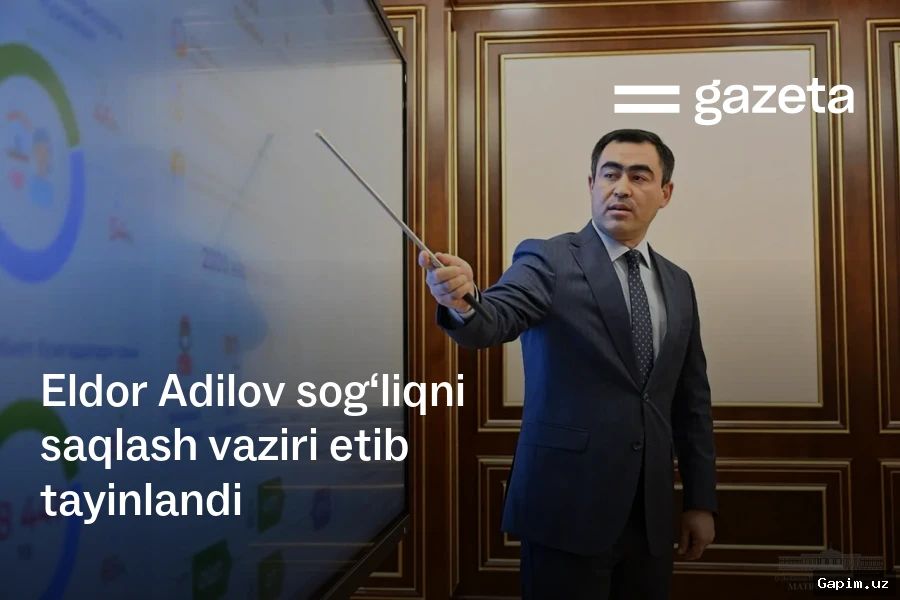
In Uzbekistan, only 28% of oncological and hematological diseases detected in children in 2025 were diagnosed at early — first and second — stages, Health Minister Eldor Adilov said on 11 November during a “Government Hour” session in the Legislative Chamber of the Oliy Majlis. According to his report, 2,534 new cases were registered among children last year, of which 710 were identified at early stages. The figures point to a persistent gap in early diagnosis and underscore the need to strengthen oncological vigilance in primary care.
Key Takeaways: In 2025, 2,534 new cases were recorded, with 710, or 28%, detected at the first and second stages. The early-detection share stood at 23% in 2023, rising by 5 percentage points over two years. Compared with 1,560 cases in 2022, new cases reached 2,534 in 2025, an increase of 974 cases, or 62.4%.
Minister Adilov cautioned that the rise in registered cases should not be attributed solely to an increased incidence of disease. He said the indicators are also affected by changes in the child population, expanded diagnostic capacity and broader registration coverage. The number of children under dispensary observation rose from 5,284 to 7,897 over the same period, an increase of nearly 49.5%. These factors are being analysed separately, according to the minister; therefore, the higher number of recorded cases does not by itself mean that the underlying risk of disease has increased by the same proportion.
During the parliamentary session, attention focused on improving the “oncological vigilance” of family doctors, paediatricians and nurses working in primary care. Adilov explained that, unlike in adults, mass screening for childhood cancers is limited, making early recognition of warning signs and prompt referral to specialised care especially important. “Our main task is to raise the oncological vigilance of family doctors, paediatricians and nurses in primary care, to notice dangerous signs in time and to refer the child to a specialised institution without delay,” he said. The ministry says the interval from suspicion of disease to the start of specialised treatment has been cut from 130–160 days to 10–18 days through the “Green Corridor” system and the digital “One Child — One Route” principle.
However, Nodira Jonbekova, a deputy from the Social Democratic Party “Adolat” faction, said the Green Corridor system is not yet working fully or effectively in the regions. She warned that failures are especially concerning in cases where childhood cancer is suspected and can lead to distressing outcomes. In response, the minister said the mechanism is currently being piloted in Samarkand city and Ishtikhan district: 20 family polyclinics in Samarkand and 29 in Ishtikhan district have been connected. The system allows electronic tracking of patients’ movement between medical institutions.
According to the minister, a child with suspected cancer is to be referred to the relevant regional medical institution within 48 hours; however, no specific timeline was announced for rolling out the system fully beyond the pilot areas. Further decisions on early diagnosis, registration and routing of children with oncological and haematological conditions are expected following the parliamentary session, the issues raised by deputies and the ministry’s promised analysis.
Source: www.gazeta.uz