Archaeologists have identified open-air Stone Age sites, cave dwellings, rock art and other artifacts in the Xatirchi district of Uzbekistan’s Navoiy region, the Yahyo G‘ulomov Samarkand Institute of Archaeology has announced. The finds were recorded in early November during joint field surveys by Samarkand State University and the institute in villages belonging to the Angidon community, at the foothills of the Nurota mountain range.
Key Takeaways: The Xatirchi district has recorded Stone Age archaeological monuments for the first time; finds include stone knives, retouched flakes, blades, microblades, backed pieces and scrapers. The assemblage is preliminarily attributed to the early Holocene and to Mesolithic–Neolithic material culture dated broadly to the 12th–3rd millennia BCE.
The surveys focused on springs near terraces on mountain slopes, where Stone Age artifacts were collected. The stone tools were made mainly from sandstone and brown flint. According to the institute, the manufacturing technique and preservation of the objects suggest an early Holocene date, while the broader assemblage reflects Mesolithic and Neolithic traditions. Such open sites and cave locations are important for understanding how ancient groups used water sources and local raw materials.
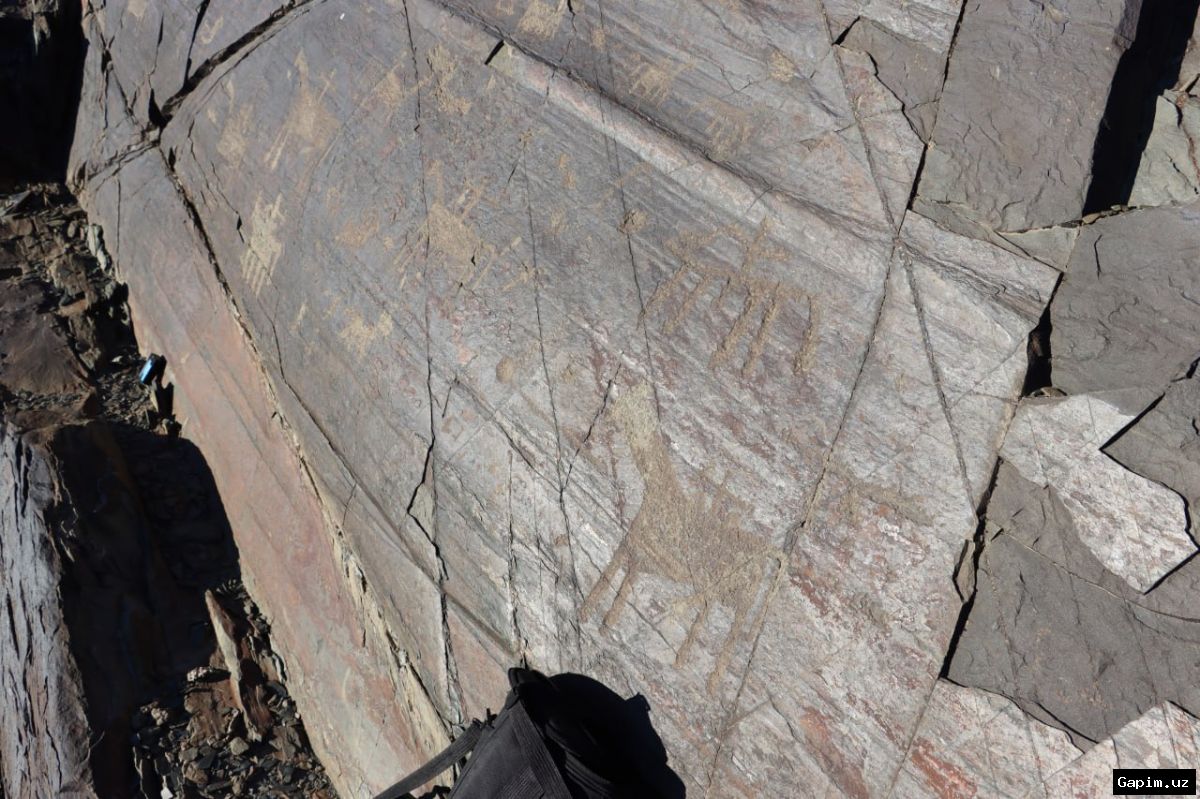
Near Chinor village, researchers also identified rock paintings. Promising springs and burial-mound sites were mapped for future study. The newly recorded monuments lie roughly 25–30 km from the well-known Uchtut, Ijont and Vaush stone-processing workshops, prompting scholars to suggest that raw material used at ancient sites around Chinor may have been brought from those workshops.
The institute said this is the first time Stone Age archaeological sites have been documented in Xatirchi district, indicating that the area’s ancient history may stretch back about 10,000 years or more. Previously, ochre rock paintings from the Mesolithic and Neolithic periods and a Bronze Age site were found in the part of the Nurota range that falls within the Qo‘shrabot district of Samarkand region. Together, the discoveries point to repeated human use of the Nurota foothills across different prehistoric periods.
Further archaeological surveys and scientific research are planned in the area, with specialists intending to study the cultural and chronological characteristics of the identified sites in greater detail. The work is expected to provide new evidence on the settlement of the Nurota foothills by ancient communities and on the Stone Age history of the region. The institute’s announcement adds to a growing body of research on prehistoric mobility, raw-material exchange and rock art in Uzbekistan’s central regions.
Source: www.gazeta.uz