Tashkent — Uzbekistan Airways has received its sixth Airbus A321neo, an aircraft distinguished from earlier deliveries of the same model by a new cabin layout, fully reclining seats and an upgraded multimedia system. The jet, registered UK32106, arrived from Hamburg, Germany, bearing a special livery marking the 35th anniversary of Uzbekistan's independence. At Tashkent-Humo Airport it was greeted with a traditional water salute before being presented to journalists and guests.
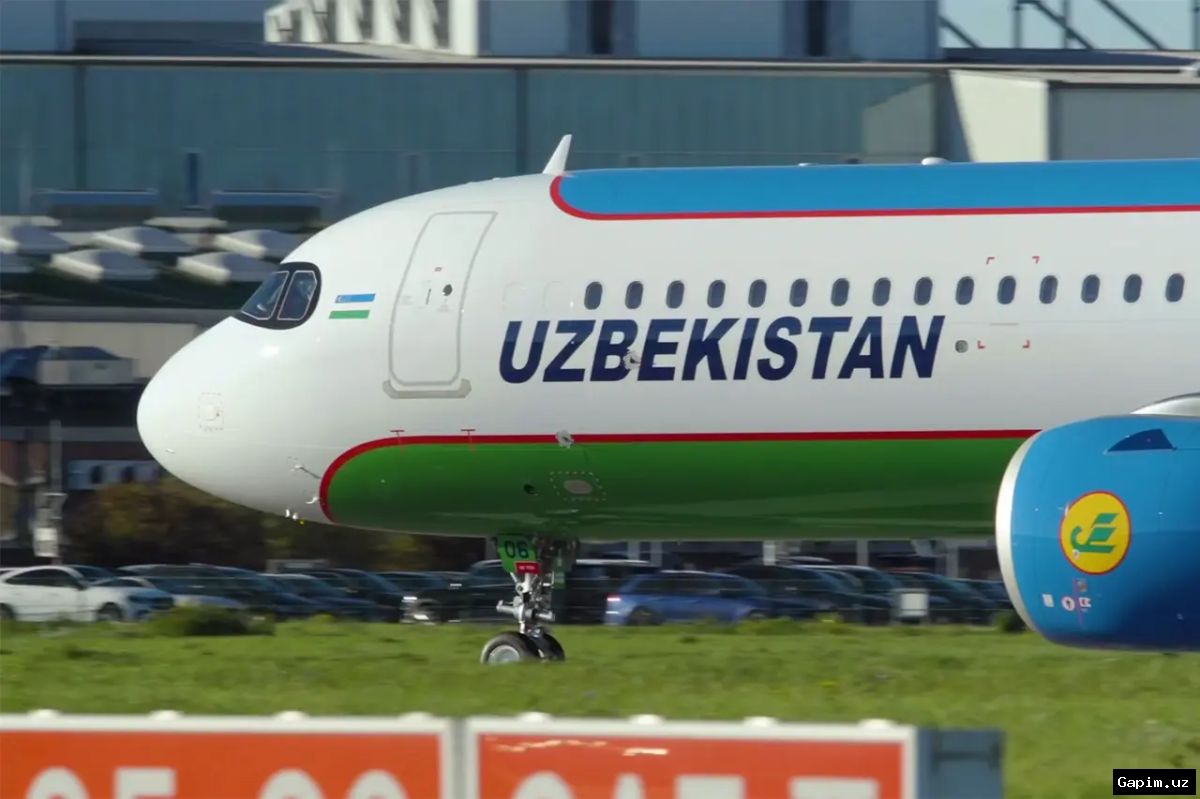
Key Takeaways: Uzbekistan Airways has taken delivery of its sixth Airbus A321neo (UK32106) from Hamburg; the new aircraft seats 172 passengers (16 business, 156 economy) instead of 188; the cabin features fully flat beds, 17.3- and 13.3-inch screens, and satellite internet equipment.
The main difference lies inside the cabin rather than in the exterior. Whereas earlier A321neo aircraft in the fleet were configured for 188 passengers, the new jet accommodates 172 — 16 in business class and 156 in economy. The reduction of 16 seats allowed a reorganization of passenger space. Business class is fitted with seats that convert fully into horizontal beds, along with individual lighting, power outlets, USB ports and additional storage compartments. In economy class, new seats with adjustable backrests and dedicated charging ports have been introduced.
Other cabin elements have also been upgraded. Enlarged overhead bins allow more hand luggage to be stowed, while a lighting system can adjust brightness and color depending on the flight phase. Every seat is equipped with a screen — 17.3 inches in business class and 13.3 inches in economy. The multimedia system offers films, music and an interactive flight map. Another innovation is equipment for high-speed satellite internet, which should eventually allow connectivity during flights, although launch dates and subscription terms have not yet been announced. According to manufacturer Airbus, the A321neo family consumes up to 20 percent less fuel per passenger seat than previous-generation aircraft, thanks to new engines and structural changes. The model's noise footprint on takeoff is also roughly 50 percent smaller than that of its predecessor, the A321ceo. These are model characteristics rather than results of separate tests on the delivered aircraft.
The delivery forms part of the airline's fleet renewal program. The aircraft is expected to begin scheduled flights soon, although the specific routes on which it will operate have not yet been announced. Earlier reports noted that Airbus forecasts passenger traffic in Central Asia to nearly triple by 2045.
Source: podrobno.uz