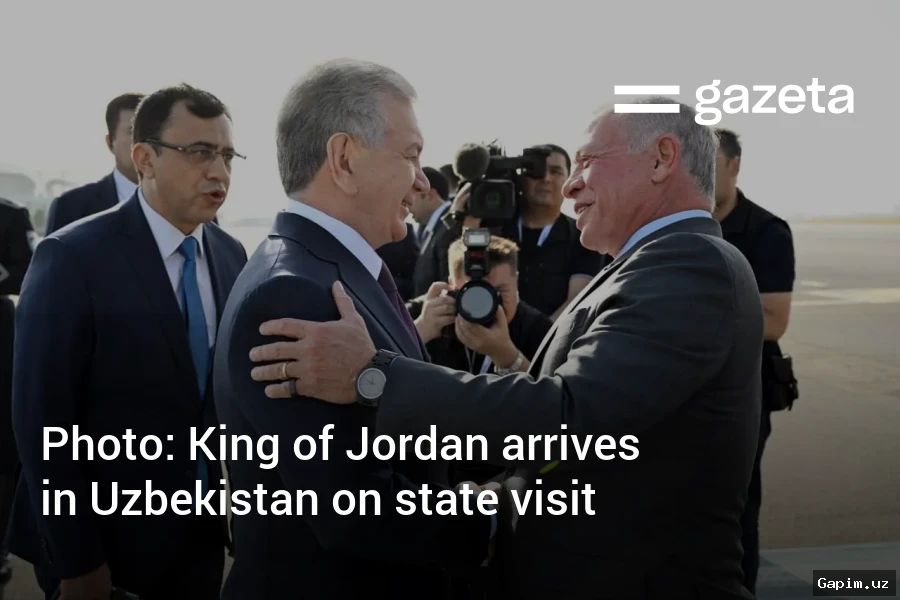
Uzbekistan and Jordan elevated their relationship to a new phase in 2025, when King Abdullah II made a state visit to Uzbekistan on Aug. 25–26, held talks with President Shavkat Mirziyoyev in Samarkand, and oversaw the signing of 15 bilateral documents and the introduction of mutual visa-free travel for up to 30 days. The dialogue continued in July 2026 at foreign-minister level, while bilateral trade rose from $853,200 in 2017 to $12 million in 2025, even though economic ties still lag behind the political agenda.
Key Takeaways: Diplomatic relations were established on Feb. 15, 1993; King Abdullah II’s 2025 visit was the first state visit by a Jordanian monarch to Uzbekistan; the two sides signed 15 documents and introduced visa-free travel for up to 30 days; bilateral trade reached $12 million in 2025, with food products accounting for 94.2 percent of Uzbek exports.
Historical Roots and Diplomatic Foundation
Contacts between Uzbekistan and Jordan began long before Uzbekistan’s independence: Uzbek politician Rafiq Nishonov, who served as the Soviet Union’s ambassador to Jordan from 1978 to 1985, was among the key figures in preparing and carrying out King Hussein bin Talal and Queen Noor’s first visit to the Soviet Union in 1982. After independence, diplomatic relations were established on Feb. 15, 1993, but political and economic contacts remained limited for years; Uzbekistan’s honorary consulate has operated in Amman since 2007, and the first round of interagency political consultations took place in Amman in 2019.
King Abdullah II’s state visit on Aug. 25–26, 2025, became the centerpiece of the new phase. Talks with President Shavkat Mirziyoyev in Samarkand covered political relations, trade, investment and industrial cooperation, with chemistry and pharmaceuticals, agriculture, textiles, geology, energy, health care and tourism identified as priority areas. The leaders adopted a joint statement, while the two governments signed 15 bilateral documents, including agreements on investment promotion and protection, extradition, a joint commission and the abolition of visa requirements.
In July 2026, Uzbek Foreign Minister Bakhtiyor Saidov met in Tashkent with Jordanian Deputy Prime Minister and Foreign Minister Ayman Safadi. They discussed implementation of the Samarkand summit agreements, expansion of trade and investment ties, transport, logistics, education and tourism, and confirmed their intention to coordinate positions within the United Nations, the Organization of Islamic Cooperation and the Non-Aligned Movement. According to Uzbek statistics, bilateral trade increased from $853,200 in 2017 to $12 million in 2025, but Uzbek exports remained narrow: food products accounted for 94.2 percent of deliveries in 2025, mainly confectionery, biscuits, waffles, dried fruit and raisins.
Economic Outlook and Next Steps
Economic ties still trail the political agenda, but practical steps such as visa-free travel for up to 30 days and plans to develop direct flights could support trade and tourism growth. Uzbek Ambassador to Jordan Nodirjon Turgunov discussed prospects for expanding Uzbek food exports to the Jordanian market in an interview with the Petra agency, suggesting that the next stage of cooperation is likely to focus on deepening industrial cooperation, investment and logistics links.
Source: www.gazeta.uz