Uzbekistan’s imports of flowers and plant products have increased by 39 percent since the start of the year, according to customs data presented during an open dialogue organized by the Chamber of Commerce and Industry on November 16. The meeting brought together representatives of the Presidential Administration, the Customs Committee and other agencies with flower growers and greenhouse operators, who proposed restoring import privileges for raw materials, reviewing higher duties on finished imported flowers and expanding export support measures. Customs Committee Chairman Akmalxoja Mavlonov said that from the beginning of the year through November 15, Uzbekistan imported $10.7 million worth of flowers, planting materials and other plant products, about $3 million more than in the same period of 2025, while customs payments to the budget reached 42.8 billion soums.
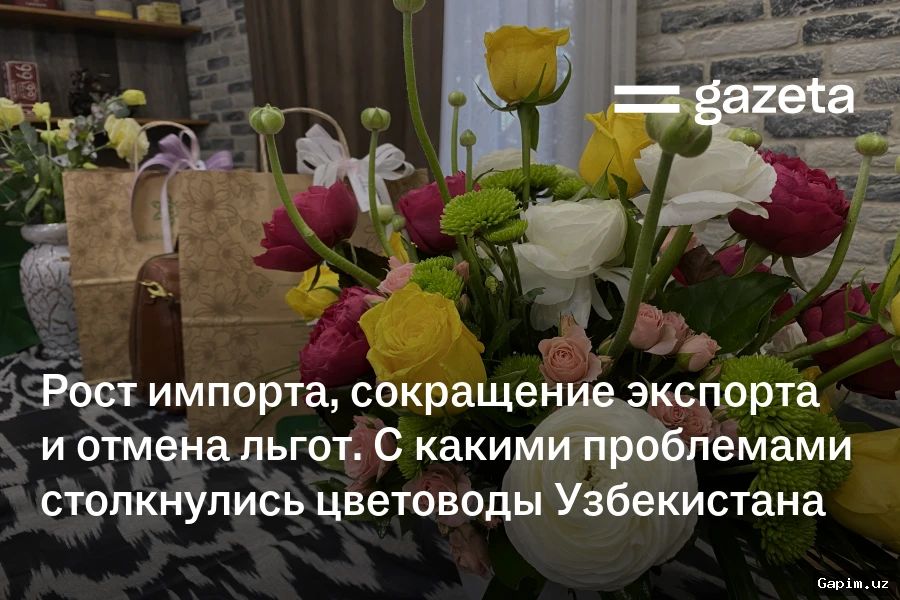
Key Takeaways: Imports of flowers and plant products reached $10.7 million by November 15, up 39 percent year on year; China supplied about $4.1 million and the Netherlands about $3.5 million; 126 entrepreneurs imported flower products in 2026, 22 more than a year earlier; and 268 batches worth about $7.5 million are currently under customs control.
Context and Background
The surge is visible not only in aggregate figures but also in the number of market participants, reflecting stronger demand from Uzbekistan’s expanding greenhouse sector and the continued need for foreign planting materials. Mavlonov stressed that more than half of the import value is not finished flowers but plants and planting materials that domestic producers can use directly, while the largest suppliers include China at roughly $4.1 million, or about 38 percent of the total, the Netherlands at nearly $3.5 million, Colombia at $1.4 million, Bulgaria at $408,000 and Turkey at $353,000. The increase has also prompted business representatives to ask for renewed support for raw-material imports and stronger measures to help local growers compete with ready-made imported flowers.
Customs Procedures and Phytosanitary Controls
Mavlonov also clarified the status of 268 batches of flower and plant products, with a total weight of about 4,400 tons and a value of roughly $7.5 million, that are currently under customs supervision. He said these goods are not necessarily being held at the border; because flowers are highly perishable, customs authorities allow entrepreneurs to store them in their own warehouses under customs control until documentation and inspections are completed. He explained that flowers are «quickly drying, wilting, perishable goods» and that holding them could damage quality and cause financial harm. He added that origin certificates and phytosanitary control results are required to complete clearance, and that products cannot be imported and immediately sold unless the requirements are fulfilled.
The Customs Committee chairman reminded participants of non-tariff measures applied to flower and planting-material imports, noting that each imported flower or seedling must arrive with an origin certificate from the exporting country and that the relevant phytosanitary permit must then be obtained from the competent authority. After entry, the products undergo phytosanitary inspection, and the resulting documents record the outcome of the examination. Officials also named several importing companies during the discussion, although the full list was not detailed in the available report.
Outlook and Next Steps
The meeting ended with a policy discussion rather than a final decision, but the proposals on the table point to the next stage of debate over how to balance import access with support for domestic production. Entrepreneurs’ requests to restore raw-material import privileges, raise duties on finished imported flowers and broaden export support are expected to be considered alongside the customs and phytosanitary framework described by Mavlonov. For greenhouse operators, the immediate priority remains completing clearance for perishable goods without financial losses, while the broader question is whether regulatory adjustments can help local flower production expand without restricting access to essential planting materials.
Source: www.gazeta.uz