From 2027, crop varieties and hybrids developed in Uzbekistan will be tested in Turkey, under agreements discussed during the GROWTECH EXPO international exhibition held in Turkey on November 24–27, 2026. Representatives of the Center for Testing Crop Varieties under Uzbekistan’s Ministry of Agriculture, including director O. Matyoqubov, met with specialists from Turkey’s Pro Gen Seed company and the “Taşpinar” agricultural chamber. The sides also discussed testing new Turkish-bred varieties in Uzbekistan, selecting promising samples, and introducing them into production.
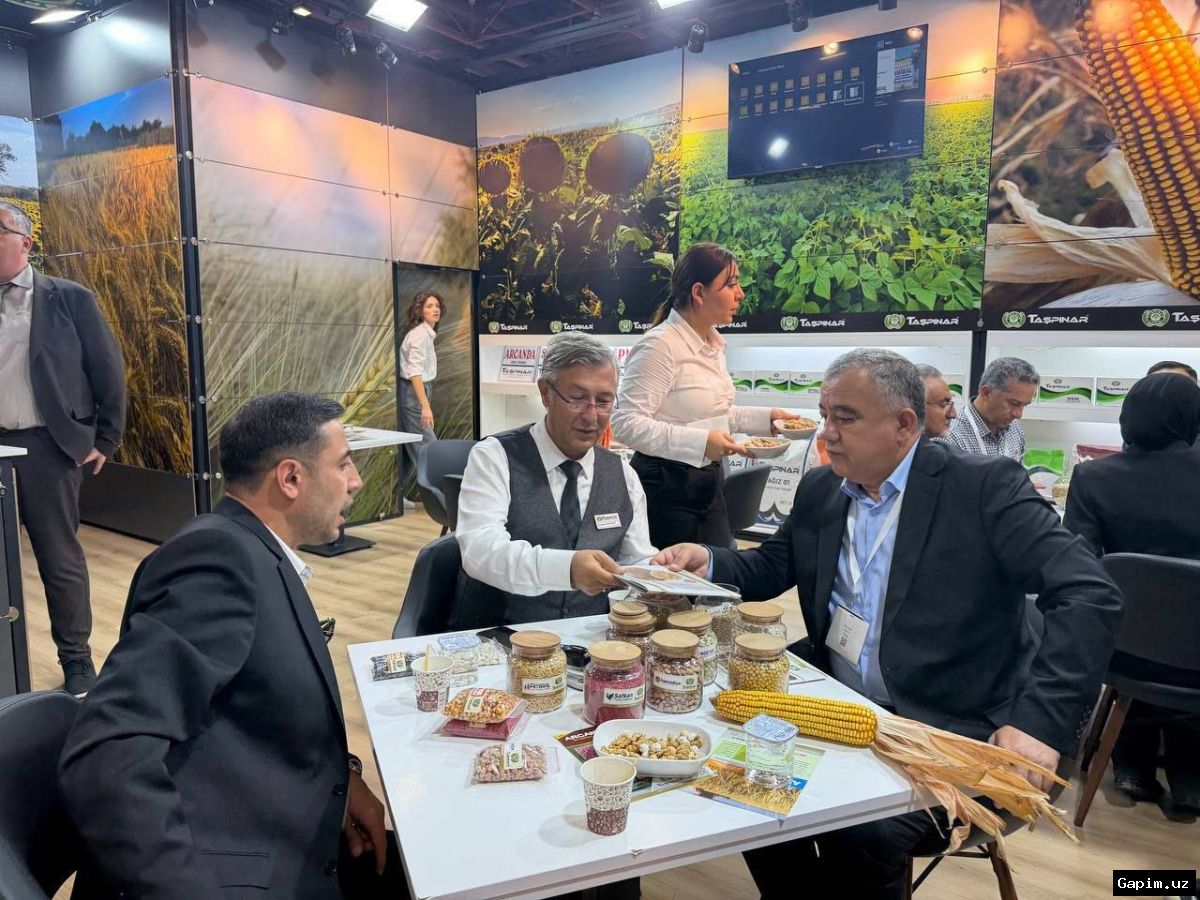
Key Takeaways: From 2027, locally developed Uzbek crop varieties and hybrids will be tested in Turkey; two wheat varieties and one barley variety owned by Pro Gen Seed are currently being tested at variety-testing stations and plots in Uzbekistan; implementation of agreements reached at the ECOSA seed congress in Tashkent was reviewed.
Context and Background
The arrangement is framed as a further step in agricultural cooperation between Uzbekistan and Turkey. It builds on agreements reached during the Ninth International Seed Congress of the Economic Cooperation Organization Seed Association (ECOSA), held in Tashkent in October 2026, whose implementation was reviewed at the exhibition. Discussions covered new Turkish-bred varieties and hybrids of grain, fodder, oilseed, and legume crops for testing in Uzbekistan, the selection of promising samples, and their future introduction into production, with the aim of improving yield, quality, and adaptation to local conditions.
Key Details and Outlook
The meetings took place alongside the exhibition and focused on practical aspects of bilateral cooperation. At present, two wheat varieties and one barley variety belonging to Pro Gen Seed are being tested at variety-testing stations and plots in Uzbekistan, allowing their performance to be assessed under local conditions. The sides also agreed that Uzbek-developed local crop varieties and hybrids will be tested in Turkey starting in 2027, expanding the mutual exchange of breeding achievements.
The cooperation is expected to strengthen ties between breeders in the two countries, accelerate the introduction of new varieties into production, and support agricultural efficiency. Further joint work on selecting promising samples and expanding trials is likely, and the results of the current tests are expected to inform future decisions on commercial use.
Source: kun.uz