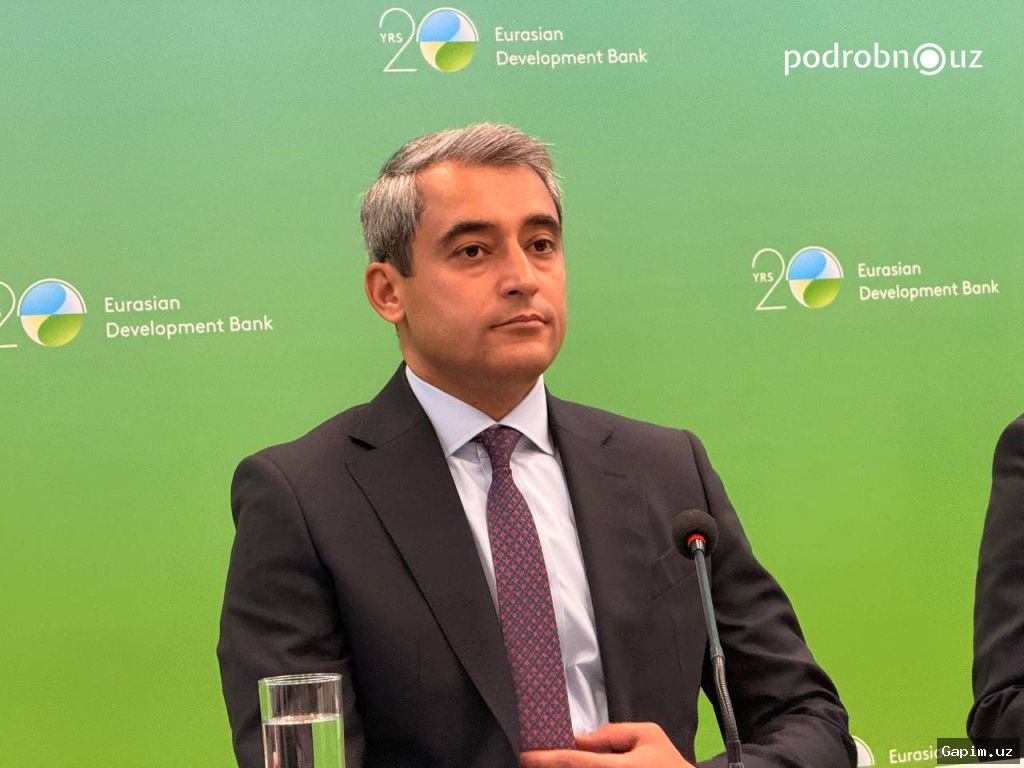
Tashkent, Uzbekistan — The Eurasian Development Bank (EDB) plans to invest in the construction of a new international airport in Tashkent, EDB’s representative office director in Uzbekistan Sarvar Khamidov told a Podrobno.uz correspondent in an interview. The bank already participates in building the new Almaty airport and, noting rapidly growing demand for passenger and cargo air transport in the region, is ready to support the Tashkent project as well. During a working visit to Uzbekistan from November 24 to 26, EDB Chairman Nikolai Podguzov held talks with representatives of Uzbekistan Airports.
Key Takeaways: EDB has confirmed plans to invest in the new international airport in Tashkent; the airport will be built in Urtachirchik and Kuyichirchik districts of Tashkent region on 1,300 hectares; the first phase includes a 208,400-square-meter passenger terminal and two 4-kilometer runways; once operational, it is expected to handle up to 20 million passengers and 129,000 tons of cargo annually.
Regional and Economic Significance
According to Khamidov, demand for passenger and cargo air transport in the region is growing rapidly, and new airports, including those under construction in Almaty and Tashkent, will help meet that demand while supporting further economic development across the region. “We have a huge appetite for projects of this kind. We are ready to allocate significant financial resources to them,” the representative office director said. He added that investment potential is substantial, extending not only to the new Tashkent airport but also to other airports being built or modernized. Simultaneous construction of airports in Tashkent and Almaty is increasingly described by media as a race for the status of Central Asia’s logistics hub.
Project Details and Next Steps
The new airport will be located about 7 kilometers east of Yangiyul and connected to the Tashkent–Samarkand, Tashkent–Andijan and Tashkent–Bostanlyk toll roads. Its first phase includes a 208,400-square-meter passenger terminal and two runways each 4 kilometers long. Once commissioned, the airport will be able to handle up to 20 million passengers and 129,000 tons of cargo per year. To prepare the site, authorities decided to relocate seven cemeteries in Tashkent region; the decision was signed on September 15 by the governor of Tashkent region. The list includes the Sergeli children’s cemetery, the Korean cemetery at the Sergeli military medical center, the Muslim cemeteries Suvon Bagish and Kudaykul, the Korean cemeteries Kudaykul and Saryktepa, and the Russian Christian cemetery Boris. Remains are to be exhumed and reburied at newly designated sites for all seven locations. By 2029, the current Tashkent airport is expected to fully exhaust its capacity; according to some reports, the existing airport may be closed after the new aviation complex opens. Khamidov did not name a possible investment amount, saying preliminary consultations have been held, the sides understand the direction of travel, and specific needs remain to be clarified.
Source: podrobno.uz