Uzbekistan's President Shavkat Mirziyoyev visited two Middle Eastern states — Oman and Jordan — within one week. Following the talks, relations with both countries were raised to the level of strategic partnership. The visits are aimed at diversifying Uzbekistan's foreign policy and economy, broadening investment sources, developing transport and logistics routes, and reaching new trade markets.
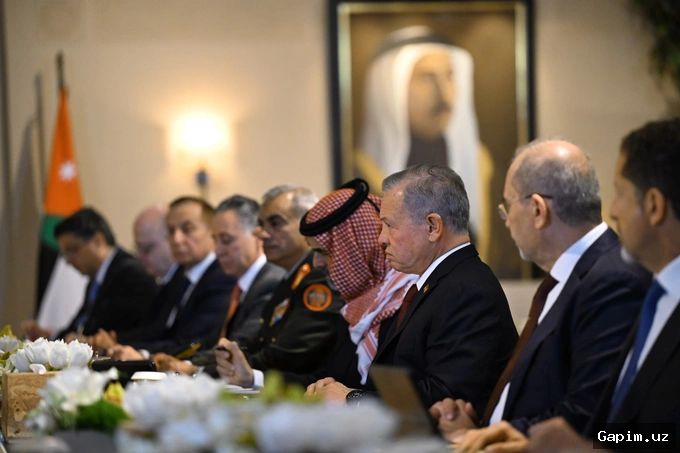
Key Takeaways: Shavkat Mirziyoyev visited Oman and Jordan within one week; relations with both states were elevated to strategic partnership; experts identify energy, petrochemicals, extraction and processing of critical minerals, pharmaceuticals, textiles, agriculture, transport infrastructure, and the digital economy among priority areas.
Context and Strategic Significance
Experts link Uzbekistan's growing engagement with Middle Eastern countries to the diversification of its foreign policy and foreign economic ties, expansion of its investment partner base, wider geography of transport routes, and broader trade markets. Sarvar Kamolov, chief research fellow at the Institute for Strategic and Interregional Studies, said the increasing attention to the Middle East reflects changes in the global economy: international trade geography is shifting, new transport and logistics routes are taking shape, and competition for investment, technology, and markets is intensifying. He said the task is not only to increase trade turnover, but also to establish joint ventures, localize production, transfer technology, and build new value-added chains.
Bahodir Alixanov, head of the sector for studying advanced foreign experience at the Strategic Development Agency, noted Uzbekistan's interest in attracting capital from sovereign investment funds and private investors. In his view, Uzbekistan itself is also of interest to Middle Eastern states: it can help them diversify foreign investments, strengthen food security, and expand opportunities to use Central Asia's resource and industrial potential. Experts give special attention to transport connectivity: for Uzbekistan, which has no direct access to the sea, expanding routes to international ports is an important condition for stable foreign trade development.
According to Alixanov, rapprochement with Muscat and Amman allows Tashkent to expand the geography of its diplomatic presence in the Middle East and strengthen cooperation with both Gulf states and Eastern Mediterranean countries. Nizomiddin Usmanov, an expert at the Center for Foreign Policy Studies, agreed, saying that strategic partnership with Oman and Jordan creates a basis not only for deeper bilateral cooperation but also for strengthening Uzbekistan's positions in the Middle East. Kamolov also stressed that this creates additional opportunities for expanding ties between Central Asia and Arab states.
Additional Opportunities and Outlook
Experts share the view that cooperation with Oman and Jordan complements Uzbekistan's established relations with Saudi Arabia, the UAE, and Qatar. While cooperation with the latter is driven mainly by large investments in energy, finance, and infrastructure, Oman and Jordan offer additional opportunities in transport logistics, specialized industrial cooperation, and access to new markets. Experts point to Oman's geographic location and developed port infrastructure as its main advantage: the Sultanate has a network of deep-water ports — Suhar and Duqm — that help bypass the narrow and vulnerable Strait of Hormuz and connect to international maritime trade routes.
In the coming period, further steps are expected through joint projects involving organizations and business circles, initiatives with investment funds, and diversification of transport corridors. Within the strategic partnership with Oman and Jordan, energy, petrochemicals, minerals, pharmaceuticals, textiles, agriculture, and the digital economy, as well as production localization and technology transfer, are expected to remain on the agenda. The expansion of Tashkent's diplomatic presence in the Middle East may strengthen Uzbekistan's role in regional cooperation.
Source: www.gazeta.uz